


From €90
< Back to show details
Peter Grimes - Britten

Teatro di San Carlo - Napoli

Select the date of the show

Loading available dates...

Please specify your seating requests regarding your ticket booking (OPTIONAL).
(100 char. max)

Seating

Music & Opera books the best available seats. The exact location of your seats will be confirmed via email. Only adjacent seats can be booked. More information

ANY QUESTIONS ?

Contact us by tel: +33 1 53 59 39 29 – or by Email.) See Help & FAQ page

TICKET DELIVERY INFORMATION

You will receive by email, your E-tickets to be printed or downloaded on your mobilephone.

Price

Music & Opera ticket prices differ from the ticket face value, as they also include all service fees and taxes.

The Club Music & Opera

Le Club Music & Opera
Join the Club to benefit from special offers. Already Member of the Club, Login !
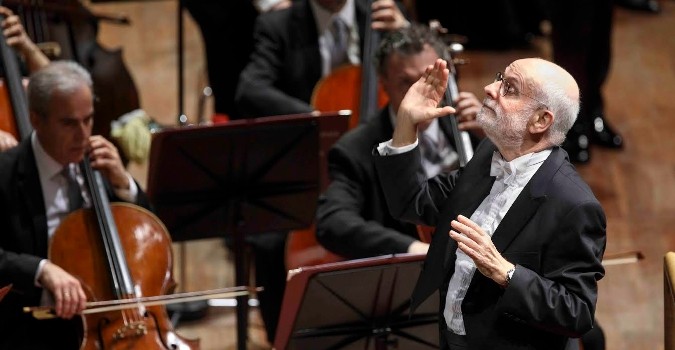
Peter Grimes - Britten

© Teatro di San Carlo

Britten Peter Grimes

From 20 May TO 22 May 2027
Teatro di San Carlo - Napoli
From 90 €
Prices & Dates
Program

Britten : Peter Grimes

Cast
  • Conductor
    John Fiore
  • Director
    Paul Curran
  • Performers
    Peter Grimes: John Findon
    Ellen Orford: Celine Byrne
    Auntie: Natalia Gavrilan
    Captain Balstrode: Benjamin Taylor
    Mrs Sedley: Aloisa Aisemberg
    First Niece: Silvia Spessot
    Swallow: Scott Wilde
  • Venue Info
  • Seating Plan
  • Synopsis

Teatro di San Carlo - Napoli LocationVia San Carlo, 98F - 80132 Napoli Italie

  • Venue's Capacity: 1386

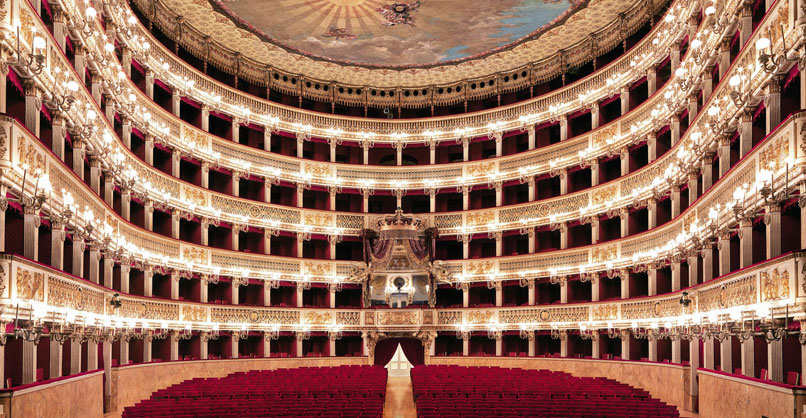
The "San Carlo" is the world's oldest opera house still in activity. Right from the start, in 1737, people came from far and wide to admire the theatre's excellent 42-musician orchestra, and to applaud the castratos trained at the Naples Conservatory (like the famous Farinelli), as well as divas known by their nicknames, "la Parruchierrina," or "la Bastarella," for example. And the house in itself, with its sumptuous architecture and no less than six stories of boxes, was no minor attraction: Stendhal was enchanted by the hall's charm, and Paul Klee was fascinated by what he described as this "superb, heavy, and obscure theatre."

In 1816, fire burned down the theatre, and Ferdinand de Bourbon reconstructed an identical building with amazing speed, for Naples, robbed of its opera house, was plunged in mourning, and threatened to not support its sovereign. Let's not forget that at that time, the reign of Domenico Barbaja (nicknamed "The Prince of Impresarios" by Alexander Dumas) had already begun brilliantly. In 1815. this Milanese ex-cafe waiter, who is often credited with the invention of whipped-cream, had had the brilliant idea of hiring Gioacchino Rossini in person as the theatre's artistic director. This exceptional LUCIA DI LAMMERMOOR for the San Carlo), while launching, in 1826, a young composer called Vincenzo Bellini. The Neapolitan stage became the place where several singers' careers were made or broken; the famous French tenor Adolphe Nourrit, for example, who considered that the applause had not been sufficient, commited suicide after a performance at the San Carlo. The composer Saverio Mercadante then won the favours of the San Carlo's notorious audience, to such an extent that Verdi at first felt ill at ease in the theatre. Only to better triumph in 1872, when he organized an entire season, and had an orchestra pit added.

During the twentieth century, the stars of the Scala have sometimes overshadowed those of the San Carlo, an historic rivalry that has always existed, in a country where music lovers must choose sides. But the Neapolitan stage defends itself by ever enriching, even to this day, the world's largest repertoire of works ever premiered in an opera house, while legendary singers, such as Beniamino Gigli (who performed in the theatre from 1915 to 1953), have always remained exceptionally faithful to the San Carlo audience, which also happens to be one of the warmest anyone could imagine.


Teatro di San Carlo

The seating plan is given as an indication and has no contractual value.
The division of categories may differ depending on shows and dates.

Synopsis

Peter Grimes

PETER GRIME, A TRAGIC OPERA EXPLORING HOMOPHOBIA.

HISTORY

This opera was composed by Benjamin Britten and was first performed at Sadler's Wells, London, in 1945 as the Second World War ended. The libretto was adapted by Montagu Slater from a poem in George Crabbe's book, The Borough. The opera is set in a fictional village called The Borough, which bears some resemblances to Aldeburgh on the East Coast of England where Britten lived. The opera remains popular both in the UK and abroad and tells the tragic story of the fisherman, Peter Grimes. As Britten and Slater worked on the opera the story of the fisherman developed into a more complex tale than in the original book. Whilst still being labelled a villain by those around him, the audience are asked to believe that he is also a victim of his society. The work has been referred to, also, as an attack on homophobia.

Prologue

Peter Grimes' apprentice has died and he is being questioned at the inquest. The townsfolk have already decided that he is guilty and push for his punishment. The coroner clears him of blame, however, he advises Grimes not to take on another apprentice. Grimes feels that this is his community's unwillingness to give him a second chance and he is comforted by the schoolmistress Ellen Orford, who he wishes to marry.

Act 1

The townsfolk, represented by the chorus, sing about their weary daily round of toil in the town and at sea. Grimes is unable to work successfully alone and another apprentice is found for him by his friend, apothecary Ned Keene. John, the new apprentice, lives in the workhouse and Ellen offers to go and fetch him. John is brought to the pub that evening but Grimes is unsettled by his presence and sets off alone to his hut, braving a terrible storm.

Act 2

On Sunday morning Ellen, whilst talking to John, is horrified to find a bruise on his neck. Grimes, when confronted, claims it happened by accident. Ellen persists and Grimes hits out at her and runs off with the apprentice. Several people see this and a mob sets off for his hut. Grimes sadly laments the loss of his first apprentice but when he hears the mob approaching he gets ready to set off for sea. Whilst climbing down the cliff to the fishing boat John falls, despite Grimes warning him to be careful, and he is killed. The mob disperse when they find the hut is empty.

Act 3

During a dance, the village busybody, Mrs. Sedley, tries to convince people that Grimes is a murderer. After many days at sea he returns alone. Meanwhile a retired skipper, Captain Balstrode, has discovered a jumper on the beach which Ellen recognises as one she has made for John. Aroused by Mrs.Sedley the mob once more set off in search of Grimes. Grimes, dangerously unstable for some time, has been pushed over the edge by the death of John and he doesn't take much persuading by Balstrude to take his boat out to sea and scupper it. He is never seen again. The opera ends the following day as villagers carry on as if nothing has happened.

MAIN ROLES

Peter Grimes: a fisherman, tenor.
Ellen Orford: widow and schoolmistress, soprano.
Balstrode: retired merchant skipper, baritone.
Mrs Sedley: a widow and busybody, mezzo-soprano.
Ned Keene: apothecary, baritone.
John: Grimes' apprentice, silent role.

© Teatro di San Carlo

You may also be interested by …

Pay in 3 installments 30,00€ with interest-free. Learn more