Refine your search

Tickets for Performances in Florence - Italie
56 shows
Filter 
Find the programme sorted by date and book your tickets for concerts, operas, and ballets:
Wozzeck - Berg
Trip in Florence
Romanzo criminale - Piovani
Simon Boccanegra - Verdi
Concert & Opera Arias - Mozart
Symphonies Nos. 1 & 4 - Mendelssohn
Roberto Bolle and Friends
Symphonies Nos. 3 & 5 - Mendelssohn
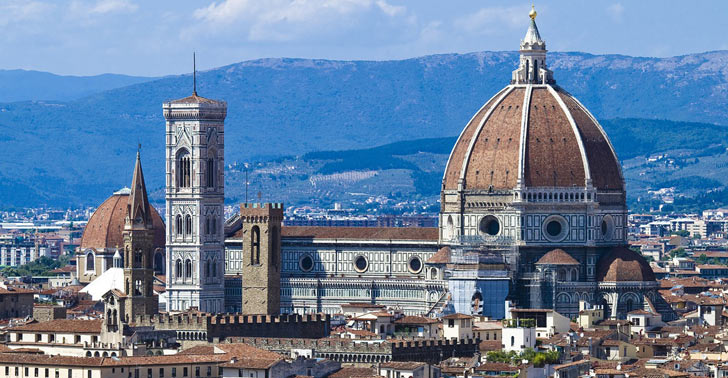
Florence
What shows are on this season in Florence?
Discover the opera, concert and Ballet Season for the city of Florence. Book your tickets online for the musical season of Florence. You will find the complete season of the Teatro del Maggio musicale Fiorentino.
Florence and music
An the late 16th century, the humanists with their great love of antiquity decided to bring ancient Greek drama, which combined theatre, poetry, music and dance, back to life. What they did, in fact, was to invent an entirely new style of singing declamation: Opera. One of the chief founders of the genre was called Giulio Caccini. A tenor and composer to the Medici family, he brought the voice to the forefront of the recitative, accompanying it with a basso continuo. This process became the “aesthetic manifesto” of the opera.
In 1600, on the occasion of the wedding of Maria de Medici with Henry IV of France, Eurydice by Jacopo Peri (1561-1633) was performed at the Palazzo Pitti. Peri himself played the role of Orpheus and used this new style of expression: the recitar cantando or "singing recitation". A singer like her father, Francesca Caccini (nicknamed La Cecchina, 1587- 1640) also wrote divertimenti for the Medici.
In 1625, she produced La liberazione di Ruggiero dall'Isola d'Alcina, an entirely sung musical drama which remains the finest example of Florentine baroque opera in history. Claudio Monteverdi (1567-1643) perfected the genre and ensured its successful establishment with his Orfeo (1607), Il Ritorno d'Ulisse in Patria (1641) and L’Incoronazione di Popea (1642).
The early works were usually performed in the private princely palaces. And although, from the 17th to 19th century many theatres were the venues for first performances, Florence’s musical life mainly revolved around two theatres: Opened in 1656, the Teatro della Pergola later underwent two major refurbishments and now seats 1,500 people. This is the venue where the grand operas of Mozart were heard for the first time in Italy and Donizetti’s Parisina and Rosamunde d’Inghilterra, Verdi’s Macbeth and Mascagni’s Rantzau were performed for the first time. Built in 1864, the Teatro Comunale was originally an open-air theatre; it was roofed in 1883 and can now accommodate 2,500 spectators.
The Maggio Musicale Fiorentino
Created in 1933 by Vittorio Gui, this musical event made its name initially through the originality of its programme. Held annually since 1937, it is Italy’s oldest music festival and Europe’s oldest along with Salzburg and Bayreuth. It has always played host to the most prestigious directors: from Max Reinhardt to Visconti, from Luca Ronconi to Zhang Yimou, including Liliana Cavani and Bob Wilson.
This festival has played an important role in the dissemination of 20th century music. Thus Stravinsky, Strauss, Messiaen and Berio found talented performers, conductors (Walter, Karajan, Mitropoulos, Muti) or soloists (Maria Callas, Arturo Benedetti Michelangeli). The Maggio has above all played a part in the rediscovery of some works (Lully, Haydn, Spontini) and the revival of operas that had sometimes been forgotten (Cherubini, Rossini, early Verdi.) The festival is held during May and June but activities continue all year round at the Teatro Comunale with a season of opera in the autumn and a symphonic season in the winter.
Orchestra del Maggio Musicale Fiorentino
Founded on 9 December 1928 by Vittorio Gui under the name of the Stabile Orchestrale Fiorentina, it later took the name of Orchestra del Maggio Musicale Fiorentino. Recognised internationally for its excellent repertoire, it has been led by the top world conductors: De Sabata, Furtwängler, Mitropoulos, Klemperer, Gavazzeni, E. Kleiber, Giulini, Böhm, Solti, Bernstein, Zubin Mehta. Made up of around 120 musicians, the orchestra is highly appreciated for a repertoire that extends from baroque to contemporary music.