

From €90
< Back to show details
Agrippina - Händel

Théâtre des Champs-Elysées - Paris

Select the date of the show

Loading available dates...

Additional offers

Restaurant Bar des Théâtres €42 per person More information
0
Please specify your seating requests regarding your ticket booking (OPTIONAL).
(100 char. max)

Seating

Music & Opera books the best available seats. The exact location of your seats will be confirmed via email. Only adjacent seats can be booked. More information

ANY QUESTIONS ?

Contact us by tel: +33 1 53 59 39 29 – or by Email.) See Help & FAQ page

TICKET DELIVERY INFORMATION

You will receive by mail your voucher to print and exchange at the theater.

Price

Music & Opera ticket prices differ from the ticket face value, as they also include all service fees and taxes.

The Club Music & Opera

Le Club Music & Opera
Join the Club to benefit from special offers. Already Member of the Club, Login !
Agrippina - Händel

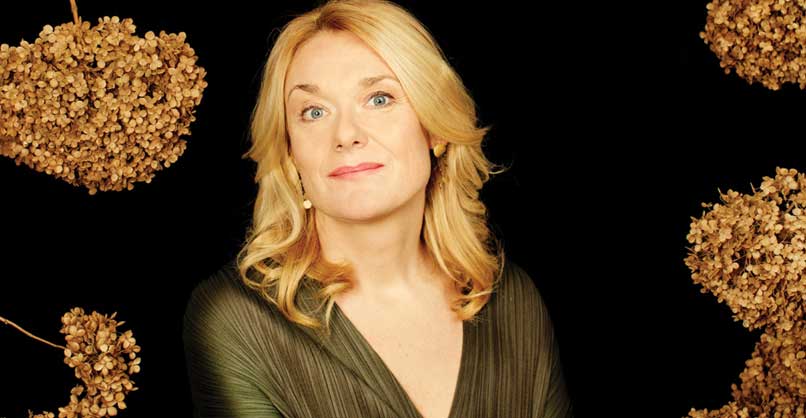
Magdalena Kozená © Julia Wesely

Händel Agrippina

The 10 November 2026
Théâtre des Champs-Elysées - Paris
From 90 €
Prices & Dates
Program

Händel : Agrippina

Cast
  • Les Accents
  • Conductor
    Thibault Noally
  • Director
    Concert Version
  • Performers
    Agrippina: Magdalena Kozená
    Nerone: Adèle Charvet
    Poppea: Julia Lezhneva
    Ottone: Christophe Dumaux
    Claudio: Nicolas Brooymans
    Pallante: Adrien Fournaison
    Narciso: Paul Figuier
  • Venue Info
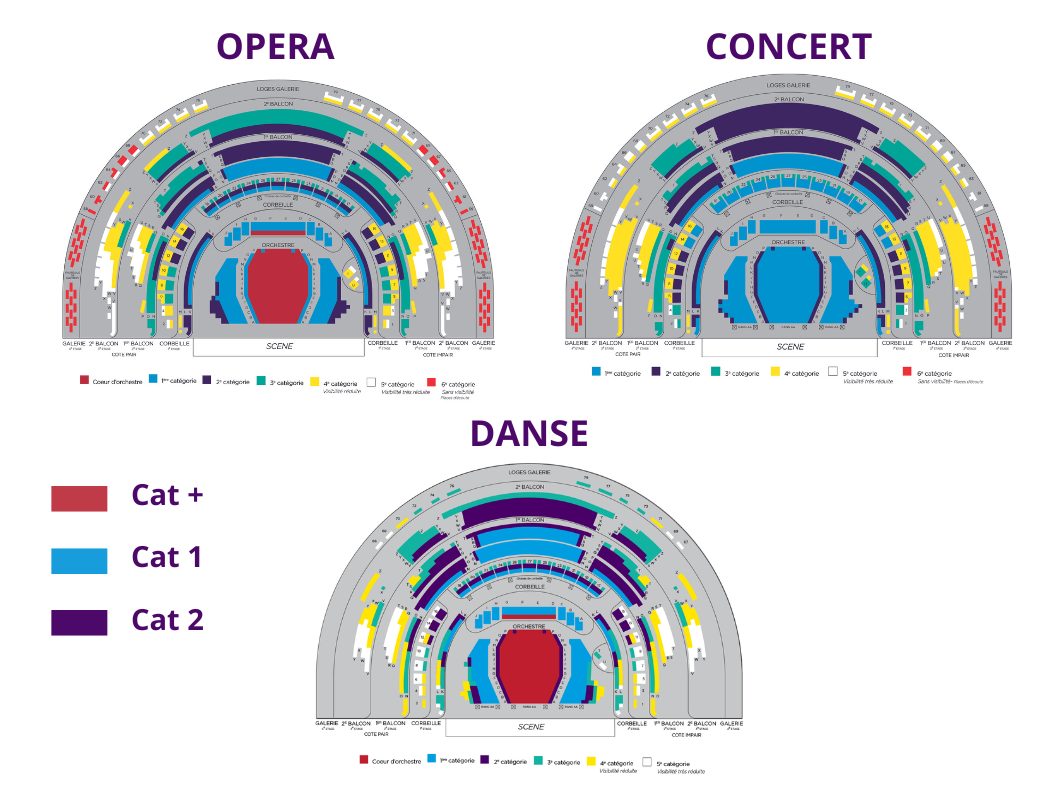
  • Seating Plan
  • Synopsis

Théâtre des Champs-Elysées - Paris Location15 Avenue Montaigne - 75008 Paris France

  • Venue's Capacity: 1985

The Théâtre des Champs-Elysées, initially planned for construction on the legendary avenue after which it was named, is in fact situated on Avenue Montaigne. It was in 1913 that the Parisian public first discovered the hall, an astonishing synthesis of tradition and modernity, with balconies that recall an Italian théâtre, while being supported by reinforced concrète, and with décoration at once sober and sumptuous. Speaking of eclecticism, the house's first season was quite surprising. THE BARBER OE SEVILLE was billed alongside BORIS GODUNOV, and it was here that Stravinsky RITE OF SPRING was premiered, provoking an infamous scandai. Nijinsky counted behind the scènes for the dancers in Russian, while Pierre Monteux kept time for the musicians, and Stravinsky ran back and forth between the stage and the audience, in an attempt to save the performance. After such an eventful start, the théâtre rapidely grew in réputation and Marcel Proust saluted Gabriel Astruc as being the manager «who staged BORIS GODUNOV, and who, in general, made up for the weaknesses of the Opéra and the Comic Opéra .»

After the First World War, concerts, opéras and ballets alternatively shared the programme, a tradition that still reigns today. Mozart's opéras were quite frequently staged, and performed by the visiting Vienna Opéra in 1924, 1947, 1949, and 1951. But the house also nurtured an affi-nity with Wagner's music; the Bayreuth troupe (with Lauritz Melchior) performed the entire Ring on the Champs-Elysées stage in 1929, and Furtwangler conducted the Walküre here in 1937.

Since the production of Boris Godunov that so enthused Marcel Proust, the théâtre also maintains close ties with the Russian réper­toire. After the bass Chaliapin and the Belgrad and Sofia Opéras, it is now the Kirov Théâtre from Saint Petersburg that regularly brings down the house.

More recently, the Champs-Elysées proposed Rimski-Korsakov's somewhat forgotten opéras in a séries of programmes that subtly mingled young talent with the grand tradition of the Vienna Philharmonie, in a concert hall entirely refurbished in 1986-87. Now equipped with a completely modernized stage machinery, the théâtre hasrevived the splendour of bygone days.

Théâtre des Champs-Elysées

The seating plan is given as an indication and has no contractual value.
The division of categories may differ depending on shows and dates.

Synopsis

Agrippina

AGRIPPINA, A COMEDY OPERA BY HANDEL

Written by George Frideric Händel, this opera in three parts tells the tale of the mother of Nero as she plans to make him Emperor and bring about the downfall of Rome. The opera was composed for the Venice Carnevale season of 1709-10 and was premiered at the Teatro San Giovanni Grisostomo on Boxing Day, 26th December 1709. Many critics today think that the opera is Händel's first masterpiece and it is one of the most popular pieces in the ongoing revival of his works. It has been [u]performed to great acclaim and given a modern makeover[/u] in London and New York.

HISTORY

The three part opera takes place in Rome and tells the story of the mother of Nero as she plans to secure the Emperor's throne for him after hearing of the death of her husband, Claudius. She will stop at nothing to achieve her ambitions and when she hears that Claudius is not dead she uses his love for Poppaea to make him denounce Otho, who is also in love with her, as a traitor and allow Nero to become Emperor. A fine comedy with many unique pieces.

Act 1

When Agrippina hears that Claudius has been lost at sea, she enlists her two freedmen Pallas and Narcissus in support of her son by a previous marriage, Nero and sets about making him Emperor of Rome. As she is about to ascend to the throne in front of the senate with Nero, she is stopped when Lesbus, Claudius servant rushes in with the news that he is not dead and was saved by Otho. She knows that both Claudius and Otho are in love with Poppaea and uses her knowledge to come between them and make Claudius denounce Otho, his chosen successor as a traitor.

Act 2

Pallas and Narcissus turn against the evil mother of Nero when they realise that she has tricked them. Poppaea tries to convince Claudius that Otho is innocent but his plotting wife manages to convince him that he should abdicate in Nero's favour. He agrees because he wants to be with Poppaea again.

Act 3

Poppaea and Otho are reconciled and she has hidden him in her bedroom when Nero comes to profess his love for her. She manages to trick him into hiding too when Claudius arrives. She tells him that it was in fact Nero and not Otho who had coerced her into rejecting Claudius. Nero leaves. Otho and Poppaea tell Claudius of their love. Pallas and Narcissus reveal Agrippina's plot to Claudius so he announces that Poppaea and Nero will be married and that Otho will be Emperor and accuses his wife of treachery. Nobody is happy so in a change of heart, Claudius makes Nero his successor and allows Poppaea and Otho to marry.

MAIN ROLES

Agrippina, wife of Claudius, mother of Nero - soprano
Nero - soprano castrato
Otho - contralto
Poppaea - soprano
Claudius, Emperor of Rome - bass

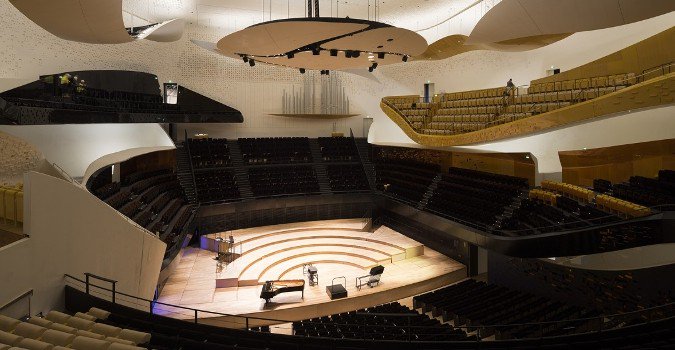
Paris - Théâtre des Champs Elysées - Intérieur

You may also be interested by …

Pay in 3 installments 30,00€ with interest-free. Learn more