


From €0
< Back to show details
Hungarian Rhapsody No. 2 - Liszt / Piano Concerto No. 1 - Liszt / Bluebeard’s Castle - Bartók

Teatro Real - Madrid

Select the date of the show

This performance in not available. Please contact the Venue or the Festival

Loading available dates...


Seating

Music & Opera books the best available seats. The exact location of your seats will be confirmed via email. Only adjacent seats can be booked. More information

ANY QUESTIONS ?

Contact us by tel: +33 1 53 59 39 29 – or by Email.) See Help & FAQ page

TICKET DELIVERY INFORMATION

Your E-tickets to be printed will be sent by mail.

Price

Music & Opera ticket prices differ from the ticket face value, as they also include all service fees and taxes.

The Club Music & Opera

Le Club Music & Opera
Join the Club to benefit from special offers. Already Member of the Club, Login !
Hungarian Rhapsody No. 2 - Liszt / Piano Concerto No. 1 - Liszt / Bluebeard’s Castle - Bartók

Netrebko Anna © Rubio Dalmau Olga

Concert

The 28 November 2026
Teatro Real - Madrid
From 0 €
Prices & Dates
Program

Bartók : Bluebeard’s Castle

Liszt : Hungarian Rhapsody No. 2

Liszt : Piano Concerto No. 1

Cast
  • Hungarian Radio Symphony Orchestra
  • Conductor
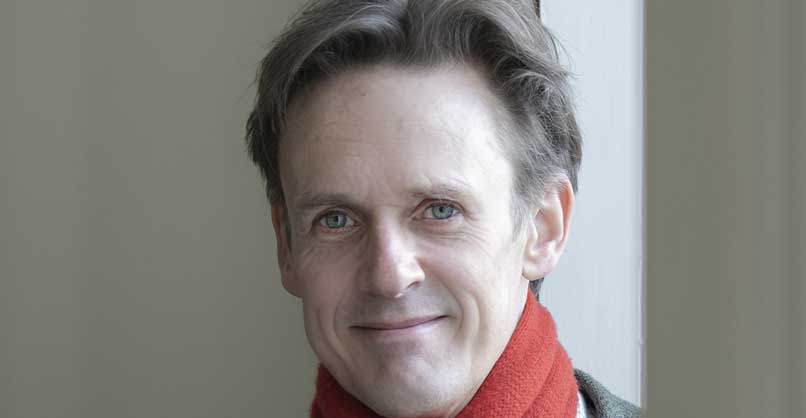
    Henrik Nánási
  • Director
    Concert Version
  • Performers
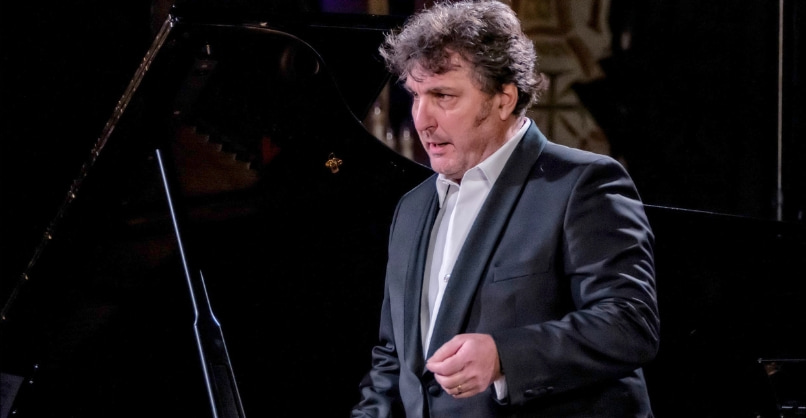
    Alexander Köpeczi
    Anna Netrebko
    Misi Boros
RESERVATION UPON REQUEST
  • Venue Info
  • Seating Plan
  • Synopsis

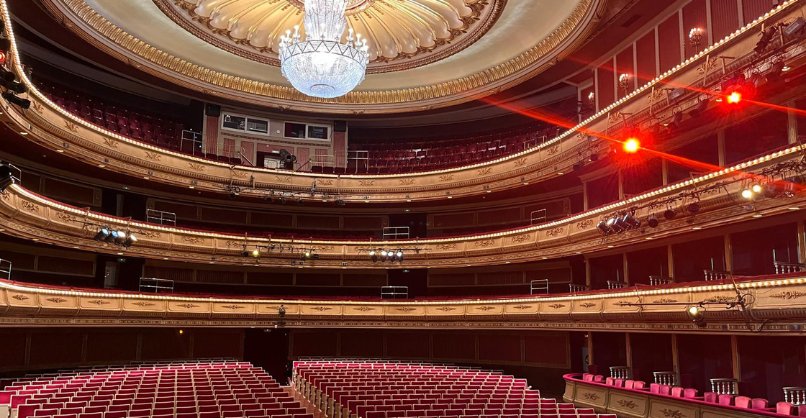
Teatro Real - Madrid LocationPlaza Isabel II, s/n - 28013 Madrid Espagne

  • Venue's Capacity: 1746

The theatre, opened in 1850, became the centre of Madrid’s artistic and social life.

The works performed most were the operas of Verdi, Meyerbeer, Bellini, Donizetti, Rossini and later Wagner. Spanish opera also featured, with works by Ruperto Chapí, Tomás Bretón and Emilio Serrano. In 1916-1917 Ballets Russes de Diaghilev performed here in the presence of Nijinsky and Stravinsky.

Victim of an explosion during the civil war, the rebuilt theatre reopened its doors in 1966 as a concert hall, home of the Orquesta y Coro Nacional de España and later home of the Orquesta y Coro de la RTVE.

In 1977, the theatre was declared a National Monument. But in 1988, the Auditorio Nacional began to put on concerts and this led to the closure of the Teatro Real. It was then completely renovated and reopened in 1997 as a venue mainly for operas and ballets. The reopening of the Teatro Real in Madrid in 1997, completely refurbished and endowed with cutting edge technology for the stage area, lead Spain into an authentic “boom” in the world of opera that has had its repercussion throughout the last decade.

Over the last thirteen years, the theatre has offered 78 new productions, 20 world premières, as well as rescuing more than twenty works of Spanish lyric repertory from oblivion and presenting operas to the Spanish public that have never been seen in Spain, with some of the most important world class signers as protagonists.

In an effort to assure that the opera reach an increasingly diverse audience, the Teatro Real has carried out a variety of activities, from the broadcasting of some of the operas on giant screens outside the theatre, transmission to cinemas, universities, etc.

The recent installation of a sophisticated system for filming operas in HD and their consequent transmission via satellite reinforces the effort of the Teatro Real to each day open its doors a little more to the an international audience, especially to those from Europe and Latin America to whom we have been united by historical and cultural ties for centuries.
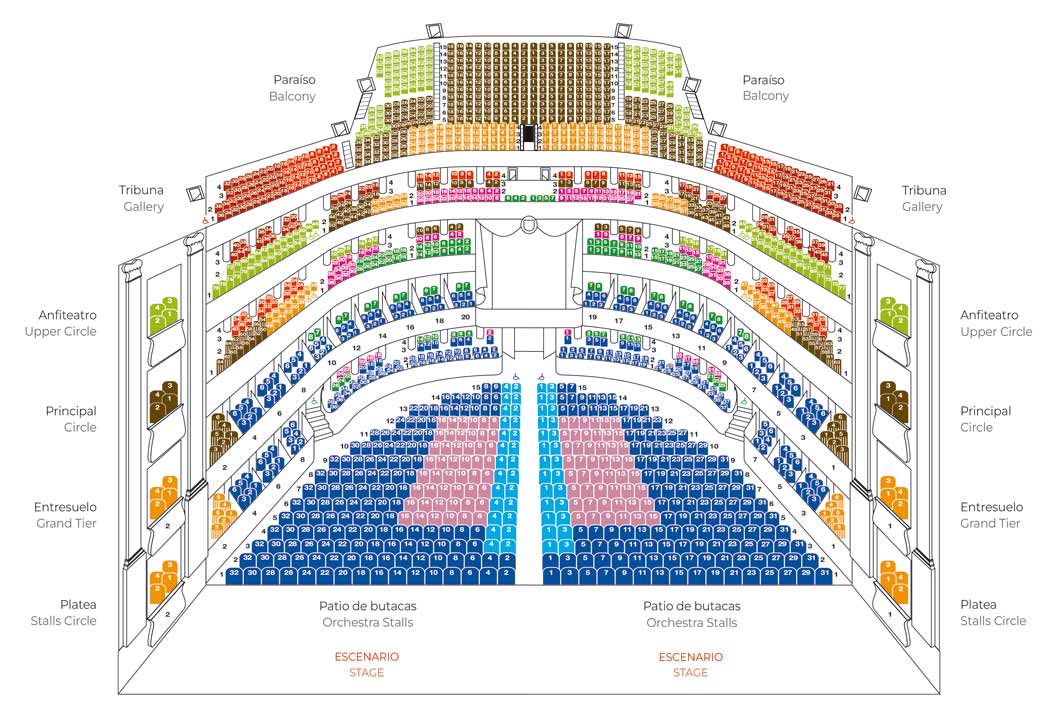

Teatro Real

The seating plan is given as an indication and has no contractual value.
The division of categories may differ depending on shows and dates.

Synopsis

Bluebeard’s Castle

BLUEBEARRD'S CASTLE - EXPLORING THE RECESSES OF HUMAN PSYCHE

Hungarian composer Béla Bartók, inspired by his poet friend Béla Balázs's libretto, conceived the one-act opera, Bluebeard's Castle.

It was first performed in 1918, Budapest. Together with Liszt, Béla Bartók is often considered the greatest composer Hungary ever produced. He was the founder of ethnomusicology, the effect of which could also be noticed in the music of Bluebeard's Castle. The opera initially failed to receive the critical acclaim it deserved. However, with the staging of Bluebeard's Castle at Maggio Musicale Fiorentino in 1938, it experienced a revival.

HISTORY

The solo act of the opera depicts the story of Bluebeard's evolving relationship with his new wife Judith and a peep into his own mind. The two have eloped and are on their way to Blubeard's citadel. The opera's main characters, Bluebeard and Judith, are also the only singers on stage.

The duke, Bluebeard's fortress is an ominously tall dark building with seven locked doors. On Judith's arrival at the scene Bluebeard gives her an opportunity to leave the place in case she does not wish to continue the association with the duke. She decides to stay and also requests the locked doors to be opened. Bluebeard expresses his misgiving, stating, those are private places and should not be explored by outsiders. He also begs Judith not to ask questions. However, he relents following Judith's persistence.

The first door opens to a torture chamber, stained with blood. As a repelled Judith carries on she finds a storehouse of weapons, a treasury, a secret garden and Bluebeard's vast kingdom behind second to fifth gates. Bluebeard pleads her to stop but Judith does not pay heed to his words. The sixth door reveals a lake of tears. At this point Judith accuses Bluebeard of murdering his former wives. She presumes it is their blood that stained Bluebeard's kingdom. Then Bluebeard hands over the last key to Judith.

The seventh door reveals Bluebeard's three former wives, all bejewelled and dressed immaculately. As they emerge silently, an emotional Bluebeard starts praising each of them and at last turns to Judith. A horrified Judith begs the duke to stop, but it proved to be too late. All of Bluebeard's wives, including Judith who is similarly dressed and wearing expensive jewelleries, disappear into a beam of moonlight. The seventh door closes slowly behind them. The duke faces desolation as all is consumed by darkness.

THE MAIN ROLES

Barbe-Bleu, baryton basse
Judith, soprano ou mezzo-soprano
Bluebeard's wives,silent

The characteristic expressionism of Béla Bartók's orchestra and the dissonance of the music heighten the intensity of this psychological drama. The minor second, an interval between two notes, has been successfully used as a reference to blood. The challenging chromaticism of both the vocal part and the haunting storyline make the stage performance of the opera a relative rarity.
Bartók prescribed the usage of large orchestra including the presence of cymbals, tamburo piccolo, celesta etc to evoke the feelings of a conflict ridden mind. The revelations of Bluebeard's subconscious world induce the audience to re-examination the dark abyss of their own souls.

Hungarian Rhapsody No. 2

Piano Concerto No. 1

Teatro Real © Javier del Real

You may also be interested by …