

From €78
< Back to show details
Cavalleria rusticana - Mascagni

Teatro Massimo - Palermo

Select the date of the show

Loading available dates...

Please specify your seating requests regarding your ticket booking (OPTIONAL).
(100 char. max)

Seating

Music & Opera books the best available seats. The exact location of your seats will be confirmed via email. Only adjacent seats can be booked. More information

ANY QUESTIONS ?

Contact us by tel: +33 1 53 59 39 29 – or by Email.) See Help & FAQ page

TICKET DELIVERY INFORMATION

You will receive by mail your voucher to print and exchange at the theater.

Price

Music & Opera ticket prices differ from the ticket face value, as they also include all service fees and taxes.

The Club Music & Opera

Le Club Music & Opera
Join the Club to benefit from special offers. Already Member of the Club, Login !
Cavalleria rusticana - Mascagni

D'Espinosa-Gaetano-(c)-DR

Mascagni Cavalleria Rusticana

From 13 September TO 19 September 2026
Teatro Massimo - Palermo
From 78 €
Prices & Dates
Program

Mascagni : Cavalleria Rusticana

Cast
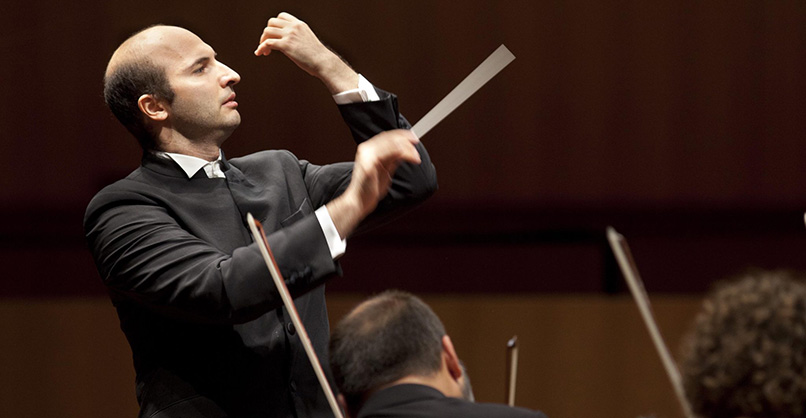
  • Conductor
    Gaetano d'Espinosa
  • Director
    Marco Gandini
  • Performers
    Santuzza: N.N.
    Turiddu: N.N.
  • Venue Info
  • Seating Plan
  • Synopsis

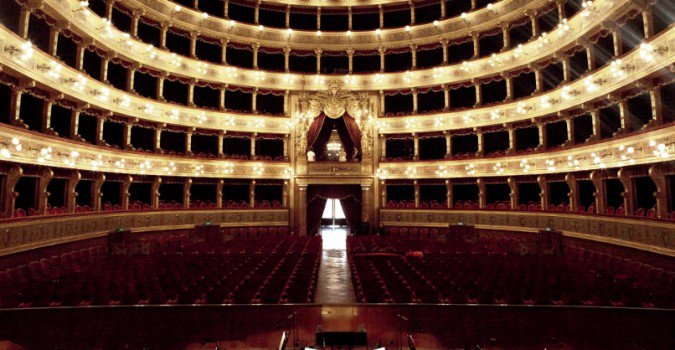
Teatro Massimo - Palermo LocationPiazza Verdi - 90138 Palermo Italie

The history of the construction of the Teatro Massimo is almost as complicated as its reopening. As early as the end of the 18th century, Marquis Domenico Caracciolo lamented that Palermo did not have a lyrical theater befitting the hometown of Alessandro Scarlatti, the man who composed more than one hundred operas. Although the Teatro Carolino was built in 1801, it soon became too cramped and outdated, never suitable for the increasingly lavish productions of the Romantic era.

In 1844, the repertoire was still limited to Cimarosa, Mayr, Rossini, Donizetti, and Bellini. The "Carolino" was even renamed after the latter composer. While the "Bellini," thus named, continued to become outdated, it wasn't until 1851 that the construction of a new building was discussed, 1860 that the authorization appeared in the official journal of Sicily, and 1864 that an architectural competition was launched. Giovanni Battista Filippo Basile's project was chosen: at the architect's death in 1891, the Opera House was still not finished! Expropriating clergymen, solving technical problems, considering changing the project, and in the meantime, even building the Politeama for current performances all caused delays. It wasn't until 1897 that the "Massimo" finally opened its doors...

One could then applaud Enrico Caruso, a young and little-known tenor, on the theatre's stage, as well as singers such as Gigli, Stabile, and Gino Bechi, among the pride and joy of the Italian school. But it was only after the Second World War that the Massimo lived its heyday: conductors such as the young Giulini, Klemperer, and Scherchen came to lead the orchestra, Callas came to sing Brunnhilde and Norma, Sutherland was a revelation in the role of Lucia, while Szymanowski, Honegger, Dallapiccola and Stravinsky, amongst others, were performed....
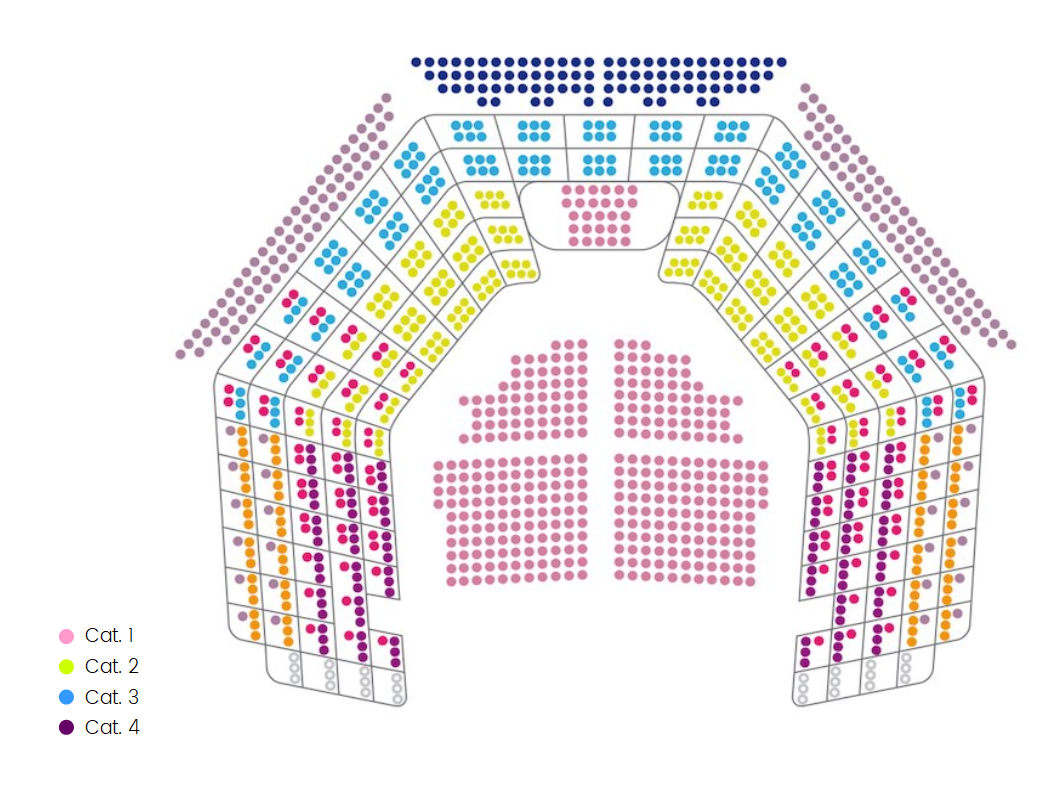

Teatro Massimo

The seating plan is given as an indication and has no contractual value.
The division of categories may differ depending on shows and dates.

Synopsis

Cavalleria Rusticana

CAVALLERIA RUSTICINA, A HEARTFELT LOVE STORY

Cavalleria Rusticina is an opera played in one act written by Pietro Mascagni. It is an award winning love poetic story that was composed in 1890. It is a heartfelt love story about a love affair that goes sour leaving the audience overwhelmed with sadness. The performance is spectacular with a perfectly set design and attractive costumes. The story is engaging, easy to follow and very interesting. The actors are well poised and have wonderful voices and perform their roles with much passion.  Cavalleria Rusticina has a lot of entertaining melodies and hymns.

HISTORY


Cavalleria Rusticinawas composed in the late 19th century and has gone on to become one of the worlds' most popular and loved plays ever performed. It's about two lovers who are separated by distance but brought together by fate. Although they both have different partners, they have an affair which ends up destroying both their lives and their partners'. It also results to the death of one of the characters, Turiddu.

Act 1

The play starts with Turiddu who is the main character swiftly singing about his former fiancée who is now Alfio's wife. He has returned from military service only to find his fiancée Lola married to someone else. This really breaks his heart and he decides to take revenge by seducing a young peasant village girl named Santuzza. As the Opera continues, Lola gets jealous of Santuzza and begins having an affair with Turiddu. They have to keep hiding their relationship from both their partners and the villagers.

On the feast of Easter, Turiddu's singing is heard from one corner of the church a few meters from his mothers' wine shop. As some villagers move around the village while singing others enter the church as they hymn to the blessed virgin.

Act 2

Santuzza becomes aware of Turridu's infidelity and goes looking for her handsome knight at his mothers' wine shop. Lucia, his mother, tells her that she had sent him to another town to fetch some wine. Before Santuzza could tell her of the whereabouts of her son, Alfio, Lolas' husband shows up asking for some wine. Lucia informs him of the situation at hand and he claims to have seen Turiddu early that morning near his cottage. The two women leave to join the choir outside the church.

Act 3

The villagers finish the mass and head to their homes. Turiddu is seen expressing vigorous excitement because he is with his one and only love, Lola. He and his friends head to his mothers' wine shop and sing a drinking song. Alfio joins them, not to drink with them but fight with Turiddu for Lolas' love.


Epilogue


The fight leads to Turiddu's death. On announcement of the news of Turridu's, Santuzza faints and Lucia collapses in the hands of the village women.

MAIN ROLES

Santuzza, A peasant girl, soprano

Turiddu, Lola's lover, bass-baritone

Lucia, Turiddu's mother, soprano

Alfio, Lola's husband, bass

Lola, Turiddu's lover, baritone.

Teatro Massimo

You may also be interested by …

Pay in 3 installments 26,00€ with interest-free. Learn more