

From €110
< Back to show details
Madama Butterfly - Puccini

Teatro di San Carlo - Napoli

Select the date of the show

Loading available dates...

Please specify your seating requests regarding your ticket booking (OPTIONAL).
(100 char. max)

Seating

Music & Opera books the best available seats. The exact location of your seats will be confirmed via email. Only adjacent seats can be booked. More information

ANY QUESTIONS ?

Contact us by tel: +33 1 53 59 39 29 – or by Email.) See Help & FAQ page

TICKET DELIVERY INFORMATION

You will receive by email, your E-tickets to be printed or downloaded on your mobilephone.

Price

Music & Opera ticket prices differ from the ticket face value, as they also include all service fees and taxes.

The Club Music & Opera

Le Club Music & Opera
Join the Club to benefit from special offers. Already Member of the Club, Login !
Madama Butterfly - Puccini

© Teatro di San Carlo

Puccini Madama Butterfly

From 19 January TO 23 January 2027
Teatro di San Carlo - Napoli
From 110 €
Prices & Dates
Program

Puccini : Madama Butterfly 130 mn

Sung in : Italian
Cast
  • Conductor
    Francesco Ivan Ciampa
  • Director
    Ferzan Özpetek
  • Performers
    Cio-Cio San: Karah Son
    Pinkerton: Giorgio Berrugi
    Suzuki: Chiara Tirotta
    Sharpless: Andrea Piazza
    Goro: Orlando Polidoro
    Bonzo: Antimo Dell’Omo
  • Venue Info
  • Seating Plan
  • Synopsis

Teatro di San Carlo - Napoli LocationVia San Carlo, 98F - 80132 Napoli Italie

  • Venue's Capacity: 1386

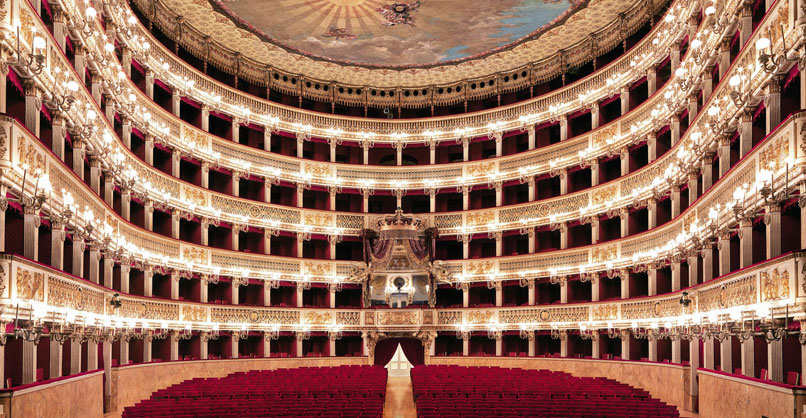
The "San Carlo" is the world's oldest opera house still in activity. Right from the start, in 1737, people came from far and wide to admire the theatre's excellent 42-musician orchestra, and to applaud the castratos trained at the Naples Conservatory (like the famous Farinelli), as well as divas known by their nicknames, "la Parruchierrina," or "la Bastarella," for example. And the house in itself, with its sumptuous architecture and no less than six stories of boxes, was no minor attraction: Stendhal was enchanted by the hall's charm, and Paul Klee was fascinated by what he described as this "superb, heavy, and obscure theatre."

In 1816, fire burned down the theatre, and Ferdinand de Bourbon reconstructed an identical building with amazing speed, for Naples, robbed of its opera house, was plunged in mourning, and threatened to not support its sovereign. Let's not forget that at that time, the reign of Domenico Barbaja (nicknamed "The Prince of Impresarios" by Alexander Dumas) had already begun brilliantly. In 1815. this Milanese ex-cafe waiter, who is often credited with the invention of whipped-cream, had had the brilliant idea of hiring Gioacchino Rossini in person as the theatre's artistic director. This exceptional LUCIA DI LAMMERMOOR for the San Carlo), while launching, in 1826, a young composer called Vincenzo Bellini. The Neapolitan stage became the place where several singers' careers were made or broken; the famous French tenor Adolphe Nourrit, for example, who considered that the applause had not been sufficient, commited suicide after a performance at the San Carlo. The composer Saverio Mercadante then won the favours of the San Carlo's notorious audience, to such an extent that Verdi at first felt ill at ease in the theatre. Only to better triumph in 1872, when he organized an entire season, and had an orchestra pit added.

During the twentieth century, the stars of the Scala have sometimes overshadowed those of the San Carlo, an historic rivalry that has always existed, in a country where music lovers must choose sides. But the Neapolitan stage defends itself by ever enriching, even to this day, the world's largest repertoire of works ever premiered in an opera house, while legendary singers, such as Beniamino Gigli (who performed in the theatre from 1915 to 1953), have always remained exceptionally faithful to the San Carlo audience, which also happens to be one of the warmest anyone could imagine.
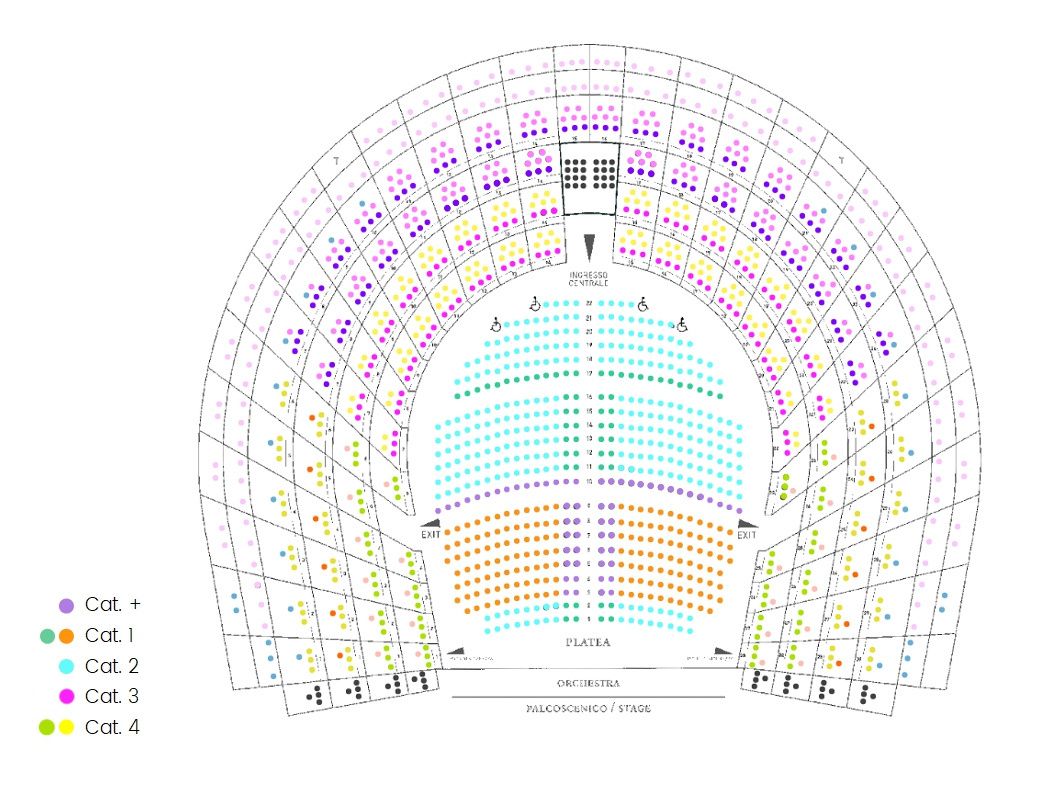

Teatro di San Carlo

The seating plan is given as an indication and has no contractual value.
The division of categories may differ depending on shows and dates.

Synopsis

Madama Butterfly

Find out the upcoming dates for Puccini's opera Madama Butterfly, and book your tickets now for Madama Butterfly.

No other opera offers a more sublime death than that of Cio-Cio-san, the endearing heroine of Madama Butterfly. Puccini's marvellous music and the ultimate sacrifice of this passionate but neglected lover can only leave hearts of stone unmoved.

Delicacy and restraint define this tragedy in three acts. In the intimacy of a Japanese home, the hopes and pain of a young woman madly in love are expressed. The unspoken dramatic tension, compassion and pity are underlined by an extremely rich melodic line, discreetly punctuated by seven authentically Japanese melodies. The music is at the service of a sincere love and a scorned honour that lead to the final tragedy. The ‘un bel di vedremo’, vibrant with love and trust, is the musical climax of the work.

THE STORY

Nagasaki, early 20th century. An American naval lieutenant, Pinkerton, marries a young geisha, Cio-Cio san, nicknamed Madam Butterfly. After he leaves, Butterfly waits faithfully for him, especially as she has had a son. Pinkerton returns three years later, but accompanied by his American wife. He wants to adopt the young boy. In despair and disgrace, Butterfly takes her own life.

PRINCIPALS CARACTERS 

  • Cio-Cio-San, a young geisha known as "Madame Butterfly", soprano.
  • Suzuki, her maid, mezzo-soprano.
  • Benjamin Franklin Pinkerton, Lieutenant in the US Navy, tenor.
  • Sharpless, US Consul in Nagasaki, baritone.
© Teatro di San Carlo

You may also be interested by …

Pay in 3 installments 36,67€ with interest-free. Learn more