


From €221
< Back to show details
Aida - Verdi

Teatro di San Carlo - Napoli

Select the date of the show

Loading available dates...


Seating

Music & Opera books the best available seats. The exact location of your seats will be confirmed via email. Only adjacent seats can be booked. More information

ANY QUESTIONS ?

Contact us by tel: +33 1 53 59 39 29 – or by Email.) See Help & FAQ page

TICKET DELIVERY INFORMATION

You will receive by email, your E-tickets to be printed or downloaded on your mobilephone.

Price

Music & Opera ticket prices differ from the ticket face value, as they also include all service fees and taxes.

The Club Music & Opera

Le Club Music & Opera
Join the Club to benefit from special offers. Already Member of the Club, Login !
Aida - Verdi

Netrebko Anna © Rubio Dalmau Olga

Verdi Aida

The 06 September 2026
Teatro di San Carlo - Napoli
From 221 €
Prices & Dates
Program

Verdi : Aida 160 mn

Sung in : Italian
Cast
  • Orchestra e Coro del Teatro di San Carlo
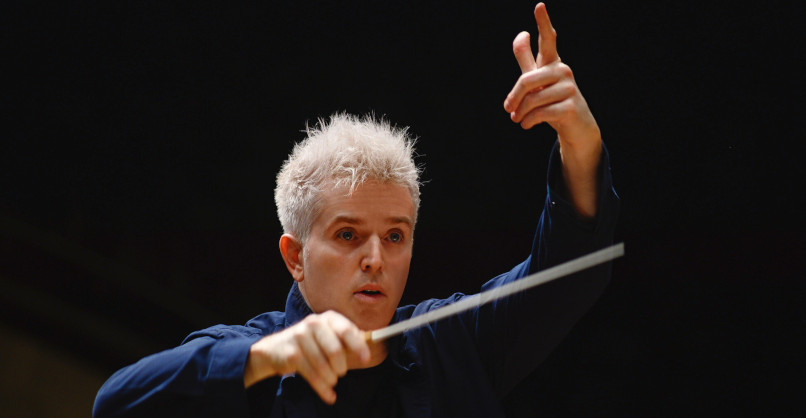
  • Conductor
    Riccardo Frizza
  • Director
    Concert Version
  • Performers
    Aida: Anna Netrebko
    Radamès: Jonas Kaufmann
    Amneris: Elizabeth DeShong
    Amonasro: Luca Salsi
    Ramfis: Alexander Köpeczi
    Il Re: Andrea Pellegrini
  • Venue Info
  • Seating Plan
  • Synopsis

Teatro di San Carlo - Napoli LocationVia San Carlo, 98F - 80132 Napoli Italie

  • Venue's Capacity: 1386

The "San Carlo" is the world's oldest opera house still in activity. Right from the start, in 1737, people came from far and wide to admire the theatre's excellent 42-musician orchestra, and to applaud the castratos trained at the Naples Conservatory (like the famous Farinelli), as well as divas known by their nicknames, "la Parruchierrina," or "la Bastarella," for example. And the house in itself, with its sumptuous architecture and no less than six stories of boxes, was no minor attraction: Stendhal was enchanted by the hall's charm, and Paul Klee was fascinated by what he described as this "superb, heavy, and obscure theatre."

In 1816, fire burned down the theatre, and Ferdinand de Bourbon reconstructed an identical building with amazing speed, for Naples, robbed of its opera house, was plunged in mourning, and threatened to not support its sovereign. Let's not forget that at that time, the reign of Domenico Barbaja (nicknamed "The Prince of Impresarios" by Alexander Dumas) had already begun brilliantly. In 1815. this Milanese ex-cafe waiter, who is often credited with the invention of whipped-cream, had had the brilliant idea of hiring Gioacchino Rossini in person as the theatre's artistic director. This exceptional LUCIA DI LAMMERMOOR for the San Carlo), while launching, in 1826, a young composer called Vincenzo Bellini. The Neapolitan stage became the place where several singers' careers were made or broken; the famous French tenor Adolphe Nourrit, for example, who considered that the applause had not been sufficient, commited suicide after a performance at the San Carlo. The composer Saverio Mercadante then won the favours of the San Carlo's notorious audience, to such an extent that Verdi at first felt ill at ease in the theatre. Only to better triumph in 1872, when he organized an entire season, and had an orchestra pit added.

During the twentieth century, the stars of the Scala have sometimes overshadowed those of the San Carlo, an historic rivalry that has always existed, in a country where music lovers must choose sides. But the Neapolitan stage defends itself by ever enriching, even to this day, the world's largest repertoire of works ever premiered in an opera house, while legendary singers, such as Beniamino Gigli (who performed in the theatre from 1915 to 1953), have always remained exceptionally faithful to the San Carlo audience, which also happens to be one of the warmest anyone could imagine.
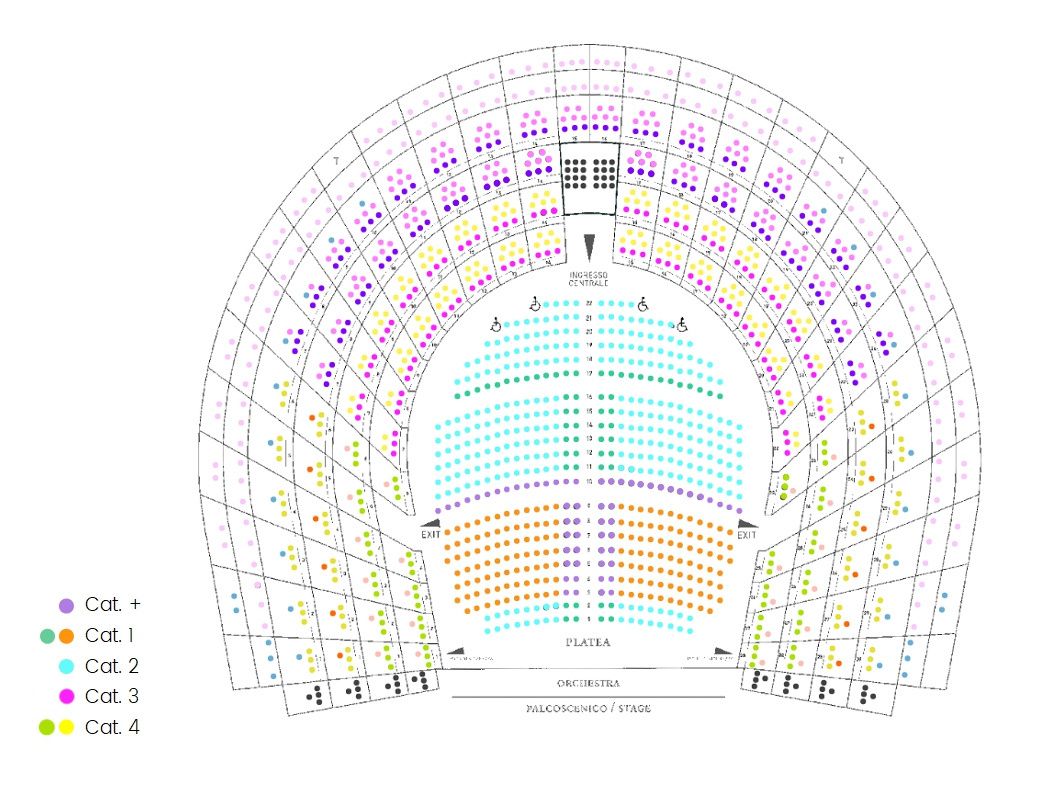

Teatro di San Carlo

The seating plan is given as an indication and has no contractual value.
The division of categories may differ depending on shows and dates.

Synopsis

Aida

The grand decorum of Verdi's Aida should not obscure the fact that the intimate is at the heart of the work. 

A love story of infinite sweetness set against a political backdrop, the opera offers a wide range of emotions. As with all Verdi's masterpieces, only the greatest voices can do justice to the fabulous vocal writing.

Listen to the Music & Opera playlist : 

This opera in four acts is world-famous for its triumphal march (the trumpets of Aida), which sometimes makes us forget just how rich and complex Verdi's music is in this work. Often martial and emphatic in its accompaniment of victorious armies, it also conveys the torments of human passions: love, tenderness or jealousy...

Gentle and harmonious in the prelude to the first act, passionate and dramatic in the love scenes, the score becomes poignant to accompany the death of the lovers. In Egypt, at the time of the Pharaohs, the Ethiopian king Amonasro threatens to attack Thebes and the Nile valley. The young Egyptian captain Radames is in love with a pretty Ethiopian slave, Aida, but he does not know that she is Amonasro's daughter. For her part, Amneris, the Pharaoh's daughter, is infatuated with Radames. Jealousy and passion, against a backdrop of war and betrayal, lead to the deaths of Radames and the young slave girl.

MAIN CHARACTERS

  • Aida, Ethiopian slave girl, soprano.
  • Radames, Egyptian captain, tenor.
  • Amneris, daughter of Pharaoh, mezzo-soprano.
  • Amonasro, king of Ethiopia, baritone.
  • Ramphis, high priest, bass.
© Teatro di San Carlo

You may also be interested by …

Pay in 3 installments 73,67€ with interest-free. Learn more