


From €182
< Back to show details
Hungarian Rhapsody No. 2 - Liszt / Piano Concerto No. 1 - Liszt / Bluebeard’s Castle - Bartók

Teatro dell'Opera - Roma

Select the date of the show

Loading available dates...

Please specify your seating requests regarding your ticket booking (OPTIONAL).
(100 char. max)

Seating

Music & Opera books the best available seats. The exact location of your seats will be confirmed via email. Only adjacent seats can be booked. More information

ANY QUESTIONS ?

Contact us by tel: +33 1 53 59 39 29 – or by Email.) See Help & FAQ page

TICKET DELIVERY INFORMATION

Your E-tickets to be printed will be sent by mail.

Price

Music & Opera ticket prices differ from the ticket face value, as they also include all service fees and taxes.

The Club Music & Opera

Le Club Music & Opera
Join the Club to benefit from special offers. Already Member of the Club, Login !
Hungarian Rhapsody No. 2 - Liszt / Piano Concerto No. 1 - Liszt / Bluebeard’s Castle - Bartók

Netrebko Anna © Rubio Dalmau Olga

Concert

The 04 December 2026
Opening date: 08 October 2026
Teatro dell'Opera - Roma
From 182 €
Prices & Dates
Program

Bartók : Bluebeard’s Castle

Liszt : Hungarian Rhapsody No. 2

Liszt : Piano Concerto No. 1

Cast
  • Hungarian Radio Symphony Orchestra
  • Conductor
    Henrik Nánási
  • Director
    Concert Version
  • Performers
    Misi Boros
    Alexander Köpeczi
    Anna Netrebko
  • Venue Info
  • Seating Plan
  • Synopsis

Teatro dell'Opera - Roma LocationPiazza Beniamino Gigli, 7 - 00187 Roma Italie

  • Venue's Capacity: 1400

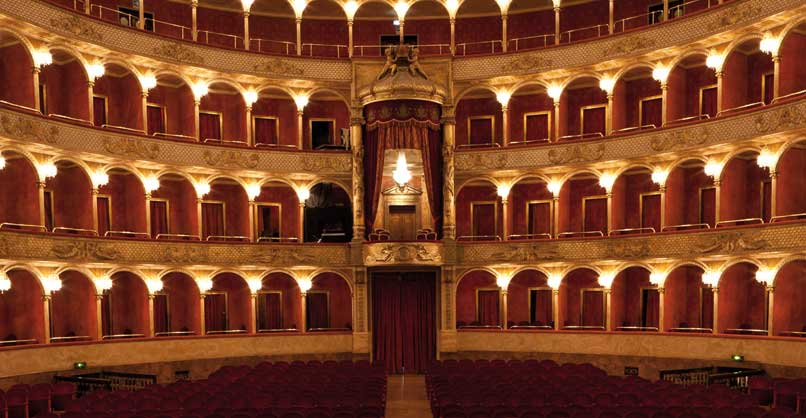
Even though there is proof that an opéra performance took place in Rome as early as 1606, (Agazzari's EUMELIO), the Pope's ban on théâtre and opéra performances was for many years an obstacle in the local development of opéra. In spite of the fact that a public opéra théâtre was inaugurated in 1697, no major composer was linked with the papal city until the opening of the présent opéra house in 1880. Opéra in Rome was far from inexistent during the nineteenth century: Rossini came to première his BARBER OF SEVILLE at the Teatro Argentina in 1816, and Verdi four of his works, including II TROVATORE (1853) and UN BALLO IN MASCHERA (1859) at the Teatro Apollo.

But in 1877, the city that had in the meantime become the capital of Italy was still without a modem opéra house. Domenico Costanzi, who had made a fortune in the hôtel business, had the good idea of bequeathing his name to the Eternal City by funding the construction of an opéra house, which was opened three years later. Roman operatic life was thus revived, and, from 1880 to 1926, the Teatro Costanzi hosted no less than 46 world premières and 120 Roman premières. Thèse premières, ail signed by Italian composers, included triumphant performances of Mascagni's CAVALLERIA RUSTICANA and Puccini's TOSCA. Furthermore, it was here that the Roman public discovered PARSIFAL in 1884, while Toscanini made his Roman début in the house's pit, conducting... CARMEN. In 1926. the théâtre fell into the hands of the fascist state, which renovated and modernized the building. When the house reopened two years later, rebaptized "Teatro Reale dell'Opera", the tradition of "national"premières was of course pursued, and one could hear composers such as Respighi and Malipiero, as weil as Stravinsky, Richard Strauss, and even Berg's WOZZECK in 1942. In 1937, the now famous open-air summer concerts were inaugurated in the Caracalla thermal baths.

In 1946, the institution adopted the name of Teatro dell'Opera and interna-tionalized its répertoire, while remaining faithful to contemporary music, as works by composers such as Britten, Honegger, Hindemith, Janâcek, and Henze were performed. It was also on this stage that Renata Tebaldi was applauded in 1948, and Maria Callas (in the rôle of Kundry in PARSIFAL!) in 1949. In spite offinancial difficulties, the house's artistic directors have, during these last few décades, deftly managed to keep alive the creativity and the luster of the Roman stage.
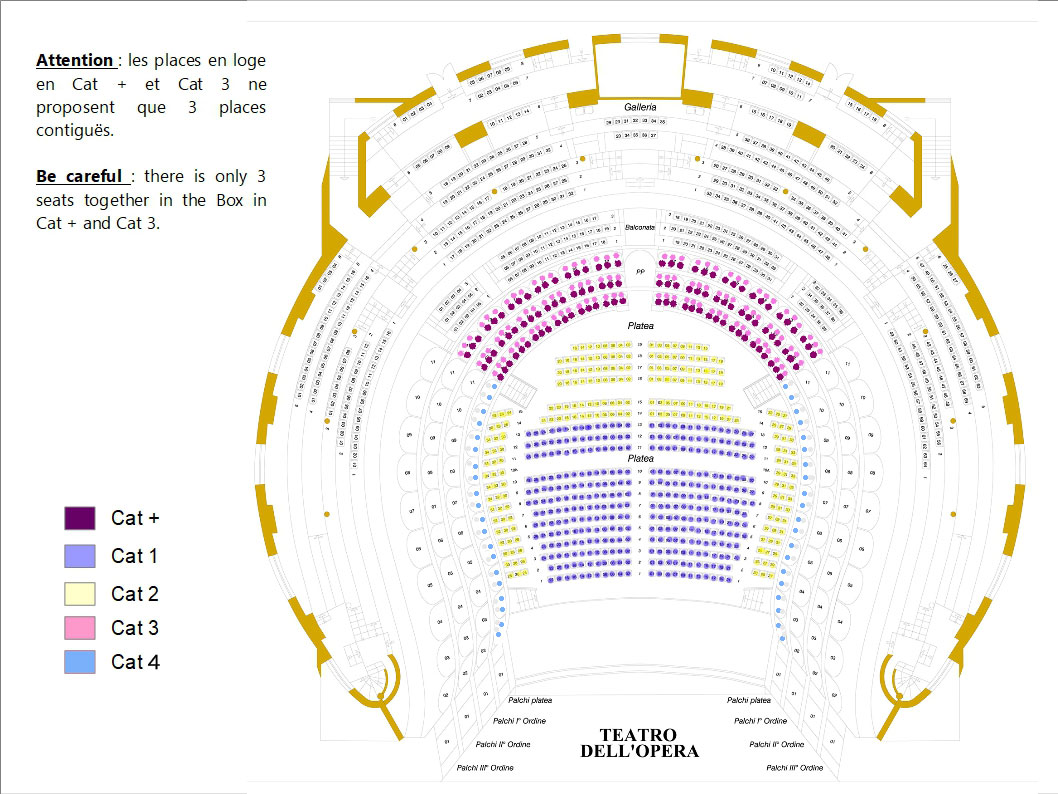

Teatro dell'Opera

The seating plan is given as an indication and has no contractual value.
The division of categories may differ depending on shows and dates.

Synopsis

Bluebeard’s Castle

BLUEBEARRD'S CASTLE - EXPLORING THE RECESSES OF HUMAN PSYCHE

Hungarian composer Béla Bartók, inspired by his poet friend Béla Balázs's libretto, conceived the one-act opera, Bluebeard's Castle.

It was first performed in 1918, Budapest. Together with Liszt, Béla Bartók is often considered the greatest composer Hungary ever produced. He was the founder of ethnomusicology, the effect of which could also be noticed in the music of Bluebeard's Castle. The opera initially failed to receive the critical acclaim it deserved. However, with the staging of Bluebeard's Castle at Maggio Musicale Fiorentino in 1938, it experienced a revival.

HISTORY

The solo act of the opera depicts the story of Bluebeard's evolving relationship with his new wife Judith and a peep into his own mind. The two have eloped and are on their way to Blubeard's citadel. The opera's main characters, Bluebeard and Judith, are also the only singers on stage.

The duke, Bluebeard's fortress is an ominously tall dark building with seven locked doors. On Judith's arrival at the scene Bluebeard gives her an opportunity to leave the place in case she does not wish to continue the association with the duke. She decides to stay and also requests the locked doors to be opened. Bluebeard expresses his misgiving, stating, those are private places and should not be explored by outsiders. He also begs Judith not to ask questions. However, he relents following Judith's persistence.

The first door opens to a torture chamber, stained with blood. As a repelled Judith carries on she finds a storehouse of weapons, a treasury, a secret garden and Bluebeard's vast kingdom behind second to fifth gates. Bluebeard pleads her to stop but Judith does not pay heed to his words. The sixth door reveals a lake of tears. At this point Judith accuses Bluebeard of murdering his former wives. She presumes it is their blood that stained Bluebeard's kingdom. Then Bluebeard hands over the last key to Judith.

The seventh door reveals Bluebeard's three former wives, all bejewelled and dressed immaculately. As they emerge silently, an emotional Bluebeard starts praising each of them and at last turns to Judith. A horrified Judith begs the duke to stop, but it proved to be too late. All of Bluebeard's wives, including Judith who is similarly dressed and wearing expensive jewelleries, disappear into a beam of moonlight. The seventh door closes slowly behind them. The duke faces desolation as all is consumed by darkness.

THE MAIN ROLES

Barbe-Bleu, baryton basse
Judith, soprano ou mezzo-soprano
Bluebeard's wives,silent

The characteristic expressionism of Béla Bartók's orchestra and the dissonance of the music heighten the intensity of this psychological drama. The minor second, an interval between two notes, has been successfully used as a reference to blood. The challenging chromaticism of both the vocal part and the haunting storyline make the stage performance of the opera a relative rarity.
Bartók prescribed the usage of large orchestra including the presence of cymbals, tamburo piccolo, celesta etc to evoke the feelings of a conflict ridden mind. The revelations of Bluebeard's subconscious world induce the audience to re-examination the dark abyss of their own souls.

Hungarian Rhapsody No. 2

Piano Concerto No. 1

Teatro dell'Opera © Silvia Lelli

You may also be interested by …