


From €75
< Back to show details
La Calisto - Cavalli

Staatsoper Unter den Linden - Berlin

Select the date of the show

Loading available dates...

Please specify your seating requests regarding your ticket booking (OPTIONAL).
(100 char. max)

Seating

Music & Opera books the best available seats. The exact location of your seats will be confirmed via email. Only adjacent seats can be booked. More information

ANY QUESTIONS ?

Contact us by tel: +33 1 53 59 39 29 – or by Email.) See Help & FAQ page

TICKET DELIVERY INFORMATION

You will receive by mail your voucher to print and exchange at the theater.

Price

Music & Opera ticket prices differ from the ticket face value, as they also include all service fees and taxes.

The Club Music & Opera

Le Club Music & Opera
Join the Club to benefit from special offers. Already Member of the Club, Login !
La Calisto - Cavalli

Giuseppina Briddeli © G . Rizzotti

Cavalli La Calisto

From 08 November TO 21 November 2026
Staatsoper Unter den Linden - Berlin
From 75 €
Prices & Dates
Program

Cavalli : La Calisto

Cast
  • Akademie für Alte Musik Berlin
    L'Arpeggiata
  • Conductor
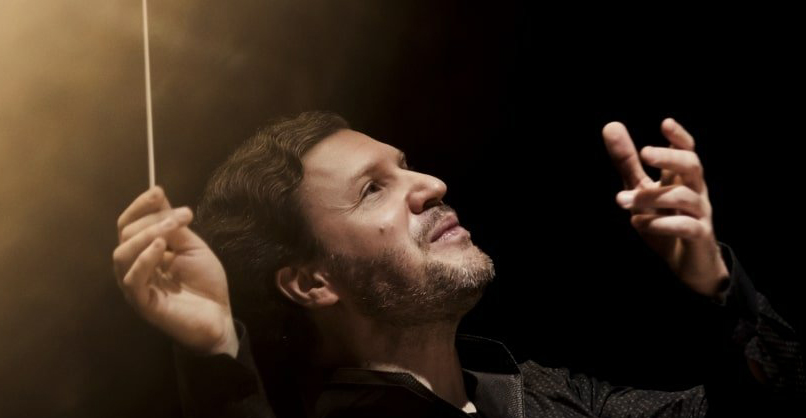
    Christina Pluhar
  • Director
    Stefan Herheim
  • Performers
    Calisto: Vera-Lotte Boecker
    Diana: Luciana Mancini
    Giove: Milan Siljanov
    Mercurio: Renato Dolcini
    Endimione: Arnaud Gluck
    Eternità: Giuseppina Bridelli
    Linfea: Marcel Beekman
    Satirino: Jake Arditti
    Silvano: João Fernandes
  • Venue Info
  • Seating Plan
  • Synopsis

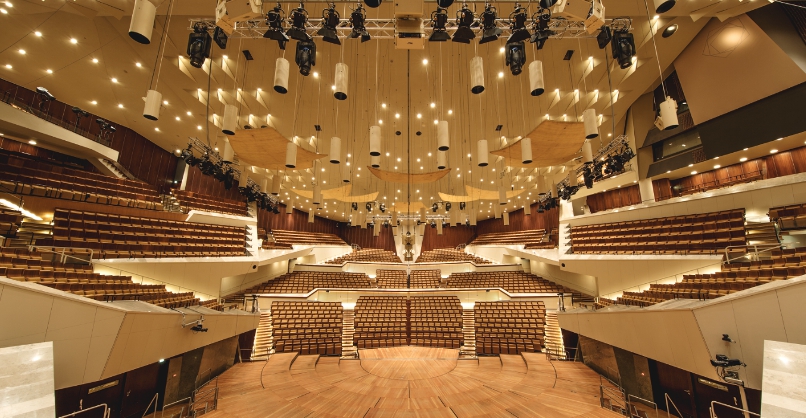
Staatsoper Unter den Linden - Berlin LocationUnter den Linden 7 - 10117 Berlin Allemagne

When the opera house situated on the Lindenallee was inaugurated in 1742, Frederick the Great intended to turn it into the cultural symbol of his ideal capital, the hub of the "Forum Fridericianum." This "enchanted palace," as the enlightened despot called it, is one of the rare vestiges of the old city still visible today, and a large part of German musics cultural heritage is contained within its walls. The Berlin Staatskapelle, for example, the orchestra connected with the opera, was founded in 1570 and the list of its permanent conductors includes names such as those of Meyerbeer, Mendelssohn, Richard Strauss, Furtwangler, Klemperer and Karajan! During the 19th century, the Berlin Opera remained a royal opera, where Weber's FREISCHUTZ was premiered. The activities of the Berlin Staatskapelle developed under Spontini's responsability, the first "Preussischer Generalmusikdirektor," ever appointed. This goes to show the importance of the ensemble in German musical life at that time, an importance which constantly grew, especially after the "Sinfonie-Soireen" were created in 1842, open to the public by subscription.

In 1919, the Royal Opera became a state opera, and played an active role in the exhuberant artistic activity that rocked Germany during the twenties: Erich Kleiber presented Berg's WOZZECK and popular harmonies of composers such as Kurt Weill resounded in this shrine of the lyrical repertoire, until Nazism cut short a period of intense creativity. During the war, Karajan forged his reputation in the theatre, until bombs destroyed the building, partially in 1941, and completely in 1945.

Because of its geographical situation, the Staatsoper became, in 1949, the Opera of East Berlin. In 1955, the East German administration reinstalled the company in its illustrious hall, rebuilt along the original plans, and one could soon applaud singers such as Peter Schreier and Theo Adam on its stage, musicians who helped create a truly Eastern German singing tradition.

Since the German reunification, the institution has been completely reorganized, especially under the impetus of Daniel Barenboim, who became its General Music Director in 1992. Proud of its impressive history, the present day Opera Unter den Linden hardly neglects its baroque beginnings, and it henceforth counts amongst those that most often produce pre-Mozartian lyrical works, such as CLEOPATRA E CESARE by Graun which opened the Opera's first season in 1742. But the house also commissions works by Pierre Boulez, while defending the traditional repertoire, in which Wagner occupies a large place. By thus juxtaposing tradition and innovation, the Opera Unter den Linden has become one of the institutions most representative of Berlin's new dynamism.


Staatsoper Unter den Linden

The seating plan is given as an indication and has no contractual value.
The division of categories may differ depending on shows and dates.

Synopsis

La Calisto

LA CALISTO, A SUPERB REDISCOVERED CLASSIC OPERA

A critical and commercial failure when first performed in Venice in 1651, this opera was left undiscovered until it was found and published by British conductor Raymond Leppard. Performed for the first time in the 20th century at the Glendebourne Festival in 1970, the opera has been reworked by Leppard and later composers to make it more accessible to modern audiences. The opera was only performed eleven times during its original run in Venice with the original score by Francesco Cavalli and libretto by Giovanni Faustini, also a producer, Faustini backed the performance until his death in the same year as the first performance.

HISTORY

Based on the myth of the nymph Calisto, this opera is presented in three acts and blends a number of myths regarding the nymph of the title and the God Jove. After being awarded a star in the heavens, Calisto attracts the attentions of Jove who decides to begin an affair with her. The nymph has promised the Goddess Diana that she will die a virgin, Jove disguises himself as Diana and then attracts the wrath of his wife who hears of his plan.

Act 1

La Calisto begins with the beauty of the nymph being discussed as she is awarded a star in the heavens. Giove and Mercurio are ensuring the world is safe when they discover Calisto complaining about the lack of drinking water, Giove is attracted to the nymph and provides a supply of water. Calisto reveals she is a follower of Giove's daughter Diana and will die a virgin, Mercurio and Giove decide that the God should disguise himself as Diana to attract the nymph. Diana appears with Endimione, who becomes jealous when Diana and Calisto share a kiss. Linfea and Silvano then try and revive Pan, who is unhappy at not being permitted to take his love for Diana any further.

Act 2

Diana and Endimione share a kiss at the beginning of act two and secretly declare their love for each other. It is soon revealed that the Diana who shared a kiss with Calisto is in fact Giove in disguise, his wife Giunone overhears her husband discussing Calisto and swears revenge on the nymph. Endimione finds Giove disguised as Diana and declares his love for her, Pan and Silvano overhear this and take Endimione captive in a fit of jealousy.

Act 3

Giove is now disguised as Diana and meets Calisto, but is shocked to find his wife is already there and has turned his lover into a bear. Diana, in the meantime rescues Endimione from Pan and decides to keep him as her lover in a state of eternal sleep. Unable to return Calisto to her rightful form, Giove declares his love for her and positions the stars of Ursa Major in her form of the bear.

MAIN ROLES

Calisto, a Nymph, Soprano
Giove, a God, Bass
Diana, Giove's Daughter, Soprano
Giunone, Giove's Wife, Soprano
Pan, God of the Woods, Alto

   
Staatsoper Unter den Linden

You may also be interested by …

Pay in 3 installments 25,00€ with interest-free. Learn more