


From €99
< Back to show details
Un ballo in maschera - Verdi

Staatsoper - Hamburg

Select the date of the show

Loading available dates...

Please specify your seating requests regarding your ticket booking (OPTIONAL).
(100 char. max)

Seating

Music & Opera books the best available seats. The exact location of your seats will be confirmed via email. Only adjacent seats can be booked. More information

ANY QUESTIONS ?

Contact us by tel: +33 1 53 59 39 29 – or by Email.) See Help & FAQ page

TICKET DELIVERY INFORMATION

You will receive by mail your voucher to print and exchange at the theater.

Price

Music & Opera ticket prices differ from the ticket face value, as they also include all service fees and taxes.

The Club Music & Opera

Le Club Music & Opera
Join the Club to benefit from special offers. Already Member of the Club, Login !
Un ballo in maschera - Verdi

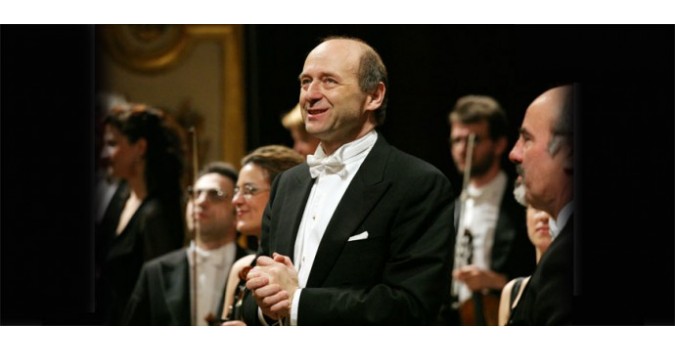
Alexey Markov (c) DR

Verdi Un Ballo in Maschera

From 02 April TO 06 April 2027
Staatsoper - Hamburg
From 99 €
Prices & Dates
Program

Verdi : Un Ballo in Maschera 135 mn

Sung in : Italian
Cast
  • Conductor
    Francesco Ivan Ciampa
  • Director
    Alexander Schulin
  • Performers
    Riccardo (Gustave III): Anthony Ciaramitaro
    Amelia: Saioa Hernández
    Renato (Ankarstroem): Alexey Markov
    Ulrica (Arvidson): Annika Schlicht
    Oscar: Narea Son
  • Venue Info
  • Seating Plan
  • Synopsis

Staatsoper - Hamburg LocationGrosse Theaterstrasse 25 - 20354 Hamburg Allemagne

During their frequent journeys to Venice, the merchants of Hamburg had many a chance to note the success of Europe's first public opera, opened in 1637. In 1678, some of these rich bourgeois thus founded, on the Geese Market, a permanent opera. It was the first in Germany, a fact of which the Hamburgers were very proud. Driven by a strong sense of nationalism that preferred to blatently ignore French and Italian opera, as well as a shrewd business acumen, Hamburg's Opern-Theatrum specialized in defending the German lyrical repertoire, ins-pite of the clergy's prostests and heated debates that reached as far as the University of Iena. In 1738, the hall went bankrupt, ruined by the public's renewed interest in Italian opera. A new building was constructed in 1765, billing both theatre and lyrical works.


It was not before 1827 that the location of the actual Staatsoper became that of an opera house. At first, the German Weber, the Italian Rossini, and the Frenchman Auber shared the billing, before Wagner and Verdi (performed here as of 1845, for the first time in Germany) became the house's undisputed stars. Gustav Mahler was appointed at the Opera's head in 1891. Under his direction, the opera freshened up its rather conventional programming (and became equipped with electricity). Mahler hired the young Bruno Walter as coach, before another of his proteges, Otto Klemperer, took over the musical direction of the institution in 1910.


Greatly affected by the financial crisis that followed the First World War, and partially destroyed during the Second, the Opera opened in 1946 with difficulty, performing in front of 600 spectators seated around what remained of the stage. But the company, that included names such as Hans Hotter, Martha Modi, Hermann Prey, Elisabeth Grümmer, and Astrid Varnay, rapidely acquired an international reputation.


Staatsoper

The seating plan is given as an indication and has no contractual value.
The division of categories may differ depending on shows and dates.

Synopsis

Un Ballo in Maschera

If you like your opera with a touch of politics then you will enjoy Un ballo in maschera. This opera was composed by Giuseppe Verdi with a libretto by Antonio Somma and was premiered in Rome in 1859. The opera is based on the assassination of King Gustav III of Sweden, although the final version had to undergo several changes because of censorship and the tense political situation in France.

HISTORY
Le bal masqué revolves around political conspiracy and unrequited love; both strands becoming entwined.

Act 1
The long first act of Le bal masqué opens at the court of King Gustavo of Sweden; he is reviewing a list of guests for his masked ball. Gustavo is in love with Amelia, the wife of Count Anckarstrom and is happy to see that she is a guest. When the Count arrives he tries to warn the King of trouble in his kingdom but Gustavo will not listen. A magistrate asks King Gustavo to banish Madame Arvidson, a fortune teller accused of witchcraft but she is defended by Oscar, the King's page. To test the accusation the King calls upon his courtiers to disguise themselves ready to meet at her lodgings. Amelia arrives to see Madame Arvidson and the disguised King hides. From his hiding place he hears Amelia profess his love for him and the problems this is causing her. The fortune teller advises her to collect a magical herb. King Gustavo and his courtiers present themselves to the fortune teller and their fortunes are read. Madame Arvidson prophesies that the King will be killed by the next man to shake his hand, who turns out to be Count Anckarstrom.

Act 2
It is now the middle of the night and Amelia bravely visits the forest to pick her herbs. King Gustavo surprises her and they declare their love for each other; but suddenly the Count arrives and Amelia veils her face to hide from her husband. The Count tells the King that conspirators are looking for him and his life is in danger. As the King flees he asks Count Anckarstrom to escort the veiled lady back to the town. The Count has to fight the conspirators and in the struggle Amelia´s face is revealed. Count Anckarstrom immediately thinks the worst. He confers with the leaders of the conspiracy and they agree to meet the following day.

Act 3
Count Anckarstrom threatens to kill Amelia. She pleads her innocence and begs to see her son one more time. The Count relents and decides Gustavo must die instead. When the conspirators arrive they ask Amelia to draw lots to see who will kill the King and the Count is chosen. They decide that the masked ball, Le bal masqué, will be the perfect place for an assasination. At the ball the King is seen resolving to be strong and deciding to send Amelia and the Count away from court but the Count finds and stabs King Gustavo. As he lies dying he declares that Amelia did not break her marriage vows although he loves her. He bids farewell to his friends and his country and dies.

MAIN ROLES

  • Riccardo, Earl of Warwick, Governor of Boston, tenor
  • Renato, Riccardo's secretary and friend, husband of Amélia, baritone
  • Amelia, Renato's wife, soprano
  • Ulrica,fortune-teller, contralto
  • Samue,conjurer, bass
  • Tom,conjurer, bass
Staatsoper Hamburg © Staatsoper Hamburg

You may also be interested by …

Pay in 3 installments 33,00€ with interest-free. Learn more