

From €108
< Back to show details
La Bohème - Puccini

Staatsoper - Hamburg

Select the date of the show

Loading available dates...

Please specify your seating requests regarding your ticket booking (OPTIONAL).
(100 char. max)

Seating

Music & Opera books the best available seats. The exact location of your seats will be confirmed via email. Only adjacent seats can be booked. More information

ANY QUESTIONS ?

Contact us by tel: +33 1 53 59 39 29 – or by Email.) See Help & FAQ page

TICKET DELIVERY INFORMATION

You will receive by mail your voucher to print and exchange at the theater.

Price

Music & Opera ticket prices differ from the ticket face value, as they also include all service fees and taxes.

The Club Music & Opera

Le Club Music & Opera
Join the Club to benefit from special offers. Already Member of the Club, Login !
La Bohème - Puccini

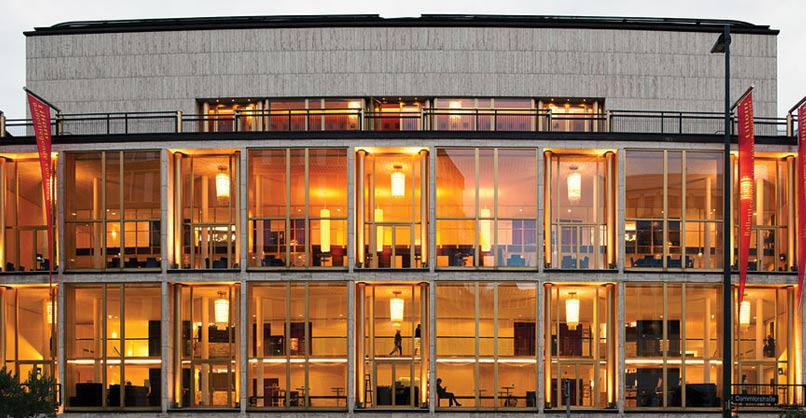
Staatsoper Hamburg © Staatsoper Hamburg

Puccini La Bohème

From 18 December TO 30 December 2026
Staatsoper - Hamburg
From 108 €
Prices & Dates
Program

Puccini : La Bohème 120 mn

Sung in : Italian
Cast
  • Conductor
    Keren Kagarlitsky
  • Director
    Guy Joosten
  • Performers
    Mimi: Elbenita Kajtazi
    Rodolfo: Won Whi Choi
    Marcello: Andrei Bondarenko
    Musetta: Narea Son
    Colline: Hubert Kowalczyk
    Schaunard: Andrew Hamilton
  • Venue Info
  • Seating Plan
  • Synopsis

Staatsoper - Hamburg LocationGrosse Theaterstrasse 25 - 20354 Hamburg Allemagne

During their frequent journeys to Venice, the merchants of Hamburg had many a chance to note the success of Europe's first public opera, opened in 1637. In 1678, some of these rich bourgeois thus founded, on the Geese Market, a permanent opera. It was the first in Germany, a fact of which the Hamburgers were very proud. Driven by a strong sense of nationalism that preferred to blatently ignore French and Italian opera, as well as a shrewd business acumen, Hamburg's Opern-Theatrum specialized in defending the German lyrical repertoire, ins-pite of the clergy's prostests and heated debates that reached as far as the University of Iena. In 1738, the hall went bankrupt, ruined by the public's renewed interest in Italian opera. A new building was constructed in 1765, billing both theatre and lyrical works.


It was not before 1827 that the location of the actual Staatsoper became that of an opera house. At first, the German Weber, the Italian Rossini, and the Frenchman Auber shared the billing, before Wagner and Verdi (performed here as of 1845, for the first time in Germany) became the house's undisputed stars. Gustav Mahler was appointed at the Opera's head in 1891. Under his direction, the opera freshened up its rather conventional programming (and became equipped with electricity). Mahler hired the young Bruno Walter as coach, before another of his proteges, Otto Klemperer, took over the musical direction of the institution in 1910.


Greatly affected by the financial crisis that followed the First World War, and partially destroyed during the Second, the Opera opened in 1946 with difficulty, performing in front of 600 spectators seated around what remained of the stage. But the company, that included names such as Hans Hotter, Martha Modi, Hermann Prey, Elisabeth Grümmer, and Astrid Varnay, rapidely acquired an international reputation.
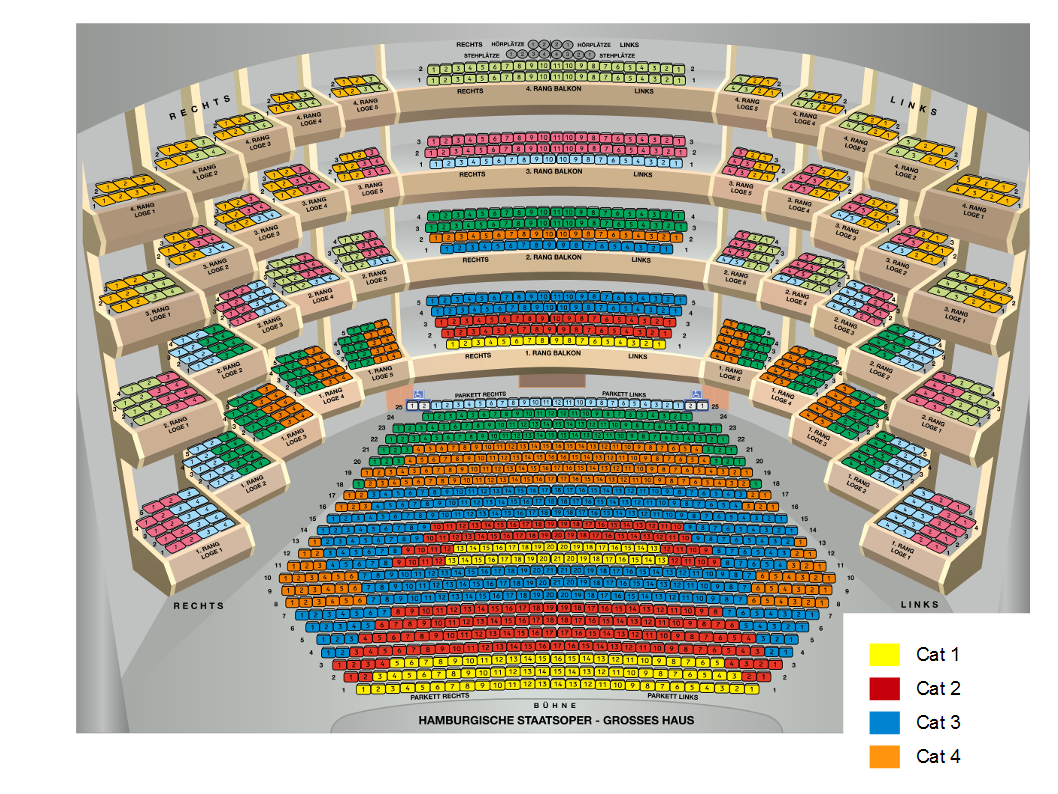

Staatsoper

The seating plan is given as an indication and has no contractual value.
The division of categories may differ depending on shows and dates.

Synopsis

La Bohème

Discover the upcoming dates for Puccini's opera La Bohème around the world and book your tickets now!


Mimi's tragic story is impossible to ignore. With La Bohème, Puccini wrote his most heart-rending opera, set to sublime, poignant music. It's a masterpiece, and an excellent introduction for the emotion-seeking neophyte.

Listen to the Music & Opera playlist : 

Building on the success of his previous opera ‘Manon Lescaut’, Giacomo Puccini continued his collaboration with Giuseppe Giacosa, adapting for the opera a novel by Henri Murger entitled ‘Scenes from Bohemian Life’. On the timeless theme of impossible love, Puccini describes the creativity and carefree nature of the Parisian artistic milieu, the harsh living conditions of the working class and the constant dissatisfaction of the bourgeoisie. He also contrasts the ability to enjoy the simple joys of life with the harshness of the times. Moving and heartbreaking, but also sparkling and sparkling, La Bohème was a growing and enduring success, even if its premiere on 1st February 1896 left audiences with mixed feelings.

THE STORY

It was love at first sight when the little cousin Mimi met the poet Rodolpho in the squalor of the Latin Quarter where he lived with his student and artist friends. But Mimi's illness and lack of money made their bohemian life and love impossible. Separated, they are not reunited until Mimi's tragic death from tuberculosis.

CARACTERS 

  • Rodolpho, poet and Mimi's lover, tenor
  • Mimi, dressmaker, soprano
  • Marcello, painter, barython
  • Musetta, singer, soprano


Staatsoper Hamburg © Staatsoper Hamburg

You may also be interested by …

Pay in 3 installments 36,00€ with interest-free. Learn more