


From €54
< Back to show details
Agrippina - Händel

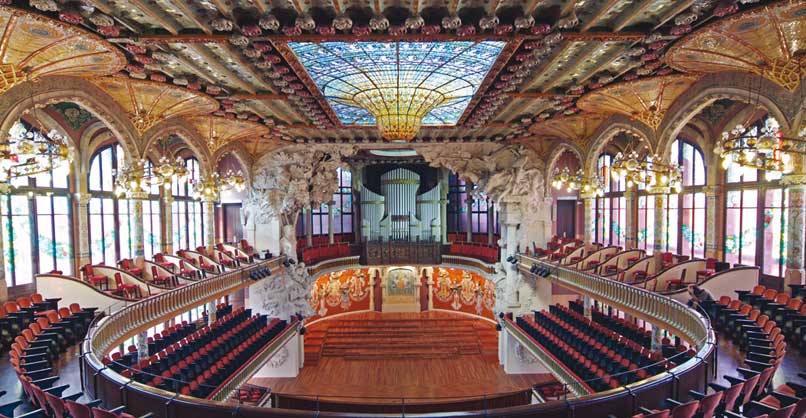
Palau de la Música - Barcelona

Select the date of the show

Loading available dates...

Please specify your seating requests regarding your ticket booking (OPTIONAL).
(100 char. max)

Seating

Music & Opera books the best available seats. The exact location of your seats will be confirmed via email. Only adjacent seats can be booked. More information

ANY QUESTIONS ?

Contact us by tel: +33 1 53 59 39 29 – or by Email.) See Help & FAQ page

TICKET DELIVERY INFORMATION

Your E-tickets to be printed will be sent by mail.

Price

Music & Opera ticket prices differ from the ticket face value, as they also include all service fees and taxes.

The Club Music & Opera

Le Club Music & Opera
Join the Club to benefit from special offers. Already Member of the Club, Login !
Agrippina - Händel

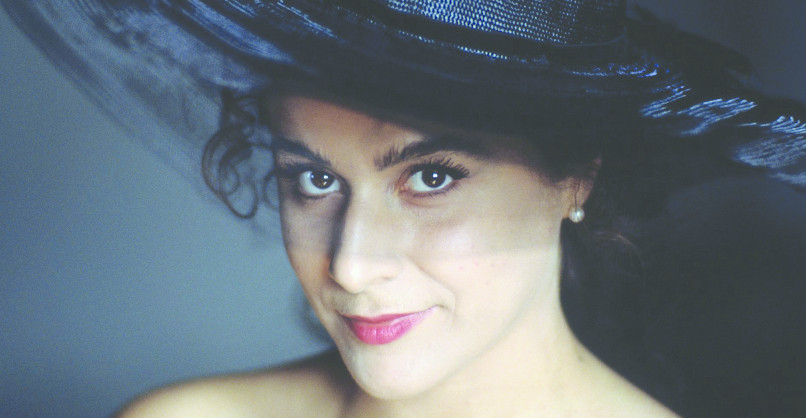
Magdalena Kozená © Julia Wesely

Händel Agrippina

The 18 November 2026
Palau de la Música - Barcelona
From 54 €
Prices & Dates
Program

Händel : Agrippina

Cast
  • Les Accents
  • Conductor
    Thibault Noally
  • Director
    Concert Version
  • Performers
    Agrippina: Magdalena Kozená
    Nerone: Adèle Charvet
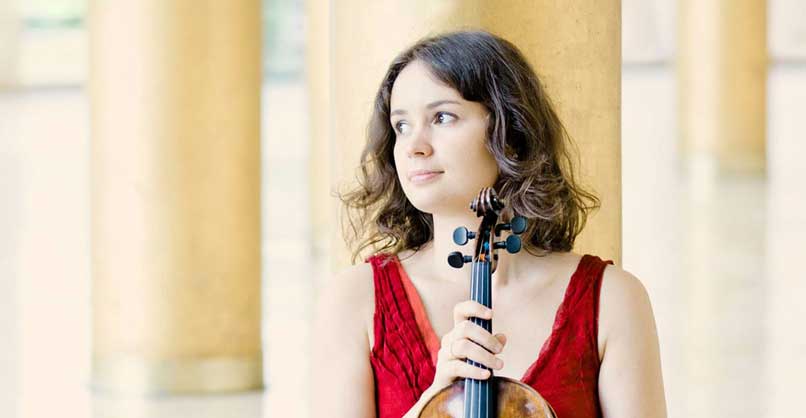
    Poppea: Julia Lezhneva
    Ottone: Christophe Dumaux
    Claudio: Nicolas Brooymans
    Pallante: Adrien Fournaison
  • Venue Info
  • Seating Plan
  • Synopsis

Palau de la Música - Barcelona LocationC/ Palau de la Música, 4-6 - 08003 Barcelona Espagne

The architect Lluis Domenech i Montaner is the father of Catalonian "Modernismo," and the Palau de la Music a Catalana is his masterpiece. Together with Gaudi, Domenech i Montaner is a representative of the mixture of nationalism and unbridled invention that characterizes turn-of-the-century art in Barcelona, the equivalent of, for example, the French and Belgian "Art Nouveau", the Austrian "Jugendstil" and the English "Modern Style".

In 1891, Lluis Millet and Amadeu Vives founded the Orfeô Català, a chorale that performs both the Catalonian popular repertoire and serious polyphonic music. The succès of the chorale was such that they asked Domenech i Montaner to design office space and a concert hall for them. Up to this day, the Palau, inaugurated in 1908, has marked Barcelonas musical history. Amidst the building's coloured mosaics and its countless floral motifs, the Catalomans came legion to hear their Orfeö perform Bach's ST. MATTHEW PASSION (Catalonian premiere in 1921) and Beethoven's MISSA SOLEMNIS (performed to commemorate the centennial of his death in 1927). To mark these events, sculptures and bus reliefs were added to the already exuberant decoration. In the building's smaller chamber music theatre, as well as in the larger 2000-seat hall, with its luminous and extravagant glass ceiling in the form of an inverted coupola, the century's most prestigious artists have come to perform.

In 1921, for example, during the famous performance of Bach's PASSION, Albert Schweitzer played the German organ that is part of the hall's hemicycle (unfortunately, this organ has been abandoned since being poorly restored in 1973). Much to the architect's credit, the Berlin Philharmonic under Karajan's baton, as well as artists such as Rubinstein, Oistrakh, and Menuhin, not to mention the famous Catalonian singers Montserrat Caballé and Victoria de Los Angeles (locally called "dels Angels"), have kept alive this extraordinary edifice, that could be visited as a museum.

Declared a historical monument in 1971. the Palau was restored and extended between 1982 and 1989. In 1991-92, Orfeö Catalä's centennial celebrations, Barcelona again established its position amongst the world's major theatres, for Giulini, Temirkanov, Colin Davis, Muti, Mehta, Barenboim, and several others came here to conduct the Philadelphia, Leningrad, Berlin, Montreal, Dresden and London symphony orchestras.
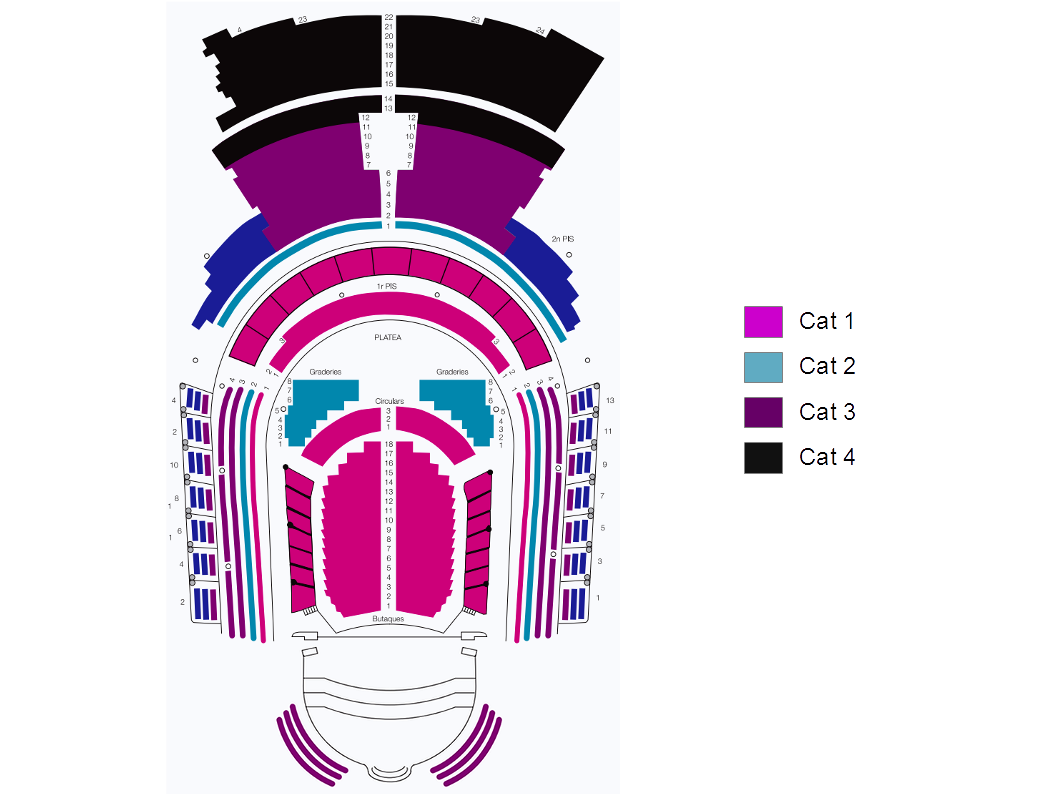

Palau de la Música

The seating plan is given as an indication and has no contractual value.
The division of categories may differ depending on shows and dates.

Synopsis

Agrippina

AGRIPPINA, A COMEDY OPERA BY HANDEL

Written by George Frideric Händel, this opera in three parts tells the tale of the mother of Nero as she plans to make him Emperor and bring about the downfall of Rome. The opera was composed for the Venice Carnevale season of 1709-10 and was premiered at the Teatro San Giovanni Grisostomo on Boxing Day, 26th December 1709. Many critics today think that the opera is Händel's first masterpiece and it is one of the most popular pieces in the ongoing revival of his works. It has been [u]performed to great acclaim and given a modern makeover[/u] in London and New York.

HISTORY

The three part opera takes place in Rome and tells the story of the mother of Nero as she plans to secure the Emperor's throne for him after hearing of the death of her husband, Claudius. She will stop at nothing to achieve her ambitions and when she hears that Claudius is not dead she uses his love for Poppaea to make him denounce Otho, who is also in love with her, as a traitor and allow Nero to become Emperor. A fine comedy with many unique pieces.

Act 1

When Agrippina hears that Claudius has been lost at sea, she enlists her two freedmen Pallas and Narcissus in support of her son by a previous marriage, Nero and sets about making him Emperor of Rome. As she is about to ascend to the throne in front of the senate with Nero, she is stopped when Lesbus, Claudius servant rushes in with the news that he is not dead and was saved by Otho. She knows that both Claudius and Otho are in love with Poppaea and uses her knowledge to come between them and make Claudius denounce Otho, his chosen successor as a traitor.

Act 2

Pallas and Narcissus turn against the evil mother of Nero when they realise that she has tricked them. Poppaea tries to convince Claudius that Otho is innocent but his plotting wife manages to convince him that he should abdicate in Nero's favour. He agrees because he wants to be with Poppaea again.

Act 3

Poppaea and Otho are reconciled and she has hidden him in her bedroom when Nero comes to profess his love for her. She manages to trick him into hiding too when Claudius arrives. She tells him that it was in fact Nero and not Otho who had coerced her into rejecting Claudius. Nero leaves. Otho and Poppaea tell Claudius of their love. Pallas and Narcissus reveal Agrippina's plot to Claudius so he announces that Poppaea and Nero will be married and that Otho will be Emperor and accuses his wife of treachery. Nobody is happy so in a change of heart, Claudius makes Nero his successor and allows Poppaea and Otho to marry.

MAIN ROLES

Agrippina, wife of Claudius, mother of Nero - soprano
Nero - soprano castrato
Otho - contralto
Poppaea - soprano
Claudius, Emperor of Rome - bass

Palau de la Catalana - Sala de Concerts @ A. Bofill

You may also be interested by …

Pay in 3 installments 18,00€ with interest-free. Learn more