

From €260
< Back to show details
Don Pasquale - Donizetti

Palais Garnier - Paris

Select the date of the show

Loading available dates...

Additional offers

Restaurant Drouant - Dinner €52 per person More information
0
Chez Drouant - Caviar & Champagne Tasting €55 per person More information
0
Please specify your seating requests regarding your ticket booking (OPTIONAL).
(100 char. max)

Seating

Music & Opera books the best available seats. The exact location of your seats will be confirmed via email. Only adjacent seats can be booked. More information

ANY QUESTIONS ?

Contact us by tel: +33 1 53 59 39 29 – or by Email.) See Help & FAQ page

TICKET DELIVERY INFORMATION

Your E-tickets to be printed will be sent by mail.

Price

Music & Opera ticket prices differ from the ticket face value, as they also include all service fees and taxes.

The Club Music & Opera

Le Club Music & Opera
Join the Club to benefit from special offers. Already Member of the Club, Login !
Don Pasquale - Donizetti

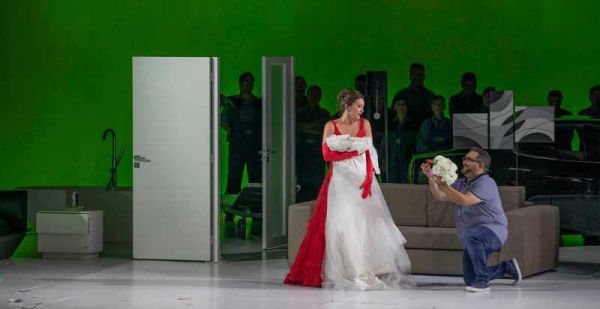
Don-Pasquale-23-24-Opera national de paris-Photo-Franck-Ferville

Donizetti Don Pasquale

Premium
M&O Offer
From 12 June TO 10 July 2027
Palais Garnier - Paris
From 260 €
Prices & Dates
Program

Donizetti : Don Pasquale

Sung in : Italian
Cast
  • Orchestre et Choeurs de l'Opéra national de Paris
  • Conductor
    Speranza Scappucci
  • Director
    Damiano Michieletto
  • Performers
    Don Pasquale: Pietro Spagnoli
    Norina: Olga Kulchynska
    Ernesto: Lawrence Brownlee
    Dottore Malatesta: Vito Priante
Premium Category

Premium Category (valid on certain dates): this category includes priority access to the best seats in Category + (Optima) or Category 1 on certain dates, a glass of champagne per person to be enjoyed in private lounges, and a programme of the show per order.

The Premium price includes a contribution (€150 per ticket) to support the friends of the Opera (AROP).

  • Venue Info
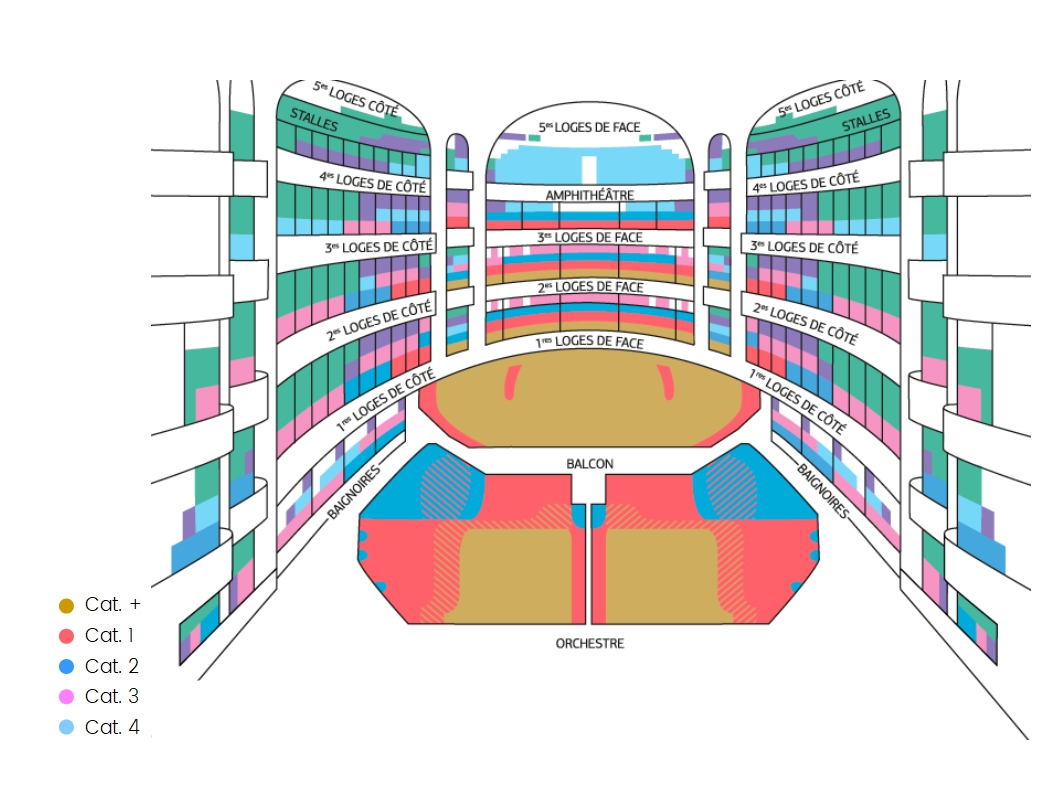
  • Seating Plan
  • Synopsis

Palais Garnier - Paris LocationPlace de l’Opéra - 75009 Paris France

  • Venue's Capacity: 2054

Subtitles in French and English for Operas.

In the land of Descartes, the words «Opéra de Paris» more readily designate a concept than an actual lyrical théâtre! Called «The Royal Academy of Music and Dance» under the reign of Monsieur de Lully and «The Impérial Academy» according to différent jolitical events, the institution was rebaptized a number of time s before settling into the "Palais Garnier" in 1875. This sumptuous édifice, with every last détail (including the door 'cnobs...) designed by Charles Garnier, brings together the most eclectic architectural éléments. When Napoléon III worried about the buildings differing styles, Garnier reassured him by explaining "hat the design was at the forefront of a new style, called «Napoléon III.» And legend has it that 'he building was constructed on a little lake, in which the Opera's administration bred fish...

Some call to remember the era of Felia Litvimne (1863-1936) and her vast repertoire, including Tannhâuser, La Juive and Lully’AlCESTE. Others remember the casts billed by Jacques Rouché between 1915 and 1945, an era during which Georges Thill sung both Massenet and Wagner in French. In 1939, the Palais Garnier's Grand Opéra and the Salle Favart's Cornic Opéra were united under the manage­ment of a common admînistrator, the «Réunion des Théâtres Lyriques Nationaux.» And 1964 marks the year during which the old ceiling of the Palais Garnier was covered with a colorfiil fresco by Chagall.

More recently, opéra lovers recall the magnificent Liebermann years, during which, in 1973, Rolf Liebermann, then the Opera's administrator, called upon the know-how of a musical advisor named Georg Solti! In 1989, the very modem Bastille Opéra was opened and the Salle Favart became indépendant once again. The Garnier Théâtre was then reserved for dance, and. together with the Bastille, became part of the «Association des Théâtres de l'Opéra de Paris,» rebap­tized «Opéra National de Paris» in 1994.

In the midst of thèse numerous changes, the Palais Garnier has recently under-gone thorough restoration, and since March 1996, lyrical productions are once again programmed on its stage. To opera lovers' great satis­faction, the famous théâtre has thus revived its past splendeur and a programming worthy of its glorious history.

 

Palais Garnier

The seating plan is given as an indication and has no contractual value.
The division of categories may differ depending on shows and dates.

Synopsis

Don Pasquale

DON PASCUALE, A COMIC OPERA

Don Pasquale is a comic opera by Gaetano Donizetti and takes place in three acts.
The opera was first performed, by Theatre-Italien, on 3 January 1843 in Paris at the Salle Ventadour. Donizetti's music and lyrical humour brings the comic opera to life. Pasquale is an old man who runs his crumbling pension with the help of a greasy cook, a chambermaid and an ancient porter.

HISTORY

The story of Donizetti's Don Pasquale is based in early 19th century in Rome, and it is a perfect setting to showcase the quirks of the clashing generations.

Pasquale, the reclusive old man, who likes cats, is a worried man as he fears that his wealth will be taken over by Ernesto, his scheming nephew. To avert this he wants to find a wife for himself and appears truly smitten when a young lady turns up in his life.

Act 1

Pasquale wants to marry in order to produce a lawful heir and keep his scheming nephew, Ernest, away from his inheritance. Dr. Malatesta calls on Pasquale and suggests his younger sister as a befitting bride for the old man.
Pasquale is immensely delighted at the prospect of marrying and urges the doctor to immediately arrange for a meeting.

Ernesto loves Norina, a young widow and refuses to marry the woman chosen by his uncle, and as a result he has to forgo the house. Norina is on her terrace, reading a romance and appears amused at the feminine wiles of the story. She suddenly feels depressed by Ernesto's farewell note when Malatesta appears with his proposal of her impersonating as his sister and marry off Pasquale.

Act 2

Ernesto is unaware of Malatesta's schemes and sits in his uncle's living room, grieving at the imminent loss of his beloved Norina. He leaves when his uncle arrives, who is getting ready to meet his bride-to-be. Pasquale feels youthful on meeting "Sofronia" and is willing to marry her immediately.

At the wedding ceremony, Ernesto enters and expresses his beloved's infidelity. But before he can foil the strategy, Malatesta informs him of the plan he has entered with Norina. So Ernesto becomes a willing witness of the contract. The Notary has sealed the contract wherein the fortune is bequeathed to the new bride, Norina. The trio celebrate their success while Pasquale is stunned to see his demure bride turn into a rebellious woman.

Act 3

Pasquale is seated in his refurbished living room with a pile of bills incurred by his wife. Norina enters the room followed by servants carrying her purchases only to leave again for the theatre. She drops a letter which speaks of a meeting in a garden at night, with some suitor. Pasquale seeks the help of Dr. Malatesta who assures him that they will trap the couple red-handed. In the garden, while Ernesto and "Sofronia" engage in a song of love, Pasquale and Malatesta arrive but they cannot see her lover as he escapes quickly. Later when Ernesto proposes to marry his beloved, "Sofronia" claims to leave if another woman lives in the same house. Pasquale is glad to permit Ernesto to marry his love. Pasquale is stunned to find the true identity of his bride. He however realises that marriage cannot work right for an old man and agrees to the young couple's marriage.

THE MAIN ROLES

Don Pasquale, an elderly bachelor, bass
Dr Malatesta, physician, baritone
Ernesto, Pasquale's nephew,tenor
Norina, Emesto's beloved, soprano
Carlino,Dr Malatesta's cousin, bass
Servants

Opera Garnier - Palais Garnier photo Jean-Pierre Delagarde / OnP

You may also be interested by …

Pay in 3 installments 86,67€ with interest-free. Learn more