

From €98
< Back to show details
Lucrezia Borgia - Donizetti

Opéra - Lyon

Select the date of the show

Loading available dates...

Please specify your seating requests regarding your ticket booking (OPTIONAL).
(100 char. max)

Seating

Music & Opera books the best available seats. The exact location of your seats will be confirmed via email. Only adjacent seats can be booked. More information

ANY QUESTIONS ?

Contact us by tel: +33 1 53 59 39 29 – or by Email.) See Help & FAQ page

TICKET DELIVERY INFORMATION

You will receive by email, your E-tickets to be printed or downloaded on your mobilephone.

Price

Music & Opera ticket prices differ from the ticket face value, as they also include all service fees and taxes.

The Club Music & Opera

Le Club Music & Opera
Join the Club to benefit from special offers. Already Member of the Club, Login !
Lucrezia Borgia - Donizetti

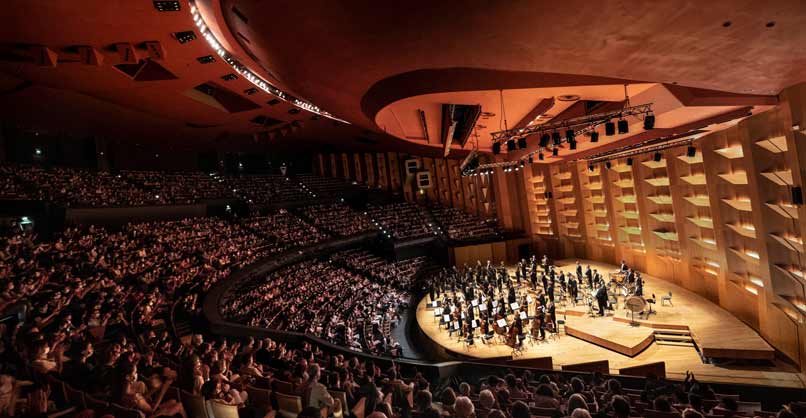
Opéra de Lyon © Franchella Stofleth

Donizetti Lucrezia Borgia

From 20 March TO 28 March 2027
Opéra - Lyon
From 98 €
Prices & Dates
Program

Donizetti : Lucrezia Borgia

Sung in : Italian
Cast
  • Conductor
    Jader Bignamini
  • Director
    Tatjana Gürbaca
  • Performers
    Lucrezia Borgia: Lidia Fridman
    Gennaro: Duke Kim
    Don Alfonso: Giorgi Manoshvili
    Maffio Orsini: Ekaterine Buachidze
    Don Apostolo Gazella: David Rother
    Jeppo Liverotto: Cătălin Pop
  • Venue Info
  • Seating Plan
  • Synopsis

Opéra - Lyon Location1 Place de la Comédie - 69001 Lyon France

  • Venue's Capacity: 1200

The city of Lyon has a long lyrical past, for, as early as 1697, the town obtained the authorisation (a then highly sought-after privilege) to open a Royal Academy of Music. Lyon's first permanent opera was built in 1756; the theatre was later razed, while its foundations served as the basis for a new theatre, opened in 1831. During this long history, the Lyon Opera forged, little by little, a solid reputation of proposing an innovative repertoire. This reputation was quite justified, and the Opera became known as the " cradle of French Wagnerianism," for it was here that the MEISTERSINGER, in 1896, and the RING, in 1904, were premiered in France. The Wagnerian tradition lasted until the Second World War, alongside an ever-increasing place reserved for contemporary works (Schoenberg and Henze were billed in 1967).


But it was mainly as of Louis Erlo's arrival at the head of the institution in 1969 that the house established a firm reputation as one of France's most dynamic theatres in the domain of lyrical creation. Besides the French premiere of Richard Strauss' DIE SCHWEIGSAME FRAU, the stage proposed the French premiere of works composed by, amongst others, Nono, Berio, and Bernd Alois Zimmermann, whose DIE SOLDATEN was performed here in 1983. This same year, the Lyon Opera became equipped with a permanent orchestra, with John Eliot Gardiner as its music director. Gardiner's wide ranging repertoire, and especially his sound knowledge of the baroque sensitivity, together with the affinity of his successor, Kent Nagano (appointed in 1988), for twentieth century music, have secured the orchestra's ability to readily adapt to the most diverse works.


In 1993, the new Lyon Opera was inaugurated, entirely redesigned by the architect Jean Nouvel. While the building underwent renovation, the company took advantage of the six seasons spent outside of its theatre to perform in different places, reaching out to a new audience. The new building, designed to incorporate a large glass wall into the existing walls of the old theatre, is symbolic of the Lyon Opera's past: a perfect union of audacity and tradition. The inaugural evening therefore included both a revival of Lully's PHAETON, that had opened the first season during the seventeenth century, and the premiere of Debussy's little-known unfinished opera RODRIGUE ET CHIMENE. Thanks to a reputation strengthened by continuing success, as well as a by the policy of maintaining a prestigious training programme for young singers and by the production of dynamic audiovisual projects, the Lyon Opera was, in 1996, the first Institution outside of Paris to receive the status of "National Opera by the French authorities.
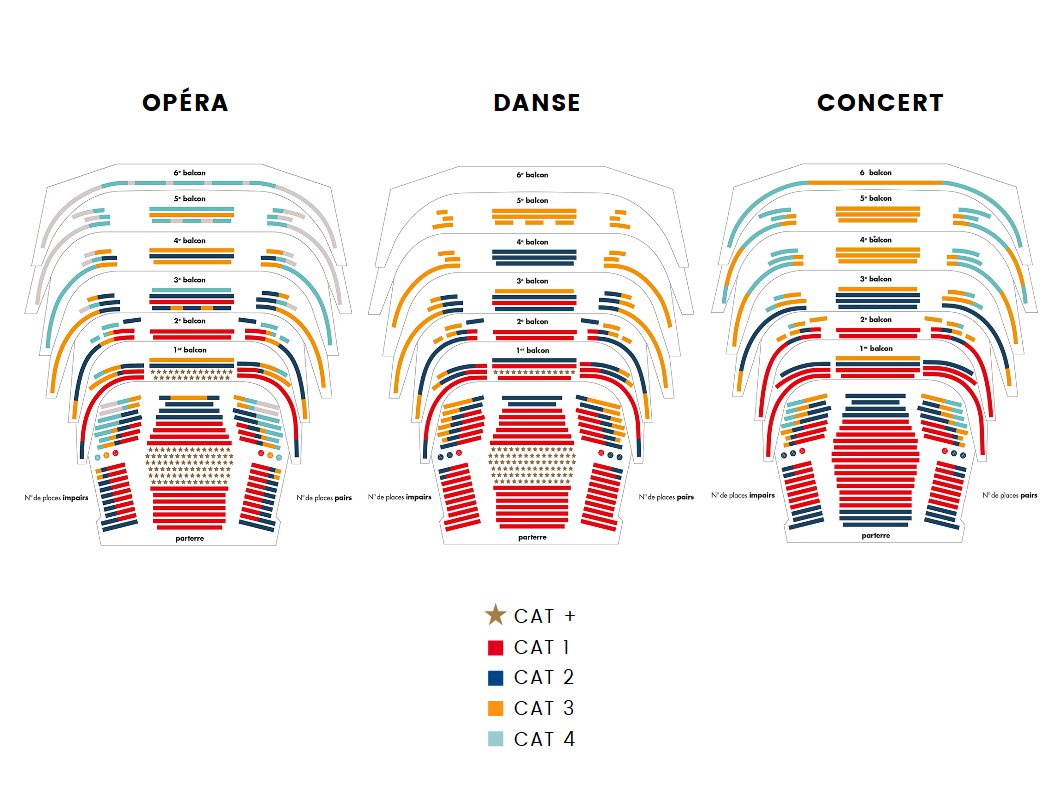

Opéra

The seating plan is given as an indication and has no contractual value.
The division of categories may differ depending on shows and dates.

Synopsis

Lucrezia Borgia

LUCREZIA BORGIA,  AN EXCITING OPERA

Written by Gaetano Donizetti, the opera is played in two parts with a proligue. Based on the libretto by Victor Hugo which in turn is based on the legend of Lucrezia. The opera premiered at La Scala the famous theatre in Milan on 26th December 1833, and was first performed in London on 1839. Often used as a vehicle for showcasing a star soprano, some of the notable performers of the role of Lucrezia include Thérèse Tietjens, Montserrat Caballé, Renée Fleming and Edita Gruberová. The opera is unusual for having the role of a male character sung by a female contralto.

HISTORY

Based in Venice and Ferrara in Italy in the early 16th century, the opera tells the tale of Lucrezia, the infamous daughter of Pope Alexander, who is said to poison her enemies. Inadvertently responsible for the death of her illegitimate son Gennaro, Lucrezia is devastated.

Prologue

On the terrace of a palace in Venice, Gennaro falls asleep after drinking at the festival. He wakes to find Lucrezia standing over him wearing a carnival mask and tells her he is the son of a poor fisherman, not knowing that she is in fact his mother. Two of Gennaro's friends arrive and Maffeo Orsini tears Lucrezia's mask off and tells him that she is one of the hated Borgias who poisoned his brother and the brother of his friend. Gennaro turns from Lucrezia in horror and she faints.

Act 1

Lucrezia is in a palace in Ferrara with her fourth husband, Alfonso. She has poisoned his predecessor. Alfonso is jealous of Gennaro and not knowing that his wife is Gennaro's mother, thinks he is her lover. Gennaro comes to the palace and sees the name BORGIA which he defaces to read 'orgy' by removing the letter B. Not knowing who committed the outrage, Lucrezia demands that they be put to death. Alfonso makes her stand by her pledge and makes her give Gennaro poisoned wine. Lucrezia has hidden the antidote and gives it to Gennaro before making him flee Ferrara.

Act 2

At a banquet in the Negroni Palace in Venice, Gennaro attends having ignored Lucrezia's advice to flee as he has sworn to stay with his friend Matteo Orsini. As a drinking song is in full swing, Lucrezia comes in and tells them that she has poisoned the wine and that five coffins are waiting for them in return for their insults. Gennaro steps up and tells her that she has poisoned him too. He grabs a knife and tries to kill her but Lucrezia tries to get him to stop by revealing that she is his mother. She tries to get him to take the antidote again, but he refuses, preferring to die with his friends. A scene at the end shows her mourning her dead son.

THE MAIN ROLES

Alfonso d'Este Lucrzias, fourth husband and Duke of Ferrara - bass
Lucrezia Borgia - soprano
Maffio Orsini, friend of Gennaro - contralto
Gennaro, young noble and illegitimate son of Lucrezia - tenor

Opéra de Lyon © Franchella Stofleth

You may also be interested by …

Pay in 3 installments 32,67€ with interest-free. Learn more