


From €0
< Back to show details
Un ballo in maschera - Verdi

Nationaltheater - München

Select the date of the show

Reservation on request at [email protected]
Specify the city, the date and the number of tickets required

Loading available dates...


Seating

Music & Opera books the best available seats. The exact location of your seats will be confirmed via email. Only adjacent seats can be booked. More information

ANY QUESTIONS ?

Contact us by tel: +33 1 53 59 39 29 – or by Email.) See Help & FAQ page

TICKET DELIVERY INFORMATION

Your E-tickets to be printed will be sent by mail.

Price

Music & Opera ticket prices differ from the ticket face value, as they also include all service fees and taxes.

The Club Music & Opera

Le Club Music & Opera
Join the Club to benefit from special offers. Already Member of the Club, Login !
Un ballo in maschera - Verdi

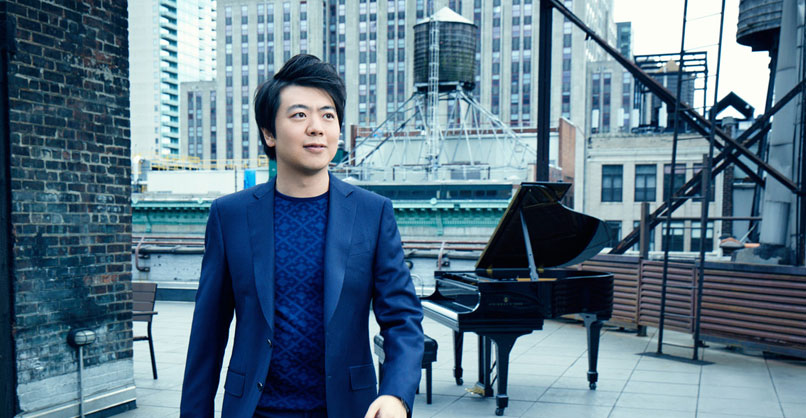
Beczala (c) bea

Verdi Un Ballo in Maschera

From 31 October TO 12 November 2026
Nationaltheater - München
From 0 €
Prices & Dates
Program

Verdi : Un Ballo in Maschera 135 mn

Sung in : Italian
Cast
  • Bayerisches Staatsorchester
  • Bayerischer Staatsopernchor
  • Conductor
    Marco Armiliato
  • Director
    Johannes Erath
  • Performers
    Riccardo (Gustave III): Piotr Beczala
    Amelia: Anastasia Bartoli
    Renato (Ankarstroem): Boris Pinkhasovich
    Ulrica (Arvidson): Yulia Matochkina
    Oscar: Erika Baikoff
MUNICH MUSIC TRIP ON REQUEST

Attend to this performance within a complete Music Trip to Munich

More information and QUOTATION 

For Munich Bayerische Staatsoper performances, we only offer PACKAGES : OPERA TICKET + HOTEL.

Contact us to as a quotation HERE

FIND HERE ALL MUSICAL STAYS

  • Venue Info
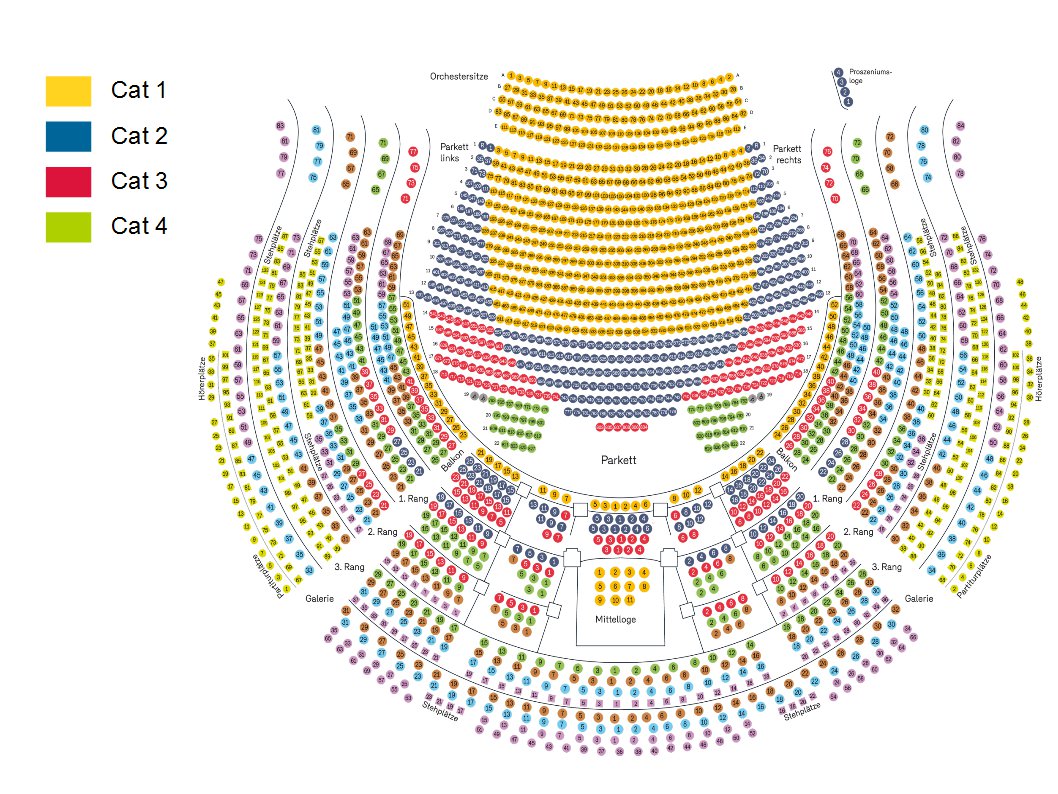
  • Seating Plan
  • Synopsis

Nationaltheater - München LocationMax-Joseph-Platz 2 - 80539 München Allemagne

  • Venue's Capacity: 2100

The history of Munich's actual theatre truly only begins at the end of the eighteenth century. Indeed, after over a century of infatuation for Italian opera, which was manifest in the construction of the Théâtre de la Cour (now called the Théâtre Cuvilliês, still active), local inhabitants began to feel the need for a German lyrical art. German repertoire, as Mozart appealed for, active in Munich especially during the premiere of his IDOMENEO, but also, a German theatre, since the Theatre de la Cour was limited to Italian art. The Napoleonic wars and King Maximilien I's sudden passion for the Odéon Theatre in Paris postponed this project.

The public thus waited until 1818 to discover its « National Theatre, » a subtle and luxurious synthesis of various styles: loggias in the Italian tradition cohabited with innovations from the French school of architecture. One of the noveltieswas a reservoir of water destined to be used in case of fire, but which nevertheless did not save the buildîng from flames in January 1823 ; the water was frozen! The Opera was reconstructed, financed by a special tax on beer: perhaps an original means but one yielding a particularly high return! After these rather tumultuous beginnings, the National Theatre reopened in 1825 and became the hotbed of German lyrical art. Four of Wagner's operas were premiered there between 1365 and 1870 (TRISTAN UND ISOLDE, Da MEISTERSINGER, DAS RHEINGOLD, and DIE WALKÜRE).

Wagner, of course, but also Mozart and Richard Strauss soon became the pillars of the Theatre's repertoire during the first half of the twentieth century, thanks to the talent of conductors such as Bruno Walter, Hans Knappertsbusch, and... Richard Strauss, himself a native of Munich. Strauss saw two of his operas premiered in his home town: FRIEDENSTAG (Peace Day, 1938!), and CAPRICCIO (1942). The libretto of the latter was elaborated with the help of the conductor Clemens Krauss, who was then Director of the Opera. The fact that the building was destroyed during the war did not prevent the company's tradition from being perpetuated.

Between 1952 and 1967, the institution was directed by Rudolf Hartmann, a former assistant to Richard Strauss and Clemens Krauss. The former 1818 edifice was reconstructed in 1963, after much hesitation as to whether or not to erect a modern hall. The long reign (1971-1992) of conductor Wolfgang Sawallisch, a distinguished representative of the tradition composed of rigour and commitment, is an example of the perserverance with which the Bayerische Staatsoper comes to terms with the legacy of its brilliant past.

Nationaltheater

The seating plan is given as an indication and has no contractual value.
The division of categories may differ depending on shows and dates.

Synopsis

Un Ballo in Maschera

If you like your opera with a touch of politics then you will enjoy Un ballo in maschera. This opera was composed by Giuseppe Verdi with a libretto by Antonio Somma and was premiered in Rome in 1859. The opera is based on the assassination of King Gustav III of Sweden, although the final version had to undergo several changes because of censorship and the tense political situation in France.

HISTORY
Le bal masqué revolves around political conspiracy and unrequited love; both strands becoming entwined.

Act 1
The long first act of Le bal masqué opens at the court of King Gustavo of Sweden; he is reviewing a list of guests for his masked ball. Gustavo is in love with Amelia, the wife of Count Anckarstrom and is happy to see that she is a guest. When the Count arrives he tries to warn the King of trouble in his kingdom but Gustavo will not listen. A magistrate asks King Gustavo to banish Madame Arvidson, a fortune teller accused of witchcraft but she is defended by Oscar, the King's page. To test the accusation the King calls upon his courtiers to disguise themselves ready to meet at her lodgings. Amelia arrives to see Madame Arvidson and the disguised King hides. From his hiding place he hears Amelia profess his love for him and the problems this is causing her. The fortune teller advises her to collect a magical herb. King Gustavo and his courtiers present themselves to the fortune teller and their fortunes are read. Madame Arvidson prophesies that the King will be killed by the next man to shake his hand, who turns out to be Count Anckarstrom.

Act 2
It is now the middle of the night and Amelia bravely visits the forest to pick her herbs. King Gustavo surprises her and they declare their love for each other; but suddenly the Count arrives and Amelia veils her face to hide from her husband. The Count tells the King that conspirators are looking for him and his life is in danger. As the King flees he asks Count Anckarstrom to escort the veiled lady back to the town. The Count has to fight the conspirators and in the struggle Amelia´s face is revealed. Count Anckarstrom immediately thinks the worst. He confers with the leaders of the conspiracy and they agree to meet the following day.

Act 3
Count Anckarstrom threatens to kill Amelia. She pleads her innocence and begs to see her son one more time. The Count relents and decides Gustavo must die instead. When the conspirators arrive they ask Amelia to draw lots to see who will kill the King and the Count is chosen. They decide that the masked ball, Le bal masqué, will be the perfect place for an assasination. At the ball the King is seen resolving to be strong and deciding to send Amelia and the Count away from court but the Count finds and stabs King Gustavo. As he lies dying he declares that Amelia did not break her marriage vows although he loves her. He bids farewell to his friends and his country and dies.

MAIN ROLES

  • Riccardo, Earl of Warwick, Governor of Boston, tenor
  • Renato, Riccardo's secretary and friend, husband of Amélia, baritone
  • Amelia, Renato's wife, soprano
  • Ulrica,fortune-teller, contralto
  • Samue,conjurer, bass
  • Tom,conjurer, bass
Munich photo © Wiilfried Hösl

You may also be interested by …