


From €195
< Back to show details
Cavalleria rusticana - Mascagni / Pagliacci - Leoncavallo

La Monnaie / De Munt - Bruxelles

Select the date of the show

Loading available dates...

Please specify your seating requests regarding your ticket booking (OPTIONAL).
(100 char. max)

Seating

Music & Opera books the best available seats. The exact location of your seats will be confirmed via email. Only adjacent seats can be booked. More information

ANY QUESTIONS ?

Contact us by tel: +33 1 53 59 39 29 – or by Email.) See Help & FAQ page

TICKET DELIVERY INFORMATION

You will receive by email, your E-tickets to be printed or downloaded on your mobilephone.

Price

Music & Opera ticket prices differ from the ticket face value, as they also include all service fees and taxes.

The Club Music & Opera

Le Club Music & Opera
Join the Club to benefit from special offers. Already Member of the Club, Login !
Cavalleria rusticana - Mascagni / Pagliacci - Leoncavallo

Clementine Margaine © DR / Site Officiel

Leoncavallo - Mascagni I Pagliacci - Cavalleria Rusticana

From 14 March TO 31 March 2027
La Monnaie / De Munt - Bruxelles
From 195 €
Prices & Dates
Program

Leoncavallo : I Pagliacci

Mascagni : Cavalleria Rusticana

Cast
  • Conductor
    Alevtina Ioffe
  • Director
    Damiano Michieletto
  • Performers
    Santuzza: Clémentine Margaine
    Canio (Pagliaccio): Martin Muehle
    Turiddu: Gaston Rivero
    Nedda: Adriana González
    Alfio: Lukasz Golinski
    Tonio (Taddeo): Andrii Kymach
    Beppe (Arlecchino): Sahy Ratia
    Silvio: Mikhail Timoshenko
  • Venue Info
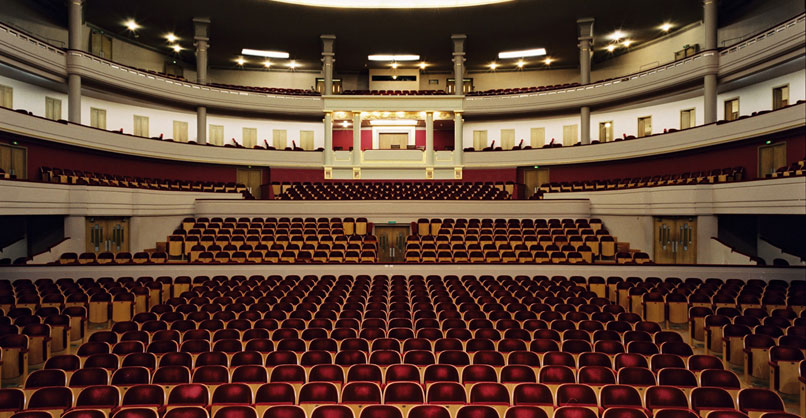
  • Seating Plan
  • Synopsis

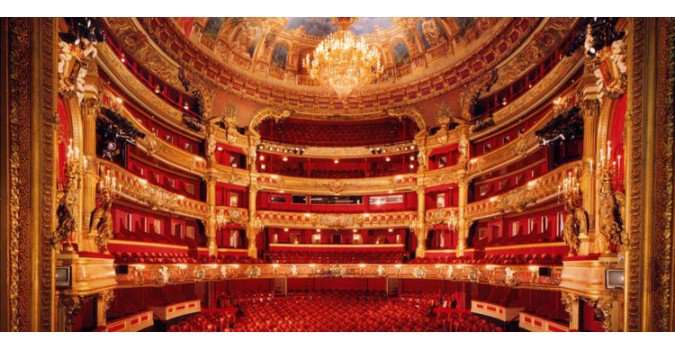
La Monnaie / De Munt - Bruxelles LocationPlace de la Monnaie - 1000 Bruxelles Belgique

  • Venue's Capacity: 1152

The history of La Monnaie, Brussels' famous opera house, dates back to 1695, when, after a large part of the city was bombed by the French, the tresorer of the last Spanish gover nor of the Netherlands obtained permission to construct a theatre on the bared site of a workshop where coins were formerly struck.

In 1700, a production of Lully's ATYS inaugurated the Monnaie stage, where opera and theatre performances were alternatively billed, and where, several years later. Napoleon came to hear the famous Talma recite the lines of Racine's BRITTANICUS. The French Emperor thought of constructing a new building just behind the old one. But Brussels soon fell under the reign of the Dutch King, who took over his plans. The second theatre, inaugurated in 1819, would nonetheless cause the Dutch sovereign quite a few headaches. During a performance of Auber's LA MUETTE BE PORTICI, for example, part of the overcrowded audience assembled in front of the building. The artists encored the opera's famous duo that pledges allegiance to the fatherland, and when the hero sang "To arms!" the crowd burst into the city. It was the 30th of August 1830, and the revolution that would lead to Belgian indépendance had begun.

The present hall was constructed in 1856, after the preceeding building was burnt down by one of the fires that have so often marked the history of European concert halls. From this time on. La Monnaie forged a reputation of being a crossroads of creation and modernity, whose audacious billing compensated that of the more conservative Parisian stage. Verdi, Wagner (heard here as nowhere else outside of Germany) or Bizet's CARMEN (which the French at first shunned), all resounded within the theatre's walls.

Since the beginning of our century, La Monnaie has never hesitated to programme works by such revolutionaries as Stravinsky, Berg, Britten, and Prokofiev, long before other opera houses welcomed them. As of 1960, the theatre's reputation was reinforced by the creation of Maurice Béjart's Twentieth Century Ballet, and consecrated under Gerard Mortier's management (1981-1991).

La Monnaie / De Munt

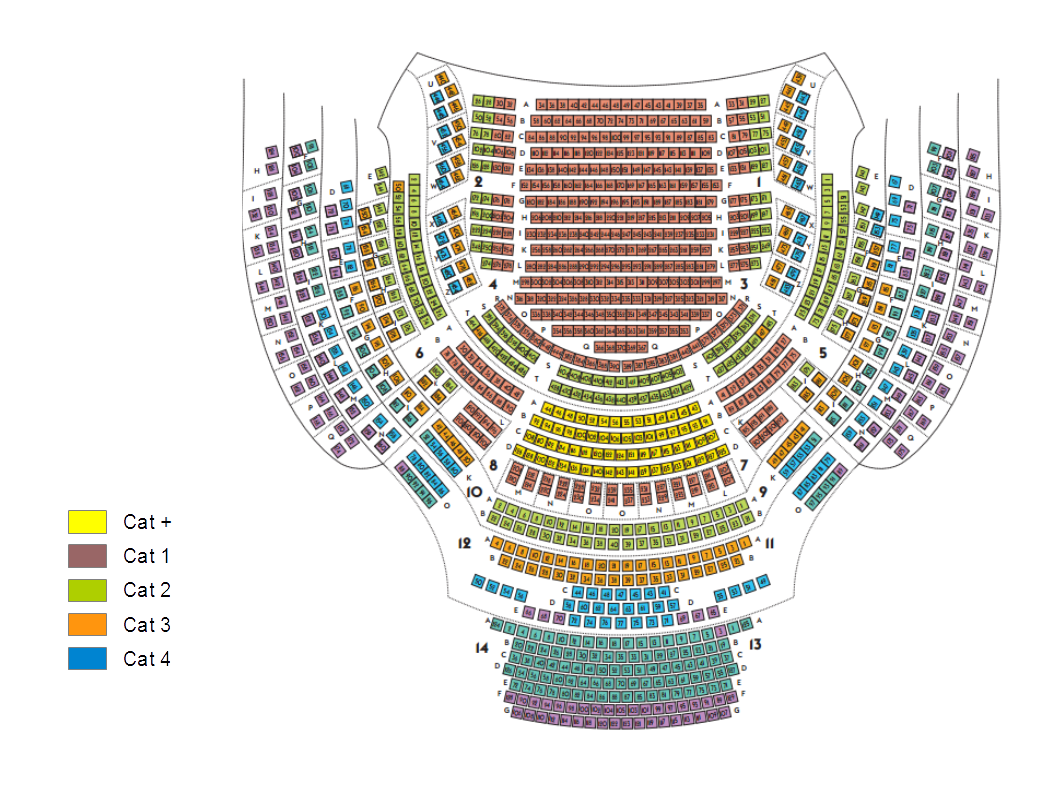
The seating plan is given as an indication and has no contractual value.
The division of categories may differ depending on shows and dates.

Synopsis

I Pagliacci

PAGGLIACI, A ROMANTIC ITALIAN OPERA

This Italian opera is composed of two acts and features music by Ruggero Leoncavallo. It is the only Leoncavallo opera that is still performed widely today. It premiered in Milan in 1892 and later that year it was first performed in the United Kingdom in London.

Leoncavallo claims that the plot of the opera is based on an incident that occurred during his own childhood, when one of the family servants was murdered in 1865. This murder was the result of a series of romantic entanglements involving a girl that two brothers were both infatuated with. When it was first written there were several allegations that the opera resembled other plays. However, it soon gained popularity.

The plot is a series of romantic entanglements, accusations, declarations and secrecy. It is both a comedy and a tragedy. Paggliaci became the first opera to be fully recorded in 1907. Later, in 1931, it also became the first opera to be completely filmed with sound.

It has been performed around the world and continues to be enjoyed today.

HISTORY

The opera is set in Calabria, near Montalto in southern Italy, on the Feast of the Assumption. It takes place between 1865 and 1870.

Act 1

The commedia troupe enter the village at 3pm and are met by cheering villagers who await the play. Canio says the play will begin an hour before sunset. Nedda steps from the cart and Tonio offers his hand but Canio pushes it away to help his wife down himself. Cannio and Beppe have a drink with the villagers who tease Canio that Tonio is planning an affair with his wife. Tonio declares his love for Nedda who then drives him away. Silvio and Nedda decide to elope, but Tonio tells Canio who arrives and chases Silvio. Nedda shouts after her lover 'I will always be yours' but refuses to reveal his name.

Act 2

The play begins and the plot mirrors the love triangle and affairs. Canio hears Nedda's character say 'I will always be yours' and demands she tell him her lover's name. Nedda tries to keep in character and the audience initially think it's all part of the performance. Nedda refuses to reveal the name of her lover and Canio stabs her. As she cries out Silvio's name, Canio stabs him too.

The final line of the opera is 'La Commedie e finita! - The comedy is ended!'

MAIN ROLES

Canio, head of the troupe, tenor
Nedda, Canio's wife who is in love with Silvio, soprano
Tonio, the fool, baritone
Beppe, actor, tenor
Silvio, Nedda's lover, baritone

Cavalleria Rusticana

CAVALLERIA RUSTICINA, A HEARTFELT LOVE STORY

Cavalleria Rusticina is an opera played in one act written by Pietro Mascagni. It is an award winning love poetic story that was composed in 1890. It is a heartfelt love story about a love affair that goes sour leaving the audience overwhelmed with sadness. The performance is spectacular with a perfectly set design and attractive costumes. The story is engaging, easy to follow and very interesting. The actors are well poised and have wonderful voices and perform their roles with much passion.  Cavalleria Rusticina has a lot of entertaining melodies and hymns.

HISTORY


Cavalleria Rusticinawas composed in the late 19th century and has gone on to become one of the worlds' most popular and loved plays ever performed. It's about two lovers who are separated by distance but brought together by fate. Although they both have different partners, they have an affair which ends up destroying both their lives and their partners'. It also results to the death of one of the characters, Turiddu.

Act 1

The play starts with Turiddu who is the main character swiftly singing about his former fiancée who is now Alfio's wife. He has returned from military service only to find his fiancée Lola married to someone else. This really breaks his heart and he decides to take revenge by seducing a young peasant village girl named Santuzza. As the Opera continues, Lola gets jealous of Santuzza and begins having an affair with Turiddu. They have to keep hiding their relationship from both their partners and the villagers.

On the feast of Easter, Turiddu's singing is heard from one corner of the church a few meters from his mothers' wine shop. As some villagers move around the village while singing others enter the church as they hymn to the blessed virgin.

Act 2

Santuzza becomes aware of Turridu's infidelity and goes looking for her handsome knight at his mothers' wine shop. Lucia, his mother, tells her that she had sent him to another town to fetch some wine. Before Santuzza could tell her of the whereabouts of her son, Alfio, Lolas' husband shows up asking for some wine. Lucia informs him of the situation at hand and he claims to have seen Turiddu early that morning near his cottage. The two women leave to join the choir outside the church.

Act 3

The villagers finish the mass and head to their homes. Turiddu is seen expressing vigorous excitement because he is with his one and only love, Lola. He and his friends head to his mothers' wine shop and sing a drinking song. Alfio joins them, not to drink with them but fight with Turiddu for Lolas' love.


Epilogue


The fight leads to Turiddu's death. On announcement of the news of Turridu's, Santuzza faints and Lucia collapses in the hands of the village women.

MAIN ROLES

Santuzza, A peasant girl, soprano

Turiddu, Lola's lover, bass-baritone

Lucia, Turiddu's mother, soprano

Alfio, Lola's husband, bass

Lola, Turiddu's lover, baritone.

La Monnaie

You may also be interested by …

Pay in 3 installments 65,00€ with interest-free. Learn more