


 120 mn


 La Rambla, 51-59 - 08002 Barcelona Espagne
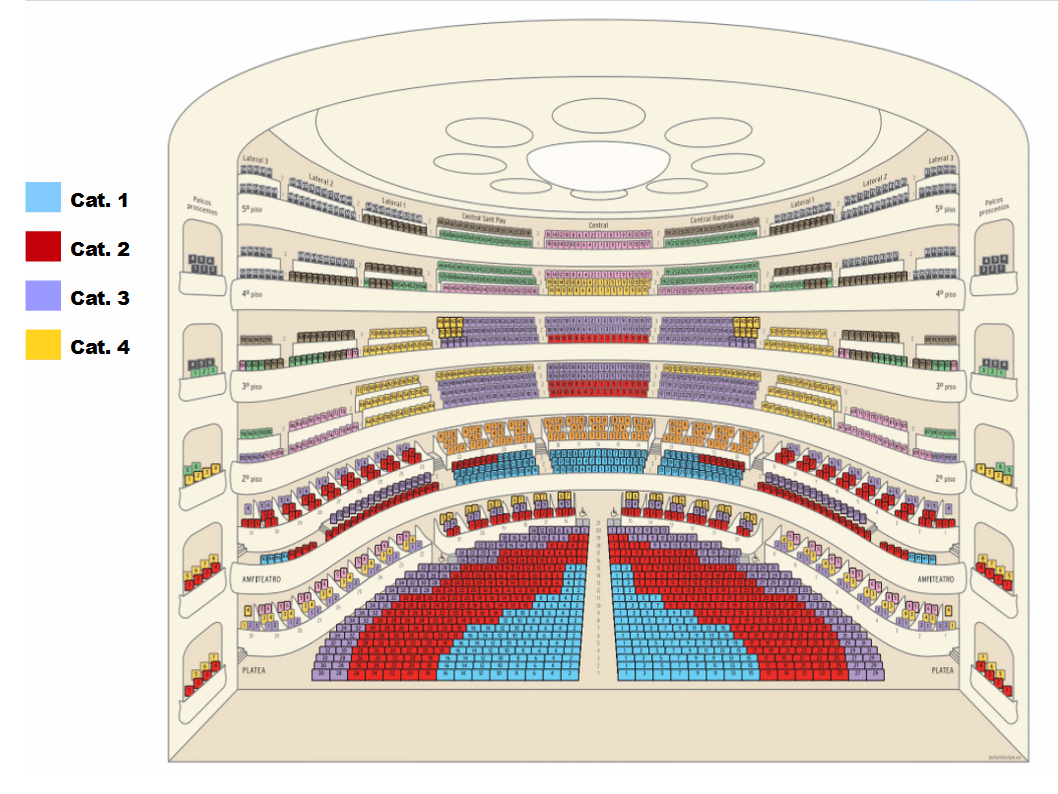
- Venue's Capacity: 2290
- Other : PRICE: The Gran Teatre del Liceu uses "Dynamic Pricing" that means that Prices for all performances are subject to change (increase and decrease) based on their sales. So, the prices may have changed, you will be informed of the new price as soon as possible, you will then be able to choose wether you want to buy your tickets at the new price or to cancel your booking (your credit card will not be charged).
On 4 April 1847, the Gran Teatre del Liceu established by Miguel Garriga, opened its doors with a very diverse programme. Anna Bolena by Donizetti was one of the major events here. In 1861, the theatre caught fire. It was rebuilt one year later to become the true rival of the old Santa Gran Teatre. At the end of the 19th century, the Liceu became the venue where people came to see and be seen; which is why the shows were performed with the house lights left on.
The work of national composers was rarely performed. However, among them were several highly esteemed composers, including GURIDI, ARRIETA and BRETON. The great French operas did not take hold quite as quickly as the Italian repertoire. It was in 1851 that Robert le diable was performed. Enthusiasm for MEYERBEER reached its peak with the performance of the play Les Huguenots in 1856; he is one of the most frequently performed composers in the history of the Liceu. This fascination of the public for the French repertoire grew with the performances of GOUNOD’s Faust in 1864 which was considered, with its 26 consecutive performances, as the last word in opera. At the end of the 19th century, the Liceu was one of the leading opera houses in Europe. Verdi was performed there, as were the great French operas, and national composers such as Felip PEDRELL and Wagner. Die Walküre caused a sensation and the house lights of the Liceu were put out for the first time.
The performance of Mussorgsky’s Boris Godunov on 20 November 1915 marked the beginning of a period of splendour for Russian opera at the Liceu. When the second republic was proclaimed in 1931, political instability led to a serious financial crisis which badly affected the Liceu. During the civil war, the Liceu was nationalised and took the name “Gran Teatre del Liceu”. Its seasons were later suspended.
The activities of the Liceu began again in 1939 under the aegis of the Spanish and German authorities, subject to the propaganda of the Third Reich. Wagner was the most frequently performed composer during this period. In 1955, for the first time in its history, the Festival of Bayreuth was held at the Gran Teatre del Liceu. Germany felt the need to make up for its recent past. Barcelona was an obvious choice, given its longstanding Wagnerian tradition and the authoritarian regime that kept away any hostile element.
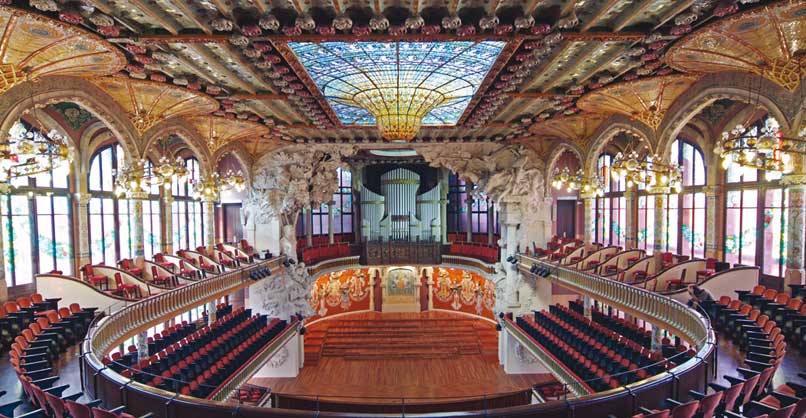
On 31 January 1994, the Liceu was once again destroyed by fire and it was rebuilt on the same site. The new building opened in 1999 offering great artistic and technological quality whilst respecting the former décor which had been reproduced. Its stage allows two or three performances at the same time with maximum visibility and an improved acoustic quality.