


From €148
< Back to show details
I Capuleti e i Montecchi - Bellini

Gran Teatre del Liceu - Barcelona

Select the date of the show

Loading available dates...

Please specify your seating requests regarding your ticket booking (OPTIONAL).
(100 char. max)

Seating

Music & Opera books the best available seats. The exact location of your seats will be confirmed via email. Only adjacent seats can be booked. More information

ANY QUESTIONS ?

Contact us by tel: +33 1 53 59 39 29 – or by Email.) See Help & FAQ page

TICKET DELIVERY INFORMATION

Your E-tickets to be printed will be sent by mail.

Price

Music & Opera ticket prices differ from the ticket face value, as they also include all service fees and taxes.

The Club Music & Opera

Le Club Music & Opera
Join the Club to benefit from special offers. Already Member of the Club, Login !
I Capuleti e i Montecchi - Bellini

Bellini I Capuleti e i Montecchi

From 30 October TO 11 November 2026
Opening date: 15 June 2026
Gran Teatre del Liceu - Barcelona
From 148 €
Prices & Dates
Program

Bellini : I Capuleti e i Montecchi

Cast
  • Conductor
    Riccardo Frizza
    Sasha Yankevych
  • Director
    Adrian Noble
  • Performers
    Giulietta: Lisette Oropesa
    Romeo: Raffaella Lupinacci
    Tebaldo: Iván Ayón Rivas
    Lorenzo: Lopez Alejandro
    Capellio: Marko Mimica
  • Venue Info
  • Seating Plan
  • Synopsis

Gran Teatre del Liceu - Barcelona LocationLa Rambla, 51-59 - 08002 Barcelona Espagne

  • Venue's Capacity: 2290
  • Other : PRICE: The Gran Teatre del Liceu uses "Dynamic Pricing" that means that Prices for all performances are subject to change (increase and decrease) based on their sales. So, the prices may have changed, you will be informed of the new price as soon as possible, you will then be able to choose wether you want to buy your tickets at the new price or to cancel your booking (your credit card will not be charged).

On 4 April 1847, the Gran Teatre del Liceu established by Miguel Garriga, opened its doors with a very diverse programme. Anna Bolena by Donizetti was one of the major events here. In 1861, the theatre caught fire. It was rebuilt one year later to become the true rival of the old Santa Gran Teatre. At the end of the 19th century, the Liceu became the venue where people came to see and be seen; which is why the shows were performed with the house lights left on.

The work of national composers was rarely performed. However, among them were several highly esteemed composers, including GURIDI, ARRIETA and BRETON. The great French operas did not take hold quite as quickly as the Italian repertoire. It was in 1851 that Robert le diable was performed. Enthusiasm for MEYERBEER reached its peak with the performance of the play Les Huguenots in 1856; he is one of the most frequently performed composers in the history of the Liceu. This fascination of the public for the French repertoire grew with the performances of GOUNOD’s Faust in 1864 which was considered, with its 26 consecutive performances, as the last word in opera. At the end of the 19th century, the Liceu was one of the leading opera houses in Europe. Verdi was performed there, as were the great French operas, and national composers such as Felip PEDRELL and Wagner. Die Walküre caused a sensation and the house lights of the Liceu were put out for the first time.

The performance of Mussorgsky’s Boris Godunov on 20 November 1915 marked the beginning of a period of splendour for Russian opera at the Liceu. When the second republic was proclaimed in 1931, political instability led to a serious financial crisis which badly affected the Liceu. During the civil war, the Liceu was nationalised and took the name “Gran Teatre del Liceu”. Its seasons were later suspended.

The activities of the Liceu began again in 1939 under the aegis of the Spanish and German authorities, subject to the propaganda of the Third Reich. Wagner was the most frequently performed composer during this period. In 1955, for the first time in its history, the Festival of Bayreuth was held at the Gran Teatre del Liceu. Germany felt the need to make up for its recent past. Barcelona was an obvious choice, given its longstanding Wagnerian tradition and the authoritarian regime that kept away any hostile element.

On 31 January 1994, the Liceu was once again destroyed by fire and it was rebuilt on the same site. The new building opened in 1999 offering great artistic and technological quality whilst respecting the former décor which had been reproduced. Its stage allows two or three performances at the same time with maximum visibility and an improved acoustic quality.

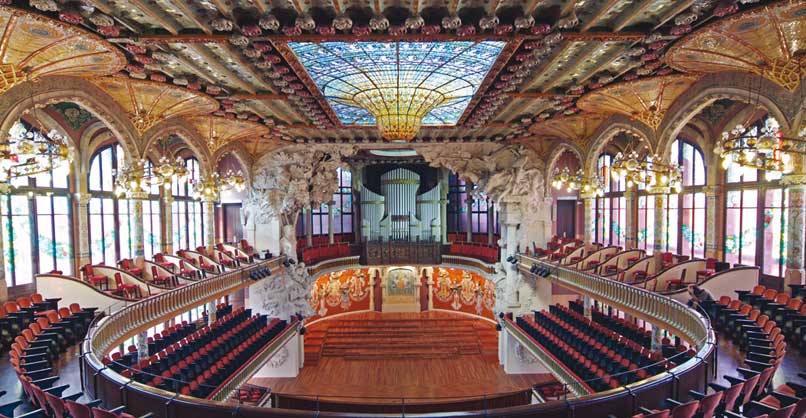
Gran Teatre del Liceu

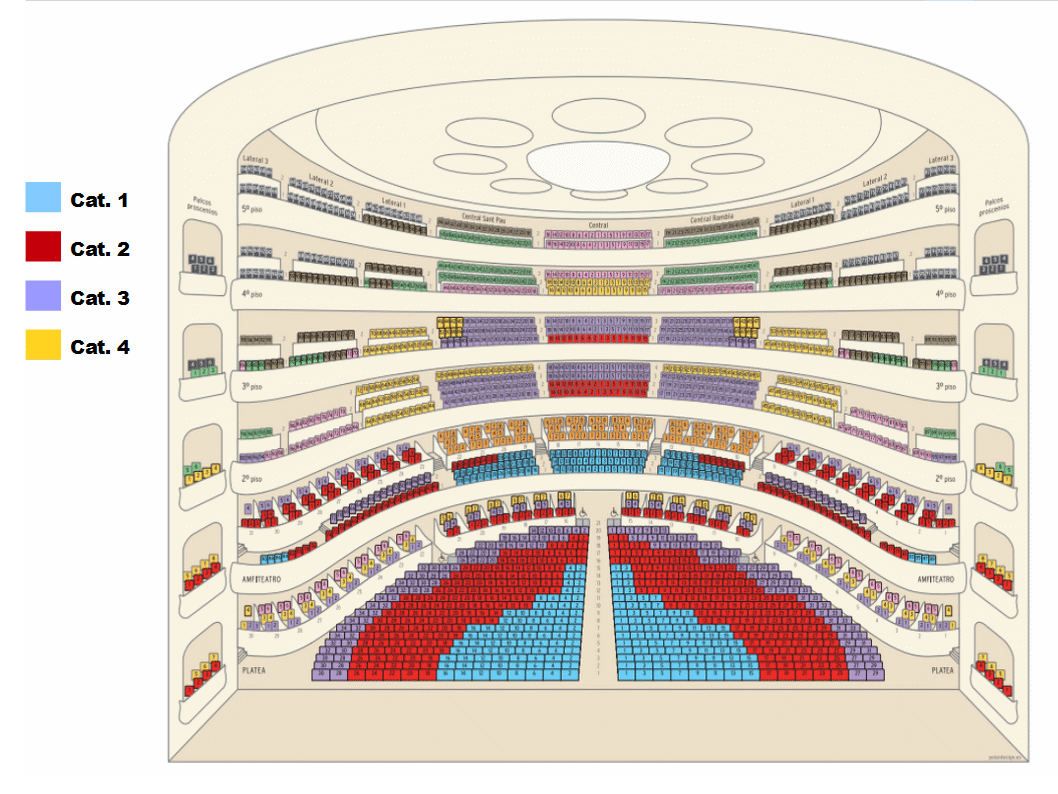
The seating plan is given as an indication and has no contractual value.
The division of categories may differ depending on shows and dates.

Synopsis

I Capuleti e i Montecchi

I CAPULETI E I MONTECCHI A LOVER'S TRAGEDY

I Capuleti e i Montecchi is an opera in two acts composed by Vincenzo Bellini. I Capuleti e i Montecchi is based on the story of Romeo and Juliet with the plot being similar to Shakespeare's version but based on Italian stories.

The score was composed in 1830 for a performance during Venice's spring carnival. As Bellini was only given six weeks for its composition he reworked several pieces of his previous works. The libretto was written by Felici Romani based on several earlier Italian librettos as the story of Romeo and Juliet or i Capuleti e i Montecchi was very popular in Italy. The score was written for the musical range of the opera singers who were to perform at its premiere. Some earlier performances divided the opera into four acts but recent productions have reverted to the original divisions. Since its revival in 1935 the opera has remained popular worldwide.

HISTORY

The Capuleti and Montecchi in Bellini's version are rival political factions not families, but otherwise the plot remains similar to the story, set in 13th C Verona, that we are all familiar with. Romeo and Giulietta meet and fall in love to much opposition. An attempt to deceive Giulietta's father, allowing her to be with Romeo, fails tragically and the story ends with the death of both Romeo and Giulietta.

Act 1

This act is divided into three scenes with scene one opening in the palace of Capellio, leader of the Capuleti's. He is talking with Tebaldo, Giulietta's betrothed. Romeo, although leader of the Montecchi, arrives disguised as an envoy with an offer of peace and a request for Giulietta's hand in marriage. Capellio and Tebaldo reject this offer as Romeo had accidentally killed Giulietta's brother in battle. Tebaldo has sworn to avenge this as a way of celebrating his marriage to Giulietta. Although Giulietta is ill, Capellio insists that their marriage is to take place immediately. Scene two moves to her bedroom where Giulietta is pining for Romeo. Lorenzo, her doctor and friend, enters and tells her that he has arranged a secret meeting with Romeo, who tries to persuade Giulietta to elope with him. She refuses as it would bring disgrace to her family's honour, saying she would rather die broken hearted. Scene three returns to preparations for the marriage of Giulietta and Tebaldo but Romeo enters in disguise and waits for the arrival of his soldiers who attack the Montecchi party. Romeo again pleads with Giulietta but they are discovered by her father and Tebaldo, who believe she is having a liaison with a mere envoy. Romeo reveals himself and is taken away shielded by his followers and war is declared.

Act 2

Act 2 is again broken into three scenes, opening in the palace with Giulietta awaiting news of the battle. Lorenzo is able to reassure her that Romeo is safe but that plans are being made to take her to Tebaldo's palace. He persuades her to take a sleeping draught and he will tell her father that she has died, promising her that both he and Romeo will be there when she awakes. Just before she falls into a deep sleep she begs her father's forgiveness. Capellio, however, is suspicious and arranges that Lorenzo be watched. Scene two sees Romeo waiting impatiently in the grounds for Lorenzo but instead Tebaldo arrives and they argue and fight only to be interrupted by the 'funeral' procession of Giulietta. Romeo and Tebaldo are united in remorse and sadness and decide on a suicide pact. The opera ends in the tombs of the Capuleti. Romeo opens Giulietta's coffin, says farewell to her and swallows poison; but before he dies Juliet awakes only to be told by Romeo that he is dying. Giulietta is unable to live without him and throws herself over his body to die. Capellio is blamed for this double tragedy by both the Capuleti and Montecchi factions.

MAIN ROLES

Capellio: Giulietta's father and leader of the Capuleti faction (bass).
Tebaldo: Capellio's friend and Giulietta's betrothed (tenor).
Giulietta: Capellio's daughter; in love with Romeo but betrothed to Tebaldo (soprano).
Romeo: leader of the Montecchi family; in love with Giulietta (mezzo-soprano).
Lorenzo: Giulietta's doctor and friend (bass).

Gran Teatre del Liceu © A. Bofill

You may also be interested by …