

From €49
< Back to show details
La Bohème - Puccini

Deutsche Oper - Berlin

Select the date of the show

Loading available dates...

Please specify your seating requests regarding your ticket booking (OPTIONAL).
(100 char. max)

Seating

Music & Opera books the best available seats. The exact location of your seats will be confirmed via email. Only adjacent seats can be booked. More information

ANY QUESTIONS ?

Contact us by tel: +33 1 53 59 39 29 – or by Email.) See Help & FAQ page

TICKET DELIVERY INFORMATION

You will receive by email, your E-tickets to be printed or downloaded on your mobilephone.

Price

Music & Opera ticket prices differ from the ticket face value, as they also include all service fees and taxes.

The Club Music & Opera

Le Club Music & Opera
Join the Club to benefit from special offers. Already Member of the Club, Login !
La Bohème - Puccini

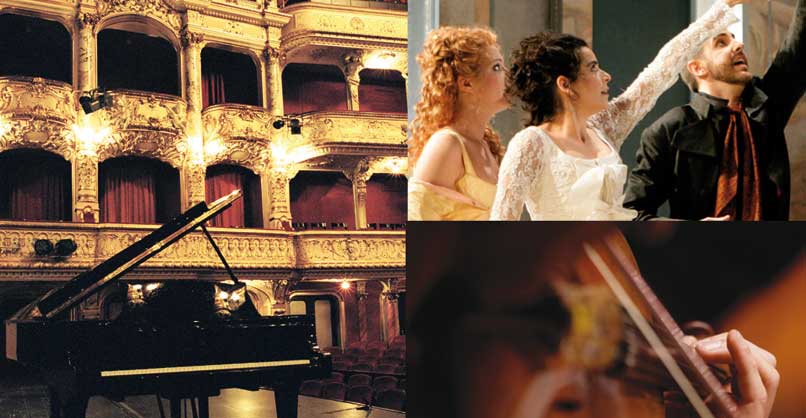
Deutsche Oper Berlin im Saal © Günter Karl Bose

Puccini La Bohème

From 11 December TO 20 December 2026
Deutsche Oper - Berlin
From 49 €
Prices & Dates
Program

Puccini : La Bohème 120 mn

Sung in : Italian
Cast
  • Conductor
    Giampaolo Bisanti
  • Director
    Götz Friedrich
  • Performers
    Mimi: Juliana Grigoryan
    Rodolfo: Andrei Danilov
    Marcello: Vincenzo Neri
    Musetta: Martina Russomanno
    Colline: Mark Kurmanbayev
    Schaunard: Kyle Miller
  • Venue Info
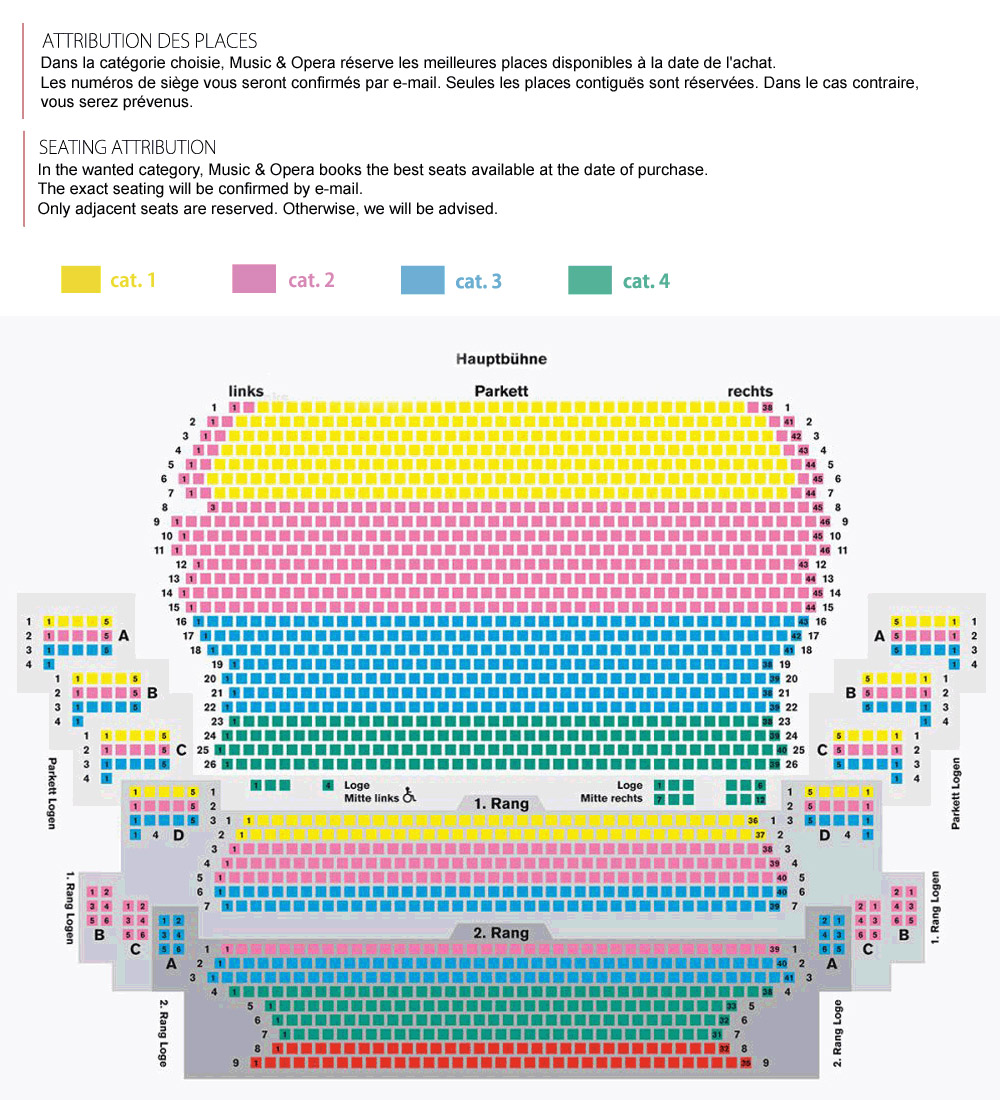
  • Seating Plan
  • Synopsis

Deutsche Oper - Berlin LocationBismarckstrasse 35 - 10627 Berlin Allemagne

  • Venue's Capacity: 1859

Contrary to the Staatsoper Unter den Linden which was founded in the eighteenth century in the centre of town and for a long time considered the Royal Opera, the history of the Berlin Opera began in 1912, in the Charlottenburg neighborhood situated outside the city limits, and intitiated by the rich bourgeoisie. But the inevitable occured, following the economic crisis of World War I, and the Charlottenburg Opera was ultimately purchased by the City of Berlin.

Bruno Walter greatly improved the musical qualities of this institution which was rebaptized the Städtische Oper (City Opera). Prior to that, Carl Ebert, as administrator (with Rudolf Bing, the future legendary director of the MET in New York, as assistant), promoted more modern music, including those operas by Kurt Weill or Schreker which Klemperer could no longer perform at the then-closed Kr oll-Oper, and which provoked the ire of the Nazis as early as 1933. In 1945, the building was left in ruins, but by the month of August 45, the company presented FIDELIO at the « Theater des Westerns » and animated that theatre until 1961. During this period, the conductor Ferenc Fricsay, named music director, enabled the Städtische Oper to regain its international ranking, alternating standard repertoire in top-quality productions (where voices such as Dietrich Fischer-Dieskau or Josef Greindl were discovered), works by Stravinsky and Hindemith (who were banned by the Nazis), and world premieres. But in 1955, the Opera Unter den Linden, situated in East Germany, reopened under the name of the Deutsche Staatsoper. Under the influence of this politico-artistic competition, three decisions were made : the Städtische Oper was rebaptized the Deutsche Oper Berlin, plans were made to construct a theatre at the Charlottenburg site (situated in West Berlin), and Carl Ebert who, in the mean­time founded the Glyndebourne Festival, was called back. His productions and season programmes turned West Berlin into one of contemporary opera's main capitals.

Deutsche Oper

The seating plan is given as an indication and has no contractual value.
The division of categories may differ depending on shows and dates.

Synopsis

La Bohème

Discover the upcoming dates for Puccini's opera La Bohème around the world and book your tickets now!


Mimi's tragic story is impossible to ignore. With La Bohème, Puccini wrote his most heart-rending opera, set to sublime, poignant music. It's a masterpiece, and an excellent introduction for the emotion-seeking neophyte.

Listen to the Music & Opera playlist : 

Building on the success of his previous opera ‘Manon Lescaut’, Giacomo Puccini continued his collaboration with Giuseppe Giacosa, adapting for the opera a novel by Henri Murger entitled ‘Scenes from Bohemian Life’. On the timeless theme of impossible love, Puccini describes the creativity and carefree nature of the Parisian artistic milieu, the harsh living conditions of the working class and the constant dissatisfaction of the bourgeoisie. He also contrasts the ability to enjoy the simple joys of life with the harshness of the times. Moving and heartbreaking, but also sparkling and sparkling, La Bohème was a growing and enduring success, even if its premiere on 1st February 1896 left audiences with mixed feelings.

THE STORY

It was love at first sight when the little cousin Mimi met the poet Rodolpho in the squalor of the Latin Quarter where he lived with his student and artist friends. But Mimi's illness and lack of money made their bohemian life and love impossible. Separated, they are not reunited until Mimi's tragic death from tuberculosis.

CARACTERS 

  • Rodolpho, poet and Mimi's lover, tenor
  • Mimi, dressmaker, soprano
  • Marcello, painter, barython
  • Musetta, singer, soprano


Deutsche Oper Berlin im Saal © Günter Karl Bose

You may also be interested by …

Pay in 3 installments 16,33€ with interest-free. Learn more