

From €60
< Back to show details
Il barbiere di Siviglia - Rossini

Deutsche Oper - Berlin

Select the date of the show

Loading available dates...

Please specify your seating requests regarding your ticket booking (OPTIONAL).
(100 char. max)

Seating

Music & Opera books the best available seats. The exact location of your seats will be confirmed via email. Only adjacent seats can be booked. More information

ANY QUESTIONS ?

Contact us by tel: +33 1 53 59 39 29 – or by Email.) See Help & FAQ page

TICKET DELIVERY INFORMATION

You will receive by email, your E-tickets to be printed or downloaded on your mobilephone.

Price

Music & Opera ticket prices differ from the ticket face value, as they also include all service fees and taxes.

The Club Music & Opera

Le Club Music & Opera
Join the Club to benefit from special offers. Already Member of the Club, Login !
Il barbiere di Siviglia - Rossini

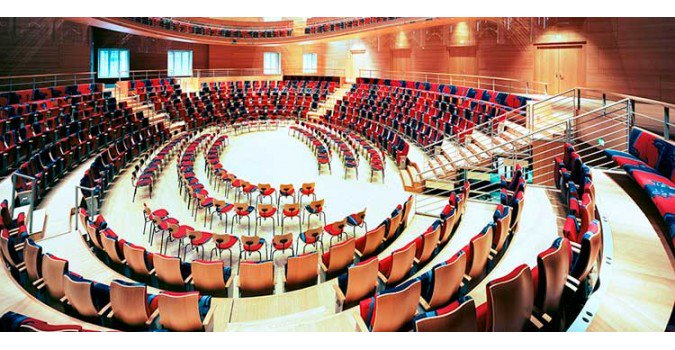
Deutsche Oper Berlin im Saal © Günter Karl Bose

Rossini Il Barbiere di Siviglia

From 23 May TO 04 June 2027
Deutsche Oper - Berlin
From 60 €
Prices & Dates
Program

Rossini : Il Barbiere di Siviglia 160 mn

Sung in : Italian
Cast
  • Conductor
    Giovanni Conti
  • Director
    Katharina Thalbach
  • Performers
    Figaro: Bongani J. Kubheka
    Rosina: Maria Warenberg
    Il Conte d’Almaviva: Omar Mancini
    Dottore Bartolo: Carlo Lepore
    Don Basilio: Mark Kurmanbayev
  • Venue Info
  • Seating Plan
  • Synopsis

Deutsche Oper - Berlin LocationBismarckstrasse 35 - 10627 Berlin Allemagne

  • Venue's Capacity: 1859

Contrary to the Staatsoper Unter den Linden which was founded in the eighteenth century in the centre of town and for a long time considered the Royal Opera, the history of the Berlin Opera began in 1912, in the Charlottenburg neighborhood situated outside the city limits, and intitiated by the rich bourgeoisie. But the inevitable occured, following the economic crisis of World War I, and the Charlottenburg Opera was ultimately purchased by the City of Berlin.

Bruno Walter greatly improved the musical qualities of this institution which was rebaptized the Städtische Oper (City Opera). Prior to that, Carl Ebert, as administrator (with Rudolf Bing, the future legendary director of the MET in New York, as assistant), promoted more modern music, including those operas by Kurt Weill or Schreker which Klemperer could no longer perform at the then-closed Kr oll-Oper, and which provoked the ire of the Nazis as early as 1933. In 1945, the building was left in ruins, but by the month of August 45, the company presented FIDELIO at the « Theater des Westerns » and animated that theatre until 1961. During this period, the conductor Ferenc Fricsay, named music director, enabled the Städtische Oper to regain its international ranking, alternating standard repertoire in top-quality productions (where voices such as Dietrich Fischer-Dieskau or Josef Greindl were discovered), works by Stravinsky and Hindemith (who were banned by the Nazis), and world premieres. But in 1955, the Opera Unter den Linden, situated in East Germany, reopened under the name of the Deutsche Staatsoper. Under the influence of this politico-artistic competition, three decisions were made : the Städtische Oper was rebaptized the Deutsche Oper Berlin, plans were made to construct a theatre at the Charlottenburg site (situated in West Berlin), and Carl Ebert who, in the mean­time founded the Glyndebourne Festival, was called back. His productions and season programmes turned West Berlin into one of contemporary opera's main capitals.
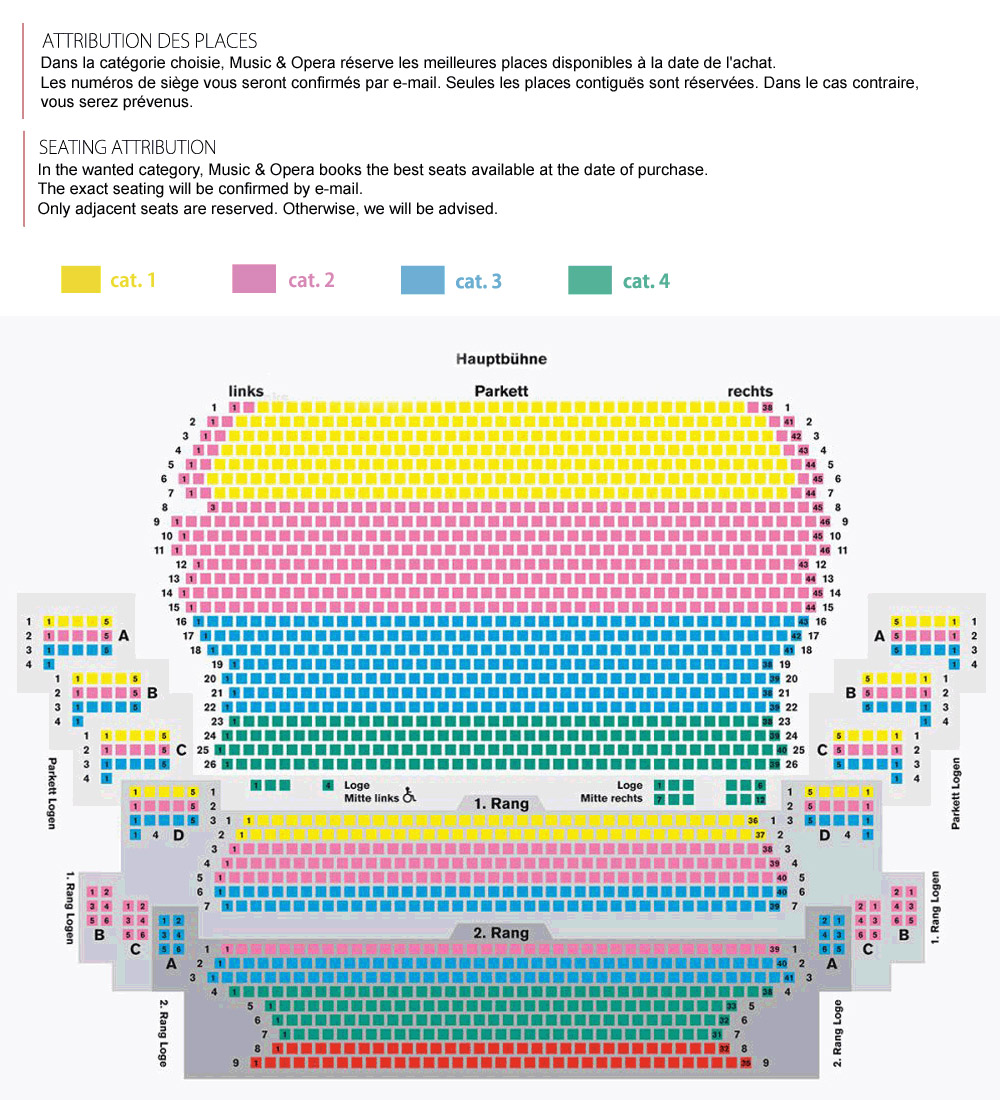

Deutsche Oper

The seating plan is given as an indication and has no contractual value.
The division of categories may differ depending on shows and dates.

Synopsis

Il Barbiere di Siviglia

Discover upcoming dates for Rossini's opera Il Barbiere di Siviglia (The Barber of Seville) around the world and reserve your tickets now!

THE BARBIER DE SEVILLE, A FESTIVAL OF CELEBRATED AIRES

With The Barber of Seville, the truculent Rossini offers a festival of famous arias with infectious glee. Everything swirls in this music where entertainment is the only thing that counts. The voices of this brilliant composer of bel canto are always in the limelight.

Listen to the Music & Opera playlist : 

Il barbiere di Siviglia, composed in 1816 by Rossini, is considered to be the finest example of Italian opera buffa. The libretto is inspired by Beaumarchai's play of the same name, but its social implications are more diffuse than in the French playwright's work. Chronologically, the plot precedes that of Mozart's Marriage of Figaro (Le Nozze di Figaro). To attend a performance of The Barber of Seville is to rediscover some of the best-known sung pieces in the classical repertoire, such as Basilio's aria, Figaro's cavatina and Rosina's aria.

THE STORY

In Seville, Count Almaviva is trying to seduce Rosina, the ward of Doctor Bartholo. Bartholo has designs on the young girl and keeps her locked up in his house. Figaro, nicknamed the Babier of Seville, has become the Count's valet and helps his master to win over the woman he loves.

THE PRINCIPAL CHARACTERS

  • Figaro, barber, baritone
  • Rosina, doctor Bartolo's ward, contralto
  • Count Almaviva, Rosina's lover, tenor
  • Bartolo, doctor, bass
  • Basilio, music master, bass
Deutsche Oper Berlin im Saal © Günter Karl Bose

You may also be interested by …

Pay in 3 installments 20,00€ with interest-free. Learn more