


From €49
< Back to show details
Hänsel und Gretel - Humperdinck

Deutsche Oper - Berlin

Select the date of the show

Loading available dates...

Please specify your seating requests regarding your ticket booking (OPTIONAL).
(100 char. max)

Seating

Music & Opera books the best available seats. The exact location of your seats will be confirmed via email. Only adjacent seats can be booked. More information

ANY QUESTIONS ?

Contact us by tel: +33 1 53 59 39 29 – or by Email.) See Help & FAQ page

TICKET DELIVERY INFORMATION

You will receive by email, your E-tickets to be printed or downloaded on your mobilephone.

Price

Music & Opera ticket prices differ from the ticket face value, as they also include all service fees and taxes.

The Club Music & Opera

Le Club Music & Opera
Join the Club to benefit from special offers. Already Member of the Club, Login !
Hänsel und Gretel - Humperdinck

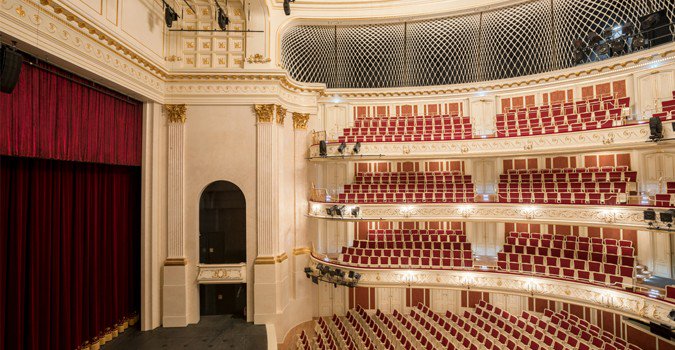
Deutsche Oper Berlin im Saal © Günter Karl Bose

Humperdinck Hänsel und Gretel

From 23 December TO 09 January 2027
Deutsche Oper - Berlin
From 49 €
Prices & Dates
Program

Humperdinck : Hänsel und Gretel

Cast
  • Conductor
    Anna Handler
  • Director
    Andreas Homoki
  • Performers
    Hänsel: Karis Tucker
    Gretel: Julieth Lozano
    Die Knusperhexe: Michael J. Scott
    Vater Peter: Vincenzo Neri
  • Venue Info
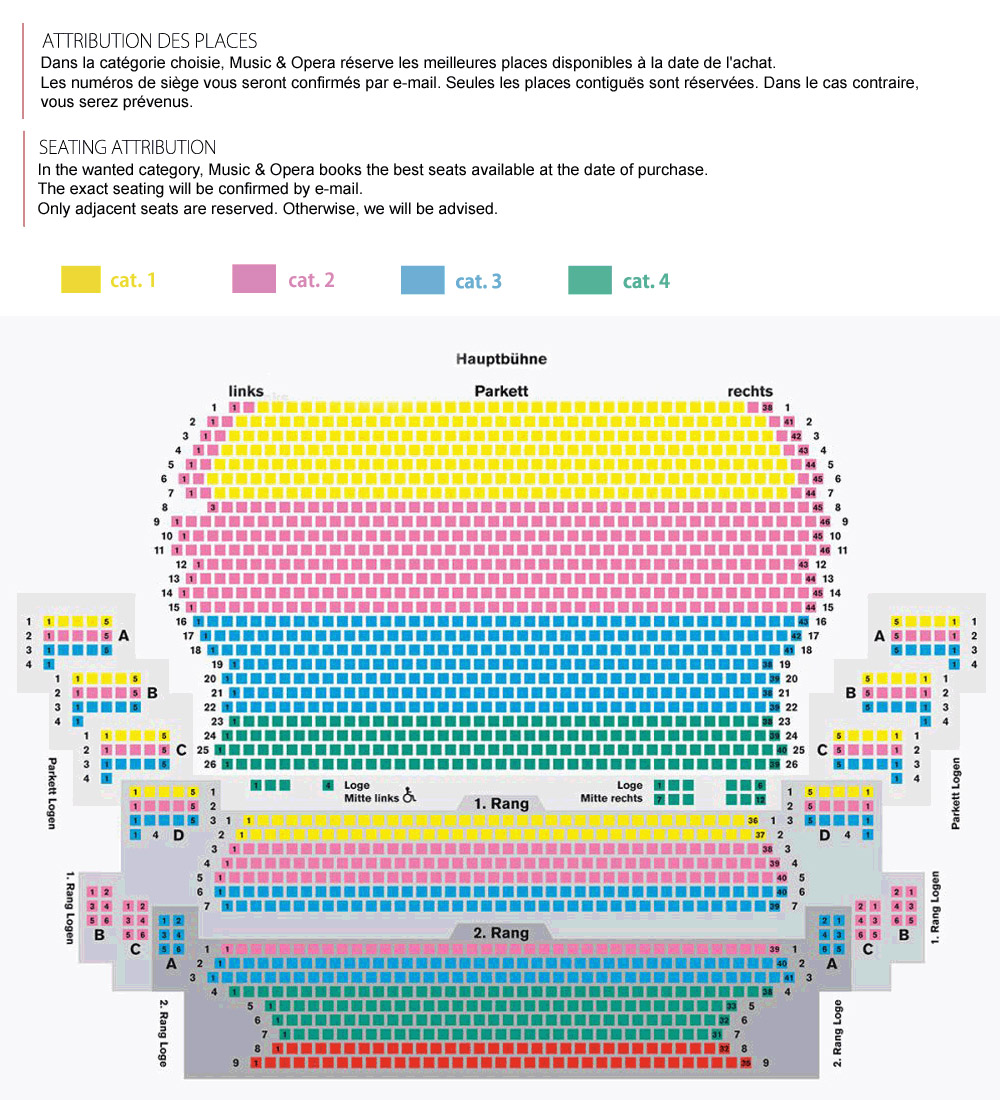
  • Seating Plan
  • Synopsis

Deutsche Oper - Berlin LocationBismarckstrasse 35 - 10627 Berlin Allemagne

  • Venue's Capacity: 1859

Contrary to the Staatsoper Unter den Linden which was founded in the eighteenth century in the centre of town and for a long time considered the Royal Opera, the history of the Berlin Opera began in 1912, in the Charlottenburg neighborhood situated outside the city limits, and intitiated by the rich bourgeoisie. But the inevitable occured, following the economic crisis of World War I, and the Charlottenburg Opera was ultimately purchased by the City of Berlin.

Bruno Walter greatly improved the musical qualities of this institution which was rebaptized the Städtische Oper (City Opera). Prior to that, Carl Ebert, as administrator (with Rudolf Bing, the future legendary director of the MET in New York, as assistant), promoted more modern music, including those operas by Kurt Weill or Schreker which Klemperer could no longer perform at the then-closed Kr oll-Oper, and which provoked the ire of the Nazis as early as 1933. In 1945, the building was left in ruins, but by the month of August 45, the company presented FIDELIO at the « Theater des Westerns » and animated that theatre until 1961. During this period, the conductor Ferenc Fricsay, named music director, enabled the Städtische Oper to regain its international ranking, alternating standard repertoire in top-quality productions (where voices such as Dietrich Fischer-Dieskau or Josef Greindl were discovered), works by Stravinsky and Hindemith (who were banned by the Nazis), and world premieres. But in 1955, the Opera Unter den Linden, situated in East Germany, reopened under the name of the Deutsche Staatsoper. Under the influence of this politico-artistic competition, three decisions were made : the Städtische Oper was rebaptized the Deutsche Oper Berlin, plans were made to construct a theatre at the Charlottenburg site (situated in West Berlin), and Carl Ebert who, in the mean­time founded the Glyndebourne Festival, was called back. His productions and season programmes turned West Berlin into one of contemporary opera's main capitals.

Deutsche Oper

The seating plan is given as an indication and has no contractual value.
The division of categories may differ depending on shows and dates.

Synopsis

Hänsel und Gretel

THE LEGENDARY OPERA OF HAENSEL ET GRAETEL

The darkly humorous opera of Haensel et graetel from the German composer Engelbert Humperdinck explores the famous folk tale from an operatic perspective.
The libetto was written by his sister, Adelheid Wett, and brought the folk story into the opera houses of Europe, and later the whole world.

First performed on 23 December 1893, the opera is closely associated with the Christmas period although its influence can be experienced throughout the year. Various interpretations of the work have been produced, with live recordings, film adaptations and new versions bringing the work to a fresh generation of audiences.

THE HISTORY

Haensel et graetel is set in the central Germanic forests and woodland of medieval times. The opera is based on the Grimm Brothers' famous fairy tale that addresses eternal issues of innocence and perceptions of danger and evil.


Concerning the eponymous young brother and sister as they attempt to thwart the cannibalistic desires of a forest witch, the opera shares the scope of many fairy tales in presenting dark psychological concepts within a more light hearted mood and setting.

Act 1

The scenes in the opening act set up the central dangers for Hansel and Gretel, the brother and sister of the title. When their mother Gertrud discovers that they have been dancing instead of doing housework, she send them off to the forest to look for strawberries. When their father discovers where his wife has sent them he is shocked - the forest is the home of the Gingerbread Witch.
Both he and his wife immediately set off to search for their children.

Act 2

The second act explores the confusion and fear of Hansel and Gretel as they set off on their task to collect strawberries.
Filling up their baskets, Hansel and Gretel eventually squabble over the fruit and end up eating or losing them all. As night falls, they are approached by the Sandman, who puts them to sleep with magic sand in their eyes. As they sleep, fourteen angels come down from Heaven to protect them in their slumber.

Act 3

The brother and sister wake up in the forest to the magic dew sprinkling of the dew fairy. As they come around, they notice a wonderful gingerbread house decorated with all kinds of sweets and chocolate. Unable to resist, they begin taking small pieces of the house to nibble on.
The Gingerbread Witch comes out of her house and catches Hansel. Through sheer wit Gretel manages to delay the witches's plans to turn them into gingerbread. She and her brother carefully fool the witch and trap her in the exploding gingerbread oven.
All of the gingerbread children are turned back into real children and Hansel and Gretel return home with their eventually arriving father Peter.

THE MAIN ROLES

Hansel, a boy, mezzo-soprano
Gretel, a girl, soprano
The Gingerbread Witch, mezzo-soprano
Peter, broom-maker, baritone
Gertrud, his wife, mezzo-soprano
Sandman, the Sleep Fairy, soprano

Deutsche Oper Berlin im Saal © Günter Karl Bose

You may also be interested by …

Pay in 3 installments 16,33€ with interest-free. Learn more