

From €117
< Back to show details
La Bohème - Puccini

Det Kongelige Teater (Operaen, Store Scene) - København

Select the date of the show

Loading available dates...

Please specify your seating requests regarding your ticket booking (OPTIONAL).
(100 char. max)

Seating

Music & Opera books the best available seats. The exact location of your seats will be confirmed via email. Only adjacent seats can be booked. More information

ANY QUESTIONS ?

Contact us by tel: +33 1 53 59 39 29 – or by Email.) See Help & FAQ page

TICKET DELIVERY INFORMATION

Your E-tickets to be printed will be sent by mail.

Price

Music & Opera ticket prices differ from the ticket face value, as they also include all service fees and taxes.

The Club Music & Opera

Le Club Music & Opera
Join the Club to benefit from special offers. Already Member of the Club, Login !
La Bohème - Puccini

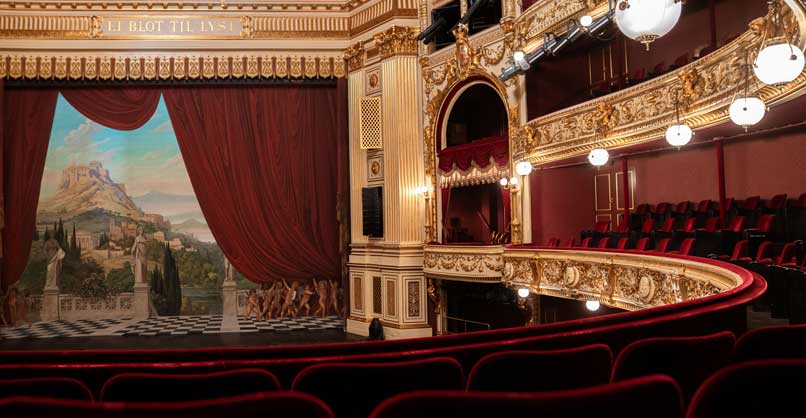
Operaen © Det Kongelige Teater

Puccini La Bohème

From 16 October TO 07 November 2026
Opening date: 12 August 2026
Det Kongelige Teater (Operaen, Store Scene) - København
From 117 €
Prices & Dates
Program

Puccini : La Bohème 120 mn

Sung in : Italian
Cast
  • Conductor
    Dominik Beykirch
  • Director
    Elisabeth Linton
  • Performers
    Mimi: Teona Todua
    Rodolfo: Omer Kobiljak
    Marcello: Jens Søndergaard
    Musetta: Clara Thomsen
    Colline: Henning von Schulman
    Schaunard: Kristian Lindroos
  • Venue Info
  • Seating Plan
  • Synopsis

Det Kongelige Teater (Operaen, Store Scene) - København LocationEkvipagemestervej 10 - 1438 København Danemark

Going back as far as 1448, to the time when King Christian I founded a trumpet corps, or to the grand celebration for the prince's wedding in 1634, it is clear that many events in the history of Danish musical institutions have had royal connections. In 1689 Christian V had the first opera house built; it burnt down not long after, taking with it some two hundred victims. This tragic accident may explain the lack of interest shown in the new Royal Opera House built in 1703. Of course, it may also be that the audiences did not enjoy the taste for German opera favoured by King Frederik IV whose fascination with the art was such that he had a theatre built within the grounds of the royal castle.


Visiting German and even Italian troupes entertained the monarchs with their operas, but it was a Frenchman who, in 1722, was entrusted with a royal monopoly to set up Danish theatre company which gave occasional performances of works featuring musical interludes — «Mascherata». Religious bans outlawed drama and opera, but in 1748 a new theatre was opened on Kongens Nytorv and works by Italian composers and Gluck provided entertainment for the residents of Copenhagen and competition for the Royal Court. Influenced by the new French comic opera and with a school for singers that had opened at the Kongens Nytorv theatre, an authentic style of national opera emerged, starting first as a form of Danish "singspiel", then, under the influence of the romantic movement, developing into true opera that was the work of a recognised and prolific school. In 1874 the Kongens Nytorv theatre was demolished and the same year replaced by the present building where dramatic art has always held pride of place.


In the early 20th century, operas by the Danish composer, Carl Nielsen, were premiered, at the same time as Wagner's operas were performed. The institution gained further support with Frederik IX's enthusiasm for opera. Before coming to the throne, the then prince had studied orchestral conducting with the artistic director of the opera house. A more recent example of the grand vitality of the Royal Theatre was in 1943, in the middle of the war, with the country under Nazi occupation, when the theatre presented the European premiere of Gershwin's PORGY AND BESS. In the five decades since, international productions have been directed by such names as Wieland Wagner, Gbtz Friedrich and Harry Kupfer, and dynamic efforts have promoted young Danish singers and composers . Programming at the Royal Theatre in this "little country" has remained faithful to history, being open to exchanges with other countries, while also providing faithful support for works by Danish composers.
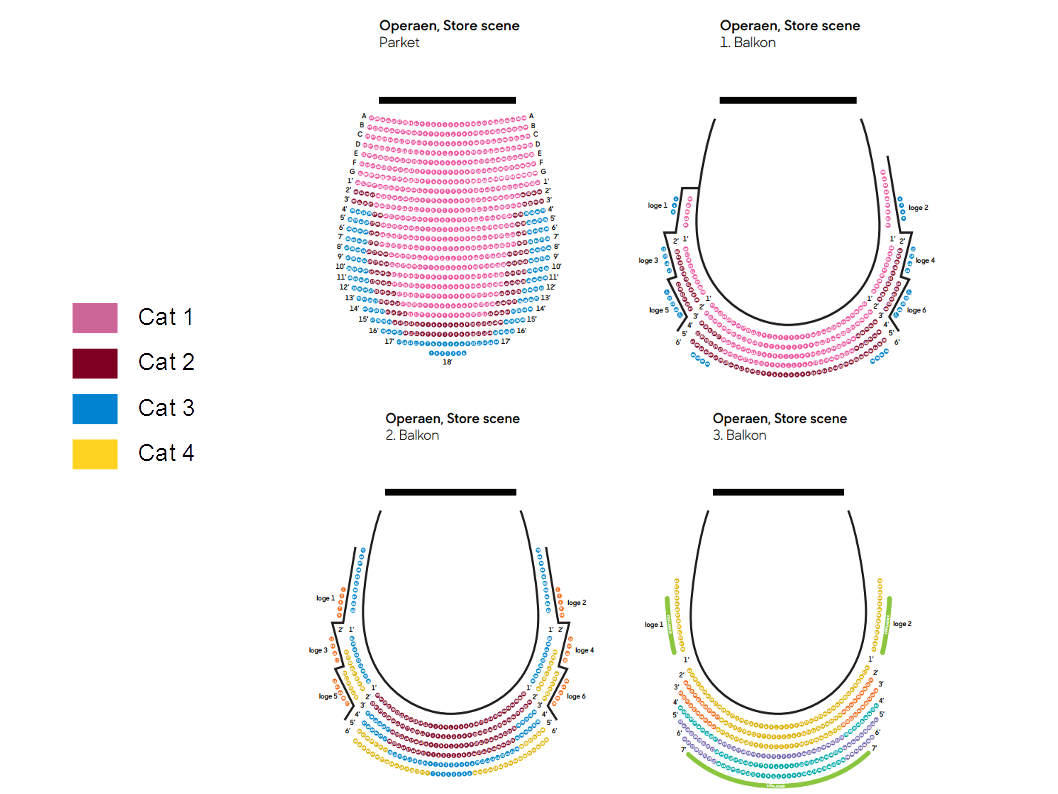

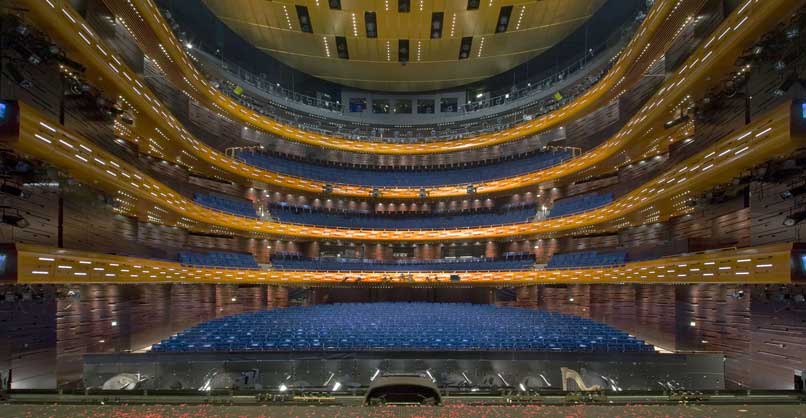
Det Kongelige Teater (Operaen, Store Scene)

The seating plan is given as an indication and has no contractual value.
The division of categories may differ depending on shows and dates.

Synopsis

La Bohème

Discover the upcoming dates for Puccini's opera La Bohème around the world and book your tickets now!


Mimi's tragic story is impossible to ignore. With La Bohème, Puccini wrote his most heart-rending opera, set to sublime, poignant music. It's a masterpiece, and an excellent introduction for the emotion-seeking neophyte.

Listen to the Music & Opera playlist : 

Building on the success of his previous opera ‘Manon Lescaut’, Giacomo Puccini continued his collaboration with Giuseppe Giacosa, adapting for the opera a novel by Henri Murger entitled ‘Scenes from Bohemian Life’. On the timeless theme of impossible love, Puccini describes the creativity and carefree nature of the Parisian artistic milieu, the harsh living conditions of the working class and the constant dissatisfaction of the bourgeoisie. He also contrasts the ability to enjoy the simple joys of life with the harshness of the times. Moving and heartbreaking, but also sparkling and sparkling, La Bohème was a growing and enduring success, even if its premiere on 1st February 1896 left audiences with mixed feelings.

THE STORY

It was love at first sight when the little cousin Mimi met the poet Rodolpho in the squalor of the Latin Quarter where he lived with his student and artist friends. But Mimi's illness and lack of money made their bohemian life and love impossible. Separated, they are not reunited until Mimi's tragic death from tuberculosis.

CARACTERS 

  • Rodolpho, poet and Mimi's lover, tenor
  • Mimi, dressmaker, soprano
  • Marcello, painter, barython
  • Musetta, singer, soprano


Operaen © Det Kongelige Teater

You may also be interested by …